
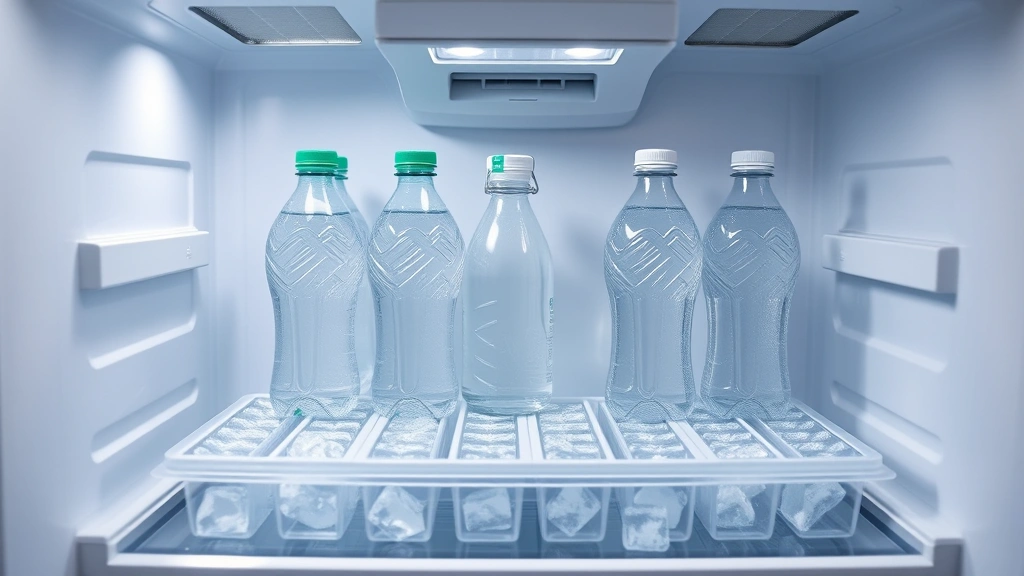
So you’re wondering how much time does it take for water to freeze? The straight answer: pure water in a standard home freezer hits solid ice in about 3-4 hours, but that’s just the starting point. The real story gets way more interesting once you factor in temperature, container size, water purity, and a bunch of other variables that can stretch that timeline from minutes to days. Let me walk you through what actually happens when water transforms into ice, and why your freezer might be faster or slower than you’d expect.
Table of Contents
Freezer Temperature Matters Most
Your freezer temperature is the heavyweight champion of freeze time. A standard home freezer runs at 0°F (-18°C), which gives you that 3-4 hour window for a typical ice cube tray. But bump the temperature down to -4°F (-20°C) or lower, and you’re cutting that time significantly. Commercial freezers that hit -40°F (-40°C)? You’re looking at minutes, not hours.
Here’s the thing: freezing isn’t instant at any temperature above absolute zero. Water needs to release heat energy as it transitions from liquid to solid. The colder your freezer, the faster that heat transfer happens. If your home freezer is set higher than 0°F—which happens more often than you’d think—you’re adding 30 minutes to an hour to the timeline.
Standard Freezing Timeline
Let’s break down a realistic freezing schedule for different scenarios. In a typical home freezer at 0°F, here’s what happens:
- 30-45 minutes: Water gets noticeably slushy around the edges
- 1.5-2 hours: About 50% solid, still partially liquid in the center
- 2.5-3 hours: Nearly solid, but the core might still be slightly soft
- 3-4 hours: Completely frozen solid, ready to use
- 4-6 hours: Fully hardened ice with no soft spots
These times assume you’re starting with room-temperature tap water and haven’t opened the freezer door repeatedly. Every time you crack that door open, you’re letting warm air in and extending the timeline by several minutes.
Container Size Changes Everything
This is where most people get surprised. A small ice cube in a standard tray? 3-4 hours. A gallon of water in a pitcher? You’re looking at 24+ hours, sometimes stretching to 36 hours depending on your freezer’s efficiency.
The reason is simple physics: surface area to volume ratio. Small containers have more surface touching the cold air, so heat escapes faster. A large container has most of its water insulated by the outer layers, so the center takes forever to freeze. This is also why how to store dry ice matters—understanding thermal dynamics helps with any cold storage situation.
For reference:
- Ice cube tray: 3-4 hours
- Water bottle (16-20 oz): 4-6 hours
- 1-liter container: 8-12 hours
- 1-gallon jug: 24-36 hours
- Large pot (2+ gallons): 48+ hours
Water Purity Factor
Pure distilled water actually freezes slower than tap water. Sounds backwards, right? That’s because tap water contains dissolved minerals and impurities that act as nucleation sites—places where ice crystals can start forming. Distilled water has nothing to latch onto, so the freezing process is delayed slightly.
The difference isn’t massive—maybe 10-15 minutes—but it’s measurable. This is why scientists use ultra-pure water in labs: it can actually stay liquid below 32°F (0°C) under certain conditions, a phenomenon called supercooling. Your tap water won’t do this under normal freezer conditions, but the principle explains why mineral content matters.
Salt water, on the other hand, freezes much slower. Ocean water takes significantly longer because salt lowers the freezing point. This is also why salting sidewalks works: it prevents ice from forming in the first place.
Mpemba Effect Explained
Here’s where it gets weird: sometimes hot water freezes faster than cold water. This counterintuitive phenomenon is called the Mpemba Effect, named after a Tanzanian student who observed it in the 1960s. Scientists still debate the exact mechanism, but several factors contribute:
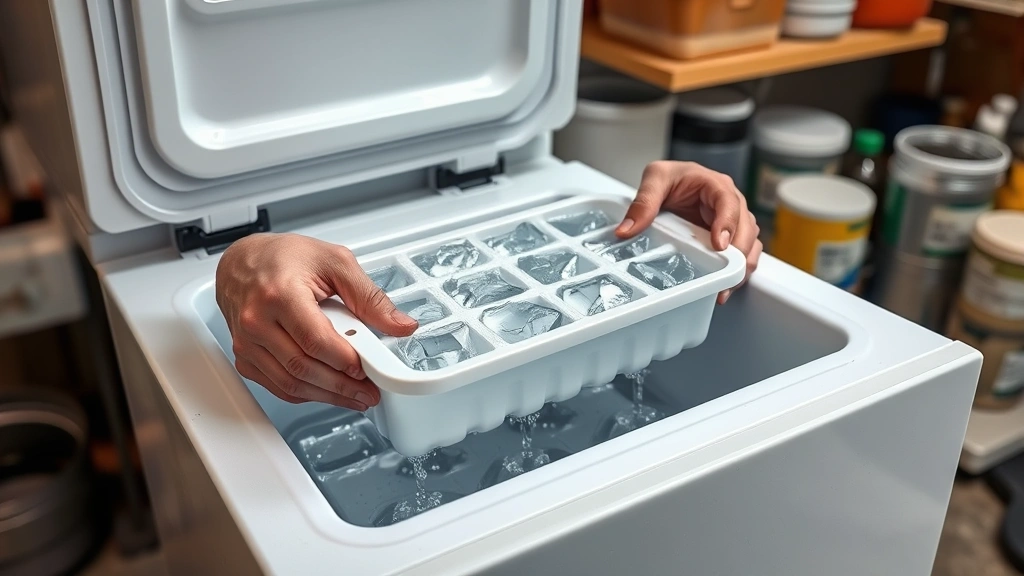
- Convection currents: Hot water creates better circulation, moving heat away more efficiently
- Evaporation: Hot water loses mass as it evaporates, reducing the volume that needs to freeze
- Supercooling: Cold water can supercool more easily, delaying the actual freezing moment
- Dissolved gases: Hot water has fewer dissolved gases, which might affect crystallization
In practice, you won’t see dramatic differences in your home freezer, but it’s a real effect under controlled laboratory conditions. Don’t count on hot water freezing faster—it usually doesn’t in everyday situations.
Ice Tray Tricks
Want to speed up ice production? Here are workshop-tested methods that actually work:
Pre-chill the tray: Stick your ice tray in the freezer for 15 minutes before adding water. This gives the container a head start on heat transfer.
Use a metal tray: Metal conducts cold better than plastic. Metal ice cube trays freeze water 20-30% faster than plastic ones. If you can find old-school aluminum trays, grab them.
Shallow containers: Use shallow pans instead of deep ones. Less distance for cold to penetrate means faster freezing. This is why ice cube trays work so well compared to containers.
Don’t fill completely: Leave about 1/4 inch of space at the top. Water expands as it freezes, and you want room for that expansion. Plus, shallower water freezes faster.
Outdoor Freezing Conditions
When it’s actually freezing outside, water freezes way faster. At 0°F (-18°C) outdoor air temperature, a cup of water can freeze solid in 2-3 hours. At -20°F (-29°C), you’re looking at 45 minutes to an hour. Drop to -40°F (-40°C), and you’re freezing water in 15-20 minutes.
Wind speed matters too. Moving air accelerates heat loss through convection. A windy day at 20°F might freeze water faster than a still day at 10°F. This is why wind chill is such an important factor in cold weather.
This knowledge comes in handy if you’re dealing with frozen pipes, ice dam prevention, or any outdoor winter project. Understanding freeze times helps you plan maintenance and prevent damage.
Speed Up Freezing Process
Beyond the tricks already mentioned, here are additional ways to accelerate freezing:
Increase freezer efficiency: Make sure your freezer isn’t working overtime. Keep it at the proper temperature, don’t overstuff it, and ensure vents aren’t blocked. A clean freezer coil freezes water faster than a dusty one.
Use smaller containers: This is the most effective strategy. Multiple small containers freeze faster than one large container with the same total volume.
Pre-freeze in stages: Freeze water partially, then transfer to a colder spot. This layered approach works in professional settings but is overkill for home use.
Add nucleation sites: A tiny piece of ice or a rough surface gives water crystals a place to start forming. This can shave off 15-20 minutes.
For serious ice production, consider a dedicated ice maker. They use circulation and constant cold contact to produce ice in 30-45 minutes per batch, way faster than passive freezing.
Frequently Asked Questions
How long does it take to freeze water in a typical home freezer?
In a standard home freezer set to 0°F (-18°C), water in an ice cube tray takes about 3-4 hours to freeze completely. Larger containers take proportionally longer—a gallon of water can take 24-36 hours. The exact time depends on your freezer’s temperature, the container size, and starting water temperature.
Does hot water really freeze faster than cold water?
The Mpemba Effect suggests hot water can freeze faster under certain controlled conditions, but in typical home freezers, cold water freezes faster. The effect is real in laboratories but inconsistent in everyday situations. Don’t rely on it for practical purposes.
What temperature makes water freeze the fastest?
The faster the freezer temperature drops below 0°F (-18°C), the faster water freezes. Commercial freezers at -40°F (-40°C) freeze water in minutes. Each 10-degree drop roughly halves the freezing time, though the relationship isn’t perfectly linear.
Why does salt water take longer to freeze?
Salt lowers water’s freezing point, so salt water needs to reach a colder temperature before ice crystals form. Ocean water freezes around 28°F (-2°C) instead of 32°F (0°C). This is why salt is used to melt ice on roads—it prevents freezing from happening in the first place.
Can I freeze water faster by leaving the freezer door open?
No. Leaving the door open lets warm air in, making your freezer work harder to maintain temperature. This actually slows freezing and wastes energy. Keep the door closed except when necessary.
How long does it take to freeze water outdoors in winter?
At 0°F (-18°C) outdoor air, water freezes in 2-3 hours. At -20°F (-29°C), expect 45 minutes to an hour. Wind significantly speeds up the process. Exact timing depends on container size, wind speed, and humidity.


