
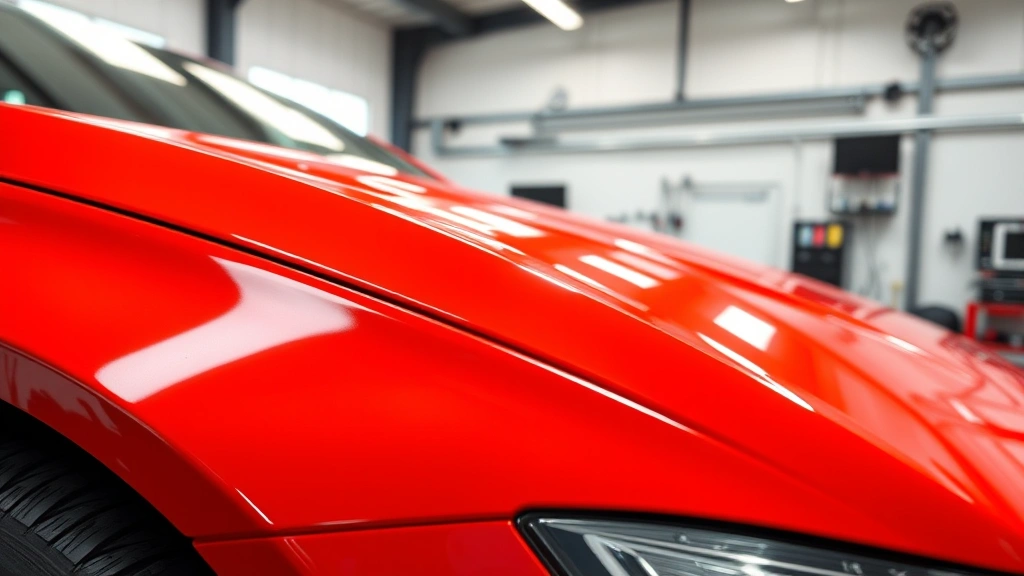
Wondering how much to paint a car costs in 2024? The answer depends on whether you’re doing a basic touch-up, a full single-stage paint job, or a multi-coat show-quality finish. You’re looking at anywhere from $300 for a DIY spray can job to $5,000+ for professional-grade work at a reputable shop. But here’s the thing—there’s a massive middle ground where smart DIYers can save serious cash without sacrificing quality. Let me break down exactly what you’re paying for and how to make the right call for your situation.
Table of Contents
- Professional Shop Costs Breakdown
- Factors That Affect Your Final Bill
- DIY Painting: Budget-Friendly Routes
- Single-Stage vs. Basecoat/Clearcoat
- Why Prep Work Is Everything
- Spray Equipment: Buy or Rent?
- Hidden Costs Nobody Mentions
- Timeline and Turnaround Expectations
- Warranty and Guarantees Explained
- Frequently Asked Questions
Professional Shop Costs Breakdown
Let’s start with what you’ll actually pay at a professional body shop. A basic paint job—think solid color, no special effects—runs $1,000 to $3,000 for most vehicles. This includes light sanding, primer, paint, and clear coat. Mid-range work (metallic or pearl finishes, better prep) lands you at $3,000 to $5,000. High-end custom work? You’re easily at $5,000 to $10,000+, especially if there’s any bodywork involved.
The variation comes down to the shop’s reputation, your location, and the vehicle’s size. A sedan costs less than a full-size truck or SUV because there’s simply more surface area to cover. Labor rates vary wildly too—a shop in rural Kansas charges differently than one in Los Angeles or Miami.
Factors That Affect Your Final Bill
Several variables determine your total cost. Vehicle size is obvious—bigger vehicles need more material and time. Paint type matters enormously. A standard single-stage acrylic lacquer is cheap. A modern basecoat/clearcoat system costs more. Specialty finishes like pearl, metallic, or matte can add 20-40% to your bill.
Existing damage changes everything. If the current paint is in decent shape, prep is straightforward. If you’ve got rust, deep scratches, or previous repair attempts, that prep work balloons the cost. Some shops charge $500-$1,500 just for stripping and sanding before they even open a paint can.
Your location and shop reputation matter. Certified collision centers and established custom shops charge premium prices because they carry insurance, maintain climate-controlled booths, and stand behind their work. Budget shops might quote $800, but you’re gambling with quality. As they say at Family Handyman, you often get what you pay for when it comes to finishing work.
DIY Painting: Budget-Friendly Routes
If you’re handy and patient, DIY painting can cut costs dramatically. Spray cans work for small touch-ups or complete panels if you’re careful—budget $200-$400 in materials for a full car. The catch? Results vary wildly. Spray cans are unpredictable, and getting an even finish takes serious practice.
A HVLP (high-volume, low-pressure) spray gun setup is the sweet spot for DIY. Rent one from Home Depot or a local tool rental shop for $30-$50 per day. Add paint, primer, sandpaper, and masking materials—you’re at $400-$800 total for materials and equipment rental. The learning curve is real, but the savings are substantial.
The biggest DIY advantage? Time investment. You control the schedule. A shop might take 2-3 weeks; you can spread the work over a month at your own pace. That flexibility is worth something, especially if you’re not in a rush.
Single-Stage vs. Basecoat/Clearcoat
Understanding paint systems saves you money and headaches. Single-stage paint is one layer that does everything—color and protection combined. It’s cheaper, faster, and easier for DIYers. The downside? Less durability and harder to repair. One small scratch and you’re repainting.
Basecoat/clearcoat is the modern standard. You spray color (basecoat), then a protective clear layer on top. It looks better, lasts longer, and scratches in the clear coat don’t require a full repaint. Costs more upfront but saves money long-term. Most professional shops use this system exclusively.
For DIY work, single-stage is honestly more forgiving. You don’t have to nail the timing between coats or worry about clearcoat adhesion. If you’re painting in your garage with limited climate control, single-stage reduces variables.
Why Prep Work Is Everything
Here’s where most DIYers fail: they skip or rush prep work. A professional shop spends 40-60% of the time on preparation. Sanding, stripping old paint, filling imperfections, masking—it’s tedious but absolutely critical. You can spray perfect paint onto a poorly prepped surface and still get a mediocre result.
Start with 120-grit sandpaper to remove old paint and gloss. Move to 220-grit for smoothing. Fill any dents or imperfections with body filler (Bondo is the classic). Sand that smooth. Prime everything. Then—and only then—spray your color coats. Rushing this step is the #1 reason DIY paint jobs look cheap.
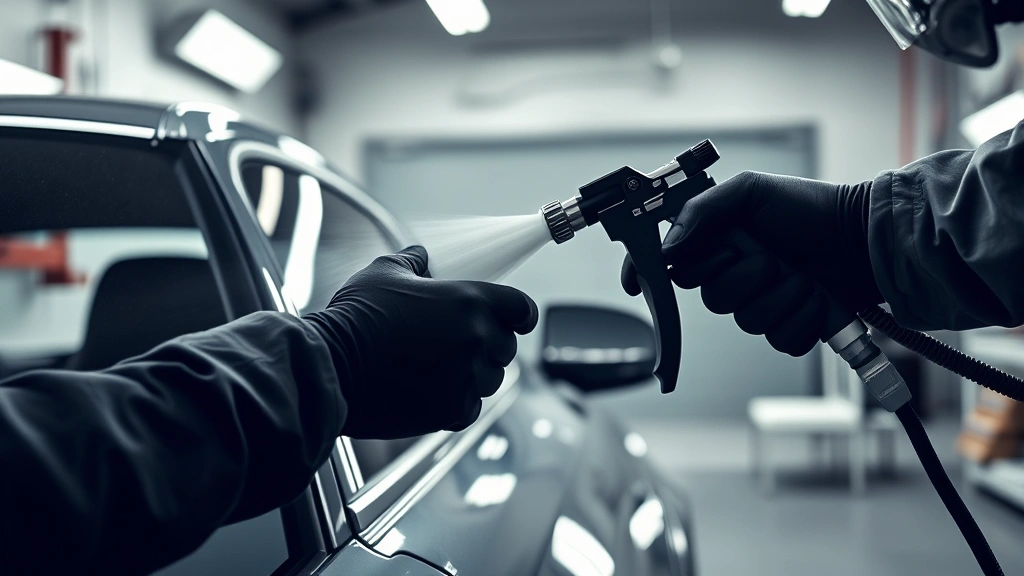
Weather matters too. Paint in a clean, dust-free environment between 65-85°F with 50-85% humidity. Spray in direct sunlight and you’ll get orange peel texture. Paint in high humidity and you’ll trap moisture. Garages work, but cover the floor, seal gaps, and run a fan to manage dust.
Spray Equipment: Buy or Rent?
A decent HVLP spray gun costs $150-$400 new. Compressors run $300-$800. If you’re only painting once, rent. If you think you’ll do this again or have other projects, buying makes sense. A used spray gun from a pawn shop or online marketplace can be $50-$100.
Compressor size matters. You need at least 20-30 CFM (cubic feet per minute) at 40 PSI for painting. Smaller pancake compressors won’t cut it—they can’t maintain consistent pressure. A 60-gallon stationary compressor is ideal but overkill if you’re only painting once. Rental shops have the right equipment and handle the headache.
Pro tip: invest in a quality air filter and moisture trap ($30-$50). Contaminated air ruins paint jobs faster than anything else. It’s cheap insurance.
Hidden Costs Nobody Mentions
Paint itself is only part of the equation. Primer runs $40-$80 per quart. Clear coat (if doing basecoat/clearcoat) is another $40-$80. Sandpaper, masking tape, drop cloths, solvents, and cleanup materials add $100-$200. Safety gear—respirator, gloves, eye protection—another $50-$100.
If your car has trim (chrome, rubber seals, interior trim), removing it saves time but adds complexity. Some shops charge extra for disassembly and reassembly. Others include it. Ask upfront.
Storage and logistics matter if you’re using a professional shop. Some shops charge extra for “wet storage” while paint cures. Others include it. Insurance implications exist too—if you’re in an accident during the paint job, who’s liable? A reputable shop carries coverage; a buddy with a spray gun in his driveway doesn’t.
Timeline and Turnaround Expectations
Professional shops typically need 2-3 weeks, sometimes longer if they’re busy. That includes prep, painting, curing, and quality checks. Rushed jobs often show poor results. Good painters don’t hurry.
DIY timelines are flexible but require patience. A full paint job spread over 4-6 weekends is realistic. Each stage needs drying time—primer needs 24 hours, paint coats need 4-8 hours between applications, clear coat needs 48+ hours before handling. Humidity and temperature affect everything.
Winter painting is slower. Paint cures slower in cold weather. Summer heat can cause blistering if humidity is high. Spring and fall are ideal. Plan accordingly.
Warranty and Guarantees Explained
Reputable shops guarantee their work for 2-5 years against peeling, fading, or adhesion failure. This is huge. If something goes wrong, they fix it free. DIY work has zero warranty—you own every mistake forever.
Read the fine print. Some warranties exclude stone chips, which are normal. Others require you to wax the car regularly. Ceramic coatings (an additional $300-$800) extend protection and warranty coverage. This Old House’s expert guidance on finishing work emphasizes that warranty backing is worth paying for.
If you DIY, document everything. Take photos of prep work, primer coats, color coats, and final results. It helps if you ever need to troubleshoot issues or if you sell the car later.
Frequently Asked Questions
Can I paint my car myself with spray cans?
Yes, but results depend on your patience and technique. Spray cans work best for small panels or touch-ups. For a full car, an HVLP spray gun produces far superior results. Spray cans are unpredictable and easy to oversaturate, causing runs and drips.
How long does a professional paint job last?
A quality paint job lasts 10-15 years or longer with proper care. UV exposure, weather, and maintenance affect longevity. Regular washing and waxing extend the life significantly. Ceramic coatings can push durability to 20+ years.
What’s the cheapest way to paint a car?
DIY with spray cans ($300-$400) is cheapest upfront but often looks it. Renting an HVLP gun ($50-$100) and spending $400-$800 on materials yields much better results. A budget shop might charge $800-$1,200, but quality varies wildly. You’re trading money for quality and warranty protection.
Do I need to remove trim and glass?
Ideally, yes. Removing trim, door handles, and masking around glass takes time but prevents overspray and ensures clean edges. Many DIYers mask carefully instead, which works if you’re meticulous. Professional shops usually remove trim because the cost is worth the clean result.
Can I paint over existing paint?
Only if it’s in good condition and properly prepped. Sand the existing paint to remove gloss, fill any imperfections, and prime bare spots. If the old paint is peeling, cracking, or separating, strip it completely. Painting over bad paint is a waste of time and money.
What’s the difference between single-stage and basecoat/clearcoat?
Single-stage is one layer combining color and protection—cheaper and simpler but less durable and harder to repair. Basecoat/clearcoat is color plus a protective clear layer—more durable, looks better, and easier to repair minor scratches. Most modern cars use basecoat/clearcoat.
How much does a matte or pearl finish cost?
Specialty finishes add 20-40% to the base price. A $2,000 standard paint job might cost $2,400-$2,800 in pearl or matte. Matte finishes require special clear coats and are more fragile—they show fingerprints and dust more easily.
Should I use a professional or DIY?
Professional if you want a warranty, guaranteed quality, and a finished product that looks showroom-ready. DIY if you have time, patience, and realistic expectations about results. Budget shops offer a middle ground but carry higher risk. Bob Vila recommends professional work for anything beyond touch-ups unless you have spray experience.
Final Thoughts on Car Painting Costs
The question “how much to paint a car” doesn’t have a one-size-fits-all answer. A professional shop offering warranty protection and quality guarantees costs $1,500-$5,000+ depending on your vehicle and finish type. DIY work cuts that dramatically—$400-$800 with an HVLP gun and patience, or $300-$400 with spray cans if you’re brave.
The real decision is about what you value: time, quality, warranty protection, or cost savings. There’s no wrong choice, just trade-offs. A DIY paint job teaches you skills and saves money. A professional job gives you peace of mind and a result you can trust. Most smart DIYers fall somewhere in the middle—handling the prep work themselves and having a professional spray the finish, splitting the cost and risk.
Whatever you choose, don’t cheap out on prep work. That’s where the magic happens. A perfectly prepped surface with budget paint looks better than poor prep with expensive paint. Get that right, and you’ll be happy with your results—and your wallet will thank you.


