
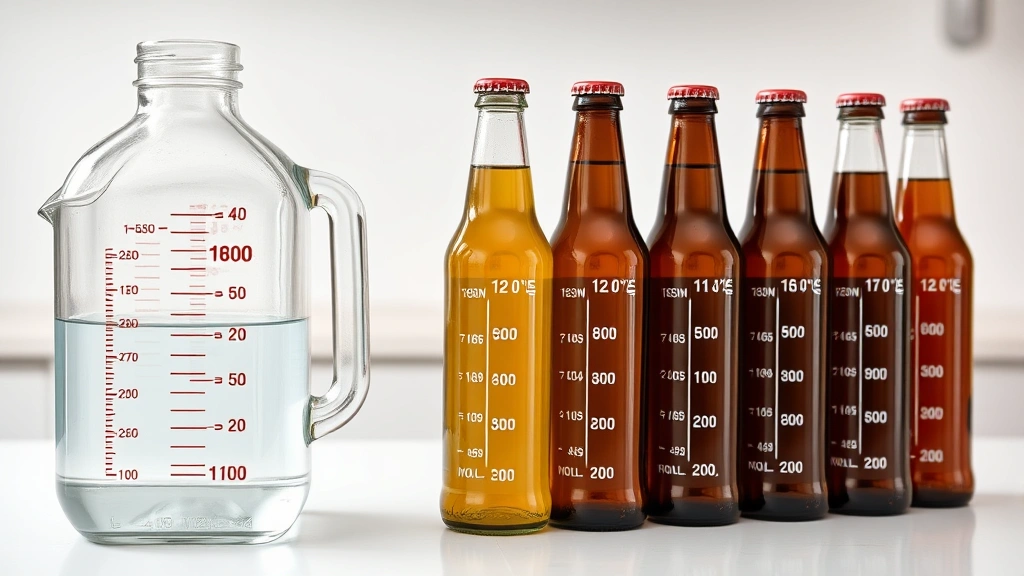
If you’ve ever stood in your kitchen or workshop scratching your head wondering how many ounces to a gallon, you’re not alone. This fundamental measurement conversion trips up plenty of folks, whether you’re mixing a batch of homemade sauce, scaling a recipe, or preparing cleaning solutions. The answer is straightforward: there are 128 fluid ounces in one gallon. But here’s the thing—understanding the why behind this number and how to use it in real-world situations will save you from wasted ingredients and failed projects.
Table of Contents
Basic Conversion Math
Let’s nail down the fundamentals right from the start. When we talk about liquid measurements in the United States, one gallon equals 128 fluid ounces. This is the standard measurement used across cooking, beverage preparation, and countless DIY projects. Think of it like this: if you need to divide a gallon into smaller portions, you’re splitting it into 128 equal parts.
The math works both directions. To convert gallons to ounces, multiply the number of gallons by 128. So 2 gallons = 256 fluid ounces. To go the other way, divide ounces by 128 to get gallons. For example, 64 fluid ounces ÷ 128 = 0.5 gallons (or one half-gallon). This simple formula becomes your best friend when you’re knee-deep in a project and need quick conversions.
There are also intermediate measurements worth knowing. A gallon breaks down into 4 quarts, each quart contains 32 fluid ounces, and each cup holds 8 fluid ounces. These stepping stones make conversions easier when you’re working with standard kitchen measuring cups rather than trying to pour 128 individual ounces.
Fluid vs. Dry Ounces
Here’s where things get tricky and where most people slip up. Fluid ounces and dry ounces are not the same thing, even though they both use the “ounce” label. This distinction matters tremendously, especially if you’re scaling recipes or mixing ingredients.
Fluid ounces measure volume—how much space a liquid takes up. Dry ounces measure weight—how heavy something is. A fluid ounce of water weighs about one ounce, which is why people often confuse them. But a fluid ounce of honey? That weighs roughly 1.5 ounces. A fluid ounce of flour? Only about 0.5 ounces. The density of what you’re measuring changes everything.
When a recipe calls for “8 ounces of milk,” it means 8 fluid ounces (volume). When it says “8 ounces of flour,” it means 8 dry ounces (weight). Your kitchen scale and measuring cup are measuring different things. Always check whether your recipe specifies “fl oz” or just “oz” to avoid disasters. This is especially critical when you’re making beverages or preparing sauces where precision affects the final result.
Quick Reference Chart
Bookmark this section because you’ll come back to it repeatedly. Here are the conversions you’ll use most often:
- 1 Gallon = 128 Fluid Ounces
- 1/2 Gallon = 64 Fluid Ounces
- 1/4 Gallon = 32 Fluid Ounces
- 1 Quart = 32 Fluid Ounces
- 1 Pint = 16 Fluid Ounces
- 1 Cup = 8 Fluid Ounces
- 1 Tablespoon = 0.5 Fluid Ounces
- 1 Teaspoon = 0.167 Fluid Ounces
Print this out or take a screenshot. When you’re in the middle of preparing a big batch of Blue Lagoon Recipe or mixing up cleaning solutions, having these numbers visible saves time and prevents mistakes. The conversions between cups and ounces are particularly useful since most home cooks work with cups and tablespoons rather than gallons.
Practical Kitchen Applications
This is where the rubber meets the road. Understanding how many ounces to a gallon directly impacts your cooking and beverage preparation success. If you’re making homemade Bubble Tea Recipes, you need to know whether you’re scaling your base tea correctly. A gallon of brewed tea is 128 fluid ounces—that’s enough for about sixteen 8-ounce servings.
When preparing Eel Sauce Recipe or Dill Sauce Recipe, precision with liquid measurements determines whether your sauce has the right consistency and flavor balance. If a recipe yields 16 ounces and you want to make a full gallon batch, you’re multiplying by 8 (since 128 ÷ 16 = 8). This means every ingredient in that recipe gets multiplied by 8.
For pickling, preserving, or making marinades, accurate conversions prevent waste and ensure proper preservation. A gallon-sized batch of marinade requires understanding how to scale your ratios correctly. Too little liquid and your vegetables won’t cure properly. Too much and you’re wasting ingredients.
Scaling Recipes Correctly
Scaling recipes is where most home cooks run into trouble with conversions. Let’s say you have a sauce recipe that makes 32 fluid ounces (one quart). You want to make a full gallon instead. Since a gallon is 128 ounces, you need to multiply every ingredient by 4 (128 ÷ 32 = 4).
Here’s the process: First, identify your original recipe yield in fluid ounces. Then, divide your target amount (128 for a gallon) by that number. That’s your multiplier. Apply that multiplier to every ingredient, including spices. This is crucial—people often forget to scale spices and end up with either bland or overpowering results.
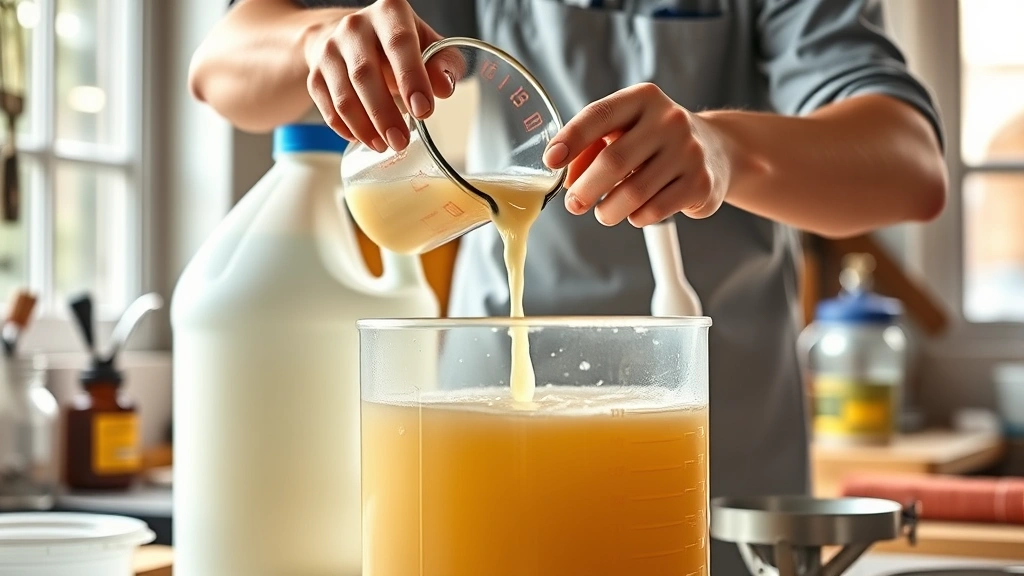
Write down your calculations before you start cooking. Don’t try to do mental math while you’re actively preparing food. A simple spreadsheet or written chart prevents expensive mistakes. If you’re scaling a Greek Recipes batch from 2 cups to a gallon, you’re multiplying by 8 (128 ÷ 16 = 8, since 2 cups = 16 ounces). Every ingredient gets that same multiplier.
Workshop Mixing Ratios
Beyond the kitchen, DIY enthusiasts use these conversions constantly. If you’re mixing paint, stain, cleaning solutions, or epoxy, getting your ratios right is non-negotiable. Many products specify mixing ratios like “1 part concentrate to 3 parts water.”
Let’s say you want to make a gallon of diluted cleaning solution with a 1:3 ratio. Your gallon (128 ounces) needs to be divided into 4 parts total. That means 32 ounces of concentrate and 96 ounces of water. Understanding how many ounces to a gallon makes this calculation instant instead of confusing.
For paint tinting or stain mixing, precision prevents color inconsistency across your project. If you need 2 gallons of a specific shade and your ratio is off, you’ll end up with leftover paint that doesn’t match. Workshop applications demand accuracy, and knowing your conversions is the foundation of that accuracy.
Common Conversion Mistakes
Let’s talk about the pitfalls people hit repeatedly. The biggest mistake is confusing fluid ounces with dry ounces. Someone reads “8 oz” and assumes it’s the same whether they’re measuring milk or flour. It’s not, and this error ruins recipes.
Another common blunder is forgetting to convert all ingredients when scaling. You multiply the main ingredients but forget the spices, salt, or leavening agents. Your final product tastes wrong because the seasoning wasn’t scaled proportionally.
People also forget about ingredient density when converting. Two gallons of honey doesn’t weigh the same as two gallons of water, even though the volume is identical. If you’re following a recipe that specifies weight (ounces on a scale) versus volume (ounces in a measuring cup), mixing these up causes problems.
Finally, folks often round their conversions too aggressively. While it might seem like 127 ounces is “close enough” to 128, in baking or precise mixing applications, that small difference compounds through your recipe. Stick to exact numbers whenever possible.
Measuring Tools Guide
Having the right tools makes conversions and measurements dramatically easier. A good set of liquid measuring cups (marked in both cups and ounces) is essential. These typically come in 1-cup, 2-cup, and 4-cup sizes. The 4-cup measure is particularly useful since 4 cups equals 32 ounces (one quart).
A kitchen scale that measures in both ounces and grams is invaluable, especially for dry ingredients. Digital scales are accurate and affordable. When a recipe specifies dry ounces, your scale is the tool that gets you precision.
Measuring spoons marked with both teaspoons and tablespoons help with smaller conversions. Remember, 1 tablespoon equals 0.5 fluid ounces, so if you need 4 tablespoons, that’s 2 fluid ounces.
For workshop applications, get a dedicated set of measuring containers for your mixing projects. Don’t use kitchen equipment for paint or chemicals—keep them separate. A gallon-sized container with ounce markings is perfect for workshop mixing.
Metric System Comparison
If you work internationally or follow recipes from non-US sources, understanding metric equivalents helps. One gallon (US) equals approximately 3.785 liters. One fluid ounce equals approximately 29.57 milliliters.
So 128 fluid ounces × 29.57 mL/oz ≈ 3,785 mL, which rounds to 3.785 liters. These conversions aren’t as clean as the US system, which is why many cooks prefer working within one system rather than constantly converting.
If you’re following a metric recipe and need to scale it to gallons, divide liters by 3.785. If you’re converting a US recipe to metric, multiply gallons by 3.785. Keep a conversion calculator handy for these calculations—mental math gets messy quickly.
Frequently Asked Questions
How many ounces are in a gallon exactly?
There are exactly 128 fluid ounces in one US gallon. This is the standard measurement used in cooking, beverage preparation, and most DIY applications. Make sure you’re working with fluid ounces (volume) rather than dry ounces (weight) unless your recipe specifically calls for dry measurements.
Is a fluid ounce the same as a regular ounce?
No. A fluid ounce measures volume (how much space something takes up), while a regular ounce (also called a dry ounce or weight ounce) measures weight. A fluid ounce of water weighs about one ounce, but a fluid ounce of honey weighs about 1.5 ounces. Always check whether your recipe specifies “fl oz” or just “oz” to avoid mixing these up.
How do I convert ounces to gallons quickly?
Divide the number of ounces by 128. So 64 ounces ÷ 128 = 0.5 gallons. For the reverse (gallons to ounces), multiply by 128. This simple formula works every time and is faster than looking up conversion charts.
Why is the conversion 128 and not something rounder?
The US measurement system is based on historical standards that don’t follow neat decimal patterns like the metric system. A gallon contains 4 quarts, each quart contains 2 pints, each pint contains 2 cups, and each cup contains 8 ounces. That’s 4 × 2 × 2 × 8 = 128. It’s actually elegant in its own way, even if it’s not as clean as metric.
Can I use these conversions for dry ingredients?
Not directly. These conversions apply to fluid ounces and volumes. For dry ingredients, you need a kitchen scale that measures weight. A cup of flour weighs about 4.5 ounces, but a fluid ounce of flour only weighs about 0.5 ounces. Always use a scale for dry ingredients when precision matters.
What’s the difference between a gallon and a gallon?
There’s a US gallon (128 fluid ounces) and an Imperial gallon (used in the UK and Canada), which equals about 160 fluid ounces. If you’re following UK recipes or working with UK measurements, the conversions are different. Always verify which gallon system you’re working with.
Final Thoughts
Understanding how many ounces to a gallon is one of those fundamental skills that pays dividends across cooking, baking, beverage preparation, and DIY projects. The answer—128 fluid ounces—is simple to remember, but the applications are endless.
Keep that quick reference chart handy, remember the distinction between fluid and dry ounces, and you’ll never be caught off guard by a conversion question. Whether you’re scaling up a favorite recipe, mixing workshop solutions, or preparing large batches of homemade beverages, these conversions are your foundation for success.
The key is being precise and intentional with your measurements. Small errors compound, especially in baking and mixing applications where ratios determine your results. Take the extra thirty seconds to write down your calculations, verify your conversions, and double-check your work. Your finished projects—whether they’re delicious meals or perfectly mixed solutions—will thank you for the effort.


