
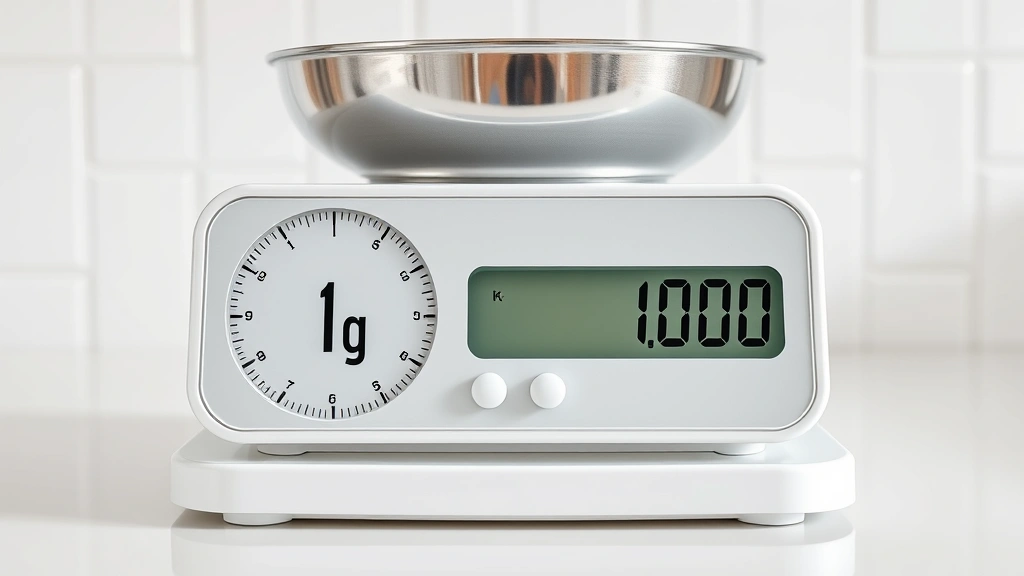
Learning how many kg to g is one of those practical skills that comes in handy more often than you’d think—whether you’re scaling a recipe, measuring materials for a project, or just trying to make sense of product weights at the store. The conversion is straightforward: 1 kilogram equals 1,000 grams. But there’s more to mastering this conversion than just knowing the basic math. Let me walk you through everything you need to understand weight conversions like a pro.
Table of Contents
The Basic Conversion Formula
Let’s nail down the fundamentals. One kilogram (kg) always equals exactly 1,000 grams (g). This isn’t approximate—it’s the official metric standard. When you’re figuring out how many kg to g, you multiply the kilogram amount by 1,000. So if you’ve got 2 kg, that’s 2 × 1,000 = 2,000 grams. Simple multiplication, every single time.
The reverse works just as smoothly. To convert grams to kilograms, divide by 1,000. So 5,000 grams becomes 5,000 ÷ 1,000 = 5 kg. Once you’ve got this relationship locked in your head, you’ll find yourself doing these conversions without even thinking about it.
Quick Conversion Examples
Let me give you some real numbers to work with. If you’re buying flour for batch cooking projects and the package says 0.5 kg, that’s 500 grams. A 1.5 kg bag of rice? That’s 1,500 grams. A small 0.25 kg packet of specialty ingredients? That’s just 250 grams.
These conversions matter because recipes often call for measurements in grams, especially when you’re following European or professional baking instructions. When you’re preparing ingredients like sauce components, precision with weight measurements makes a real difference in the final result. A 3 kg package of something becomes 3,000 grams—easy to remember because you’re just adding three zeros.
Kitchen Weight Conversions
In the kitchen, understanding how many kg to g becomes essential for consistent cooking. When you’re preparing proteins, the weight matters for cooking time and portion control. A 1.2 kg chicken breast is 1,200 grams, which helps you calculate cooking time more accurately.
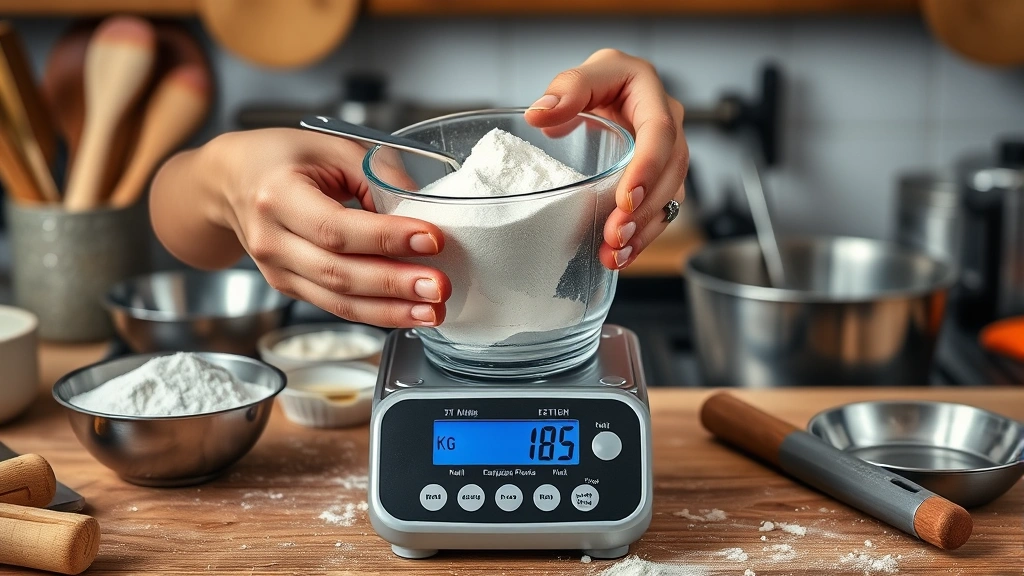
Baking is where this really shines. Professional bakers work almost exclusively in grams because it’s more precise than cups or tablespoons. If a sourdough recipe calls for 500g flour and you’ve got a 2 kg bag, you know you’re using a quarter of your bag. For fruit-based recipes, knowing that 1 kg equals 1,000 grams helps you scale recipes up or down without guessing.
When you’re preparing vegetables, the conversion helps with meal planning. If a recipe serves 4 people and calls for 800g of carrots, and you’re cooking for 8 people, you need 1.6 kg—or 1,600 grams. The math stays consistent and reliable.
Practical Real-World Uses
Beyond cooking, this conversion shows up everywhere. If you’re working on a DIY project and materials are listed in kilograms, you might need to convert to grams for precision. Gardeners use this when measuring fertilizer or soil amendments. A 5 kg bag of compost is 5,000 grams, which helps you portion it out correctly for different garden sections.
In fitness and nutrition tracking, body weight and supplement measurements often bounce between kg and g. If you’re tracking macros and a supplement is dosed in grams, but the package weight is in kilograms, you need to make the conversion to figure out how many doses you’ve got.
Shipping and packaging also rely on this conversion. When you’re mailing something and need to know the exact weight, understanding how many kg to g helps you hit the right postage category. A 2.5 kg package is 2,500 grams, which might be the difference between two shipping tiers.
Handy Reference Table
Here’s a quick reference chart for common conversions you’ll encounter:
| Kilograms (kg) | Grams (g) |
|---|---|
| 0.1 kg | 100 g |
| 0.25 kg | 250 g |
| 0.5 kg | 500 g |
| 1 kg | 1,000 g |
| 1.5 kg | 1,500 g |
| 2 kg | 2,000 g |
| 2.5 kg | 2,500 g |
| 5 kg | 5,000 g |
| 10 kg | 10,000 g |
Keep this table handy when you’re cooking, crafting, or working on projects. The pattern is always the same: multiply kilograms by 1,000 to get grams.
Mental Math Shortcuts
Once you understand the basic relationship, mental math becomes your friend. For most conversions, you’re just moving the decimal point three places to the right when going from kg to g. So 0.75 kg becomes 750 g—shift that decimal three spots and you’re done.
For larger numbers, the same rule applies. 3.2 kg? That’s 3,200 grams. 0.005 kg? That’s 5 grams. The consistency makes it easy to develop speed and confidence with the conversion. After a few weeks of regular use, you won’t even need to think about it.
Another shortcut: if you’re working with half-kilograms, remember that 0.5 kg is always 500 grams. Quarter kilograms are 250 grams. These common fractions come up so often that learning them as standalone facts saves you calculation time.
Avoiding Conversion Mistakes
The most common mistake is moving the decimal the wrong direction. People sometimes divide instead of multiply, which gives you the opposite answer. If you’re converting kg to g, you’re always multiplying by 1,000—never dividing. Check your work by asking: “Is my answer bigger or smaller?” Grams are smaller units than kilograms, so your gram number should always be larger.
Another trap is forgetting zeros. When you multiply by 1,000, you’re adding three zeros to whole numbers. 2 kg becomes 2,000 g, not 200 g. The extra zeros matter. If you’re working with decimals, keep your decimal point in the right place. 1.5 kg is 1,500 g, not 15 g or 15,000 g.
Watch out for unit confusion when you’re reading recipes or instructions. Some sources use different abbreviations or symbols. “kg” and “kilogram” mean the same thing. “g” and “gram” are identical. But “mg” (milligram) is completely different—that’s one-thousandth of a gram. Don’t mix those up.
Using a Conversion Calculator
While mental math is great, having a reliable conversion calculator on hand takes the guesswork out entirely. Most smartphones have built-in calculator apps that can handle unit conversions. Google’s search bar also works as a quick converter—just type “5 kg to g” and it gives you the answer instantly.
Dedicated conversion websites and apps are available for free, and they handle not just kg to g, but dozens of other weight conversions. Some kitchen scales even have built-in converters that let you switch between units at the touch of a button. These tools are especially helpful when you’re dealing with unusual conversions or working quickly in a busy kitchen.
The key is not to become dependent on calculators for basic conversions. Use them to verify your work or handle complex calculations, but practice doing the simple ones in your head. You’ll develop faster workflow and never be stuck without a tool.
Frequently Asked Questions
Is 1 kg always equal to 1,000 grams?
Yes, absolutely. This is the metric standard and never changes. 1 kilogram = 1,000 grams, every single time. This relationship is fixed and universal.
How do I convert decimal kilograms to grams?
Multiply the decimal number by 1,000. So 0.75 kg × 1,000 = 750 g. If you’re moving the decimal point, shift it three places to the right.
What’s the difference between kg, g, and mg?
Kilogram (kg) is the largest—1 kg = 1,000 grams. Gram (g) is the middle unit. Milligram (mg) is the smallest—1,000 mg = 1 gram. Don’t confuse them.
Can I use this conversion for liquids?
Not directly. Grams and kilograms measure weight, not volume. Water has a 1:1 ratio (1 gram of water = 1 milliliter), but other liquids have different densities. Check specific conversions for non-water liquids.
Why do recipes use grams instead of cups?
Grams are more precise and consistent. A cup of flour can vary based on how tightly it’s packed, but 200 grams of flour is always the same. Professional and European recipes favor grams for accuracy.
How many grams are in 2.5 kilograms?
2.5 kg × 1,000 = 2,500 grams. Multiply the kilogram number by 1,000 and you’ve got your answer.
Final Thoughts on kg to g Conversion
Mastering how many kg to g is one of those small skills that pays dividends across cooking, crafting, fitness, and everyday life. The conversion is straightforward—multiply kilograms by 1,000 to get grams—and once you’ve got it down, you’ll handle weight measurements with confidence.
Whether you’re scaling recipes for a crowd, measuring materials for a project, or just trying to understand product packaging, this conversion is your foundation. Keep the basic formula in mind, practice a few conversions until they feel natural, and you’ll never struggle with metric weight conversions again. It’s one of those practical skills that makes everything else easier.


