
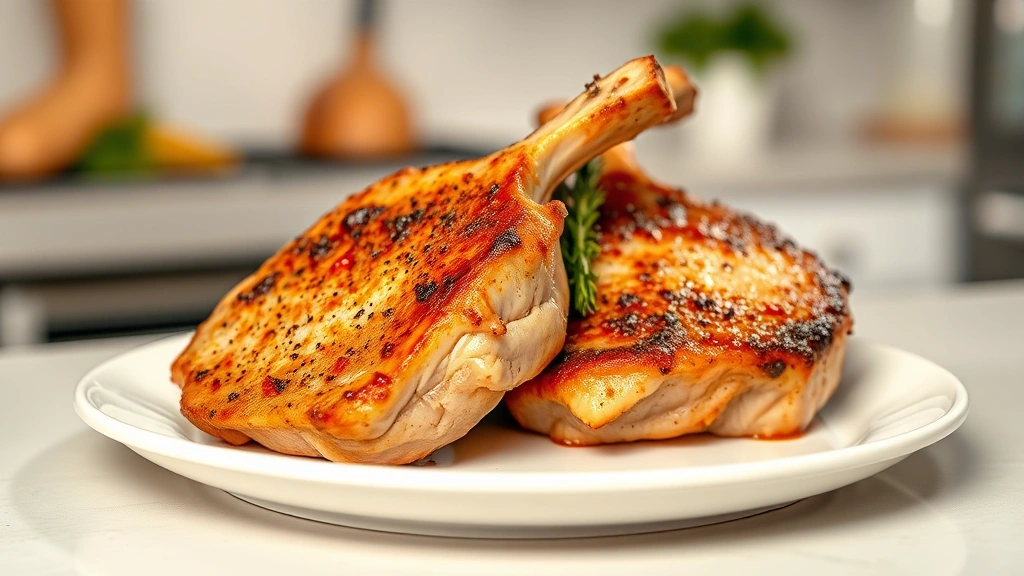
Learning how long to bake pork chops at 350 degrees is one of those kitchen skills that’ll change your weeknight dinner game forever. Get this right, and you’re looking at juicy, tender chops every single time—no dry, rubbery disasters. The answer? Most pork chops bake perfectly in 15-20 minutes at 350°F, depending on thickness. But there’s a lot more to nail down if you want restaurant-quality results at home.
Table of Contents
Thickness Matters Most
Here’s the thing nobody tells you: pork chop thickness is the real boss of baking time. A thin chop (under half an inch) will cook faster than a thick one, and that’s where most home cooks mess up. You’re not just throwing meat on a sheet pan and hoping—you need to understand what you’re working with.
Thin chops (½ inch or less) need about 12-15 minutes at 350°F. Medium chops (¾ to 1 inch) take 15-20 minutes. Thick chops (1¼ inches or more) might need 20-25 minutes. The difference between a perfect chop and a dried-out hockey puck is literally just a few minutes, so get a meat thermometer. That’s non-negotiable if you want consistent results.
Basic Timing Guide
Let me give you the straightforward breakdown. At 350°F, you’re looking at these general timeframes:
½-inch chops: 12-15 minutes
¾-inch chops: 15-18 minutes
1-inch chops: 18-22 minutes
1¼-inch chops: 22-25 minutes
These times assume you’re baking bone-in chops. Boneless chops cook slightly faster—knock off about 2-3 minutes. The bone actually acts as a heat conductor, which sounds backwards, but it helps the meat cook more evenly. Start checking for doneness at the lower end of the range. Better to check early than to overcook.
Internal Temperature Check
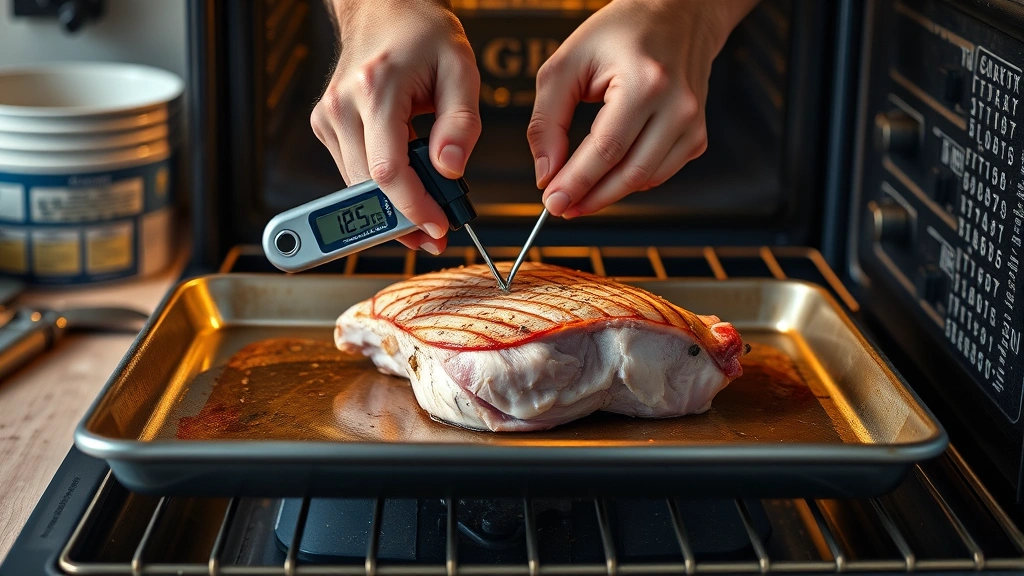
Forget about guessing or cutting into the meat to peek. A meat thermometer is your best friend here. The USDA says pork is safe to eat at 145°F internal temperature, and that’s where you want to land. Insert the thermometer into the thickest part of the chop, away from bone if there is one.
Here’s a pro move: pull the chops out when they hit 143°F. They’ll coast up to 145°F while resting, and you’ll avoid that overcooked, dry texture that ruins pork. The carryover cooking is real, and it works in your favor if you plan for it. This technique takes the guesswork out of how long to bake pork chops at 350 and gives you perfect results every time.
Prep Techniques That Work
Before those chops hit the oven, you’ve got some decisions to make. Pat them dry with paper towels—moisture is the enemy of browning. If you want a golden crust (and you do), you need them dry. Let them sit at room temperature for about 15 minutes before baking. Cold meat bakes unevenly.
Pound them lightly if they’re uneven in thickness. You want them relatively uniform so they cook at the same rate. Use a meat mallet and a plastic bag to avoid splatter. This step takes two minutes and eliminates the problem of one end being done while the other’s still raw.
Consider a quick sear on the stovetop before baking. Heat a cast iron or stainless steel skillet over medium-high heat, sear the chops for 2 minutes per side, then transfer to the oven. This builds a flavorful crust and reduces your total baking time by a few minutes. It’s not required, but it’s the move that separates good from great.
Seasoning Strategy
Don’t undersell the seasoning. Salt and pepper are the foundation, but that’s not where it ends. Season both sides generously about 30 minutes before baking—the salt has time to penetrate the meat and improve texture. Kosher salt is better than table salt because the crystals dissolve more evenly.
Garlic powder, paprika, and dried thyme are your workhorses. Fresh rosemary on top of the chops while they bake adds serious flavor. If you’re feeling fancy, make a quick herb butter (softened butter mixed with minced garlic, fresh parsley, and lemon zest) and dollop it on the hot chops straight from the oven. It melts into the meat and elevates everything.
Don’t add acidic ingredients like vinegar or lemon juice before baking—they’ll make the meat tough. Save those for a finishing squeeze after cooking.
Oven Setup Tips
Position your oven rack in the middle—not too high, not too low. High heat spots near the top can brown the chops unevenly. Line your baking sheet with foil or parchment for easy cleanup, then arrange the chops in a single layer without crowding. They need air circulation to cook evenly.
If you’re baking a full batch and they’re packed tight, they’ll steam instead of bake. Space them out with at least an inch between each chop. Use a rimmed baking sheet, not a flat cookie sheet, so any juices stay on the pan instead of dripping into your oven.
Preheat your oven for at least 15 minutes before the chops go in. A properly preheated oven means more consistent cooking. This is especially important at 350°F—it’s a moderate temperature, so precision matters.
Resting Period Matters
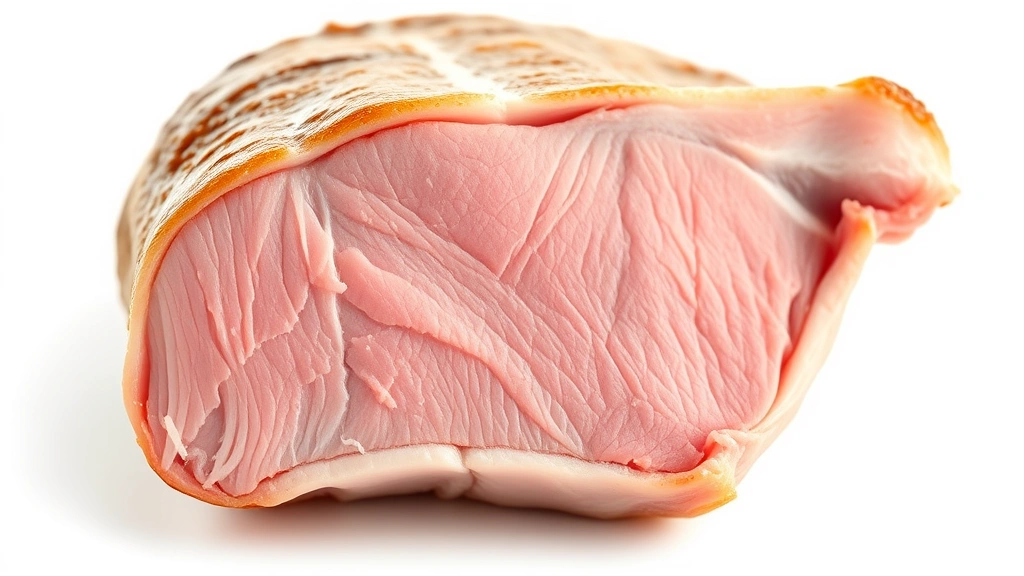
This is where most people blow it. When the chops hit 143°F internally, pull them out and let them rest on a warm plate for 5 minutes. Don’t skip this step. The muscle fibers relax, the juices redistribute, and when you cut into the meat, it stays moist instead of running all over the plate.
Tent them loosely with foil to keep them warm during rest. This isn’t a long rest like you’d do with a big roast, but those five minutes make a measurable difference in texture and juiciness. It’s the difference between a good chop and a great one.
Common Mistakes to Avoid
The biggest mistake is baking at too high a temperature. People think 400°F or 425°F will speed things up, but all it does is dry out the outside while the inside stays undercooked. Stick with 350°F—it’s the sweet spot for even, gentle cooking.
Second mistake: not using a thermometer. You’re flying blind without one. Eyeballing doneness doesn’t work for pork, and overcooked chops are genuinely inedible. A $15 instant-read thermometer pays for itself on the first batch.
Third mistake: cooking straight from the fridge. Cold meat bakes unevenly. Room temperature chops cook consistently. It takes 15 minutes, and it matters.
Fourth mistake: opening the oven door constantly. Every time you peek, you drop the internal temperature and extend cooking time. Resist the urge. Trust the timer and use your thermometer at the appropriate time.
Pairing With Perfect Sides
Baked pork chops pair beautifully with roasted vegetables. While the chops are baking, you can throw root vegetables on a separate rack. Check out our guide on how long to steam green beans for a lighter side option that cooks quickly on the stovetop.
A creamy sauce elevates the whole dish. Pan sauces made from the drippings are classic—deglaze the baking sheet with chicken broth, add a splash of cream or mustard, and you’ve got restaurant-quality sauce in minutes. Serve with mashed potatoes, rice, or roasted apples for a complete meal.
For something more involved, check out our best Dutch oven recipes for braised pork options that cook alongside your chops. Or if you’re planning a bigger spread, our authentic jambalaya recipe makes a fantastic one-pot meal that pork chops complement perfectly.
Frequently Asked Questions
Can I bake pork chops at a different temperature?
Yes, but 350°F is the sweet spot. At 375°F, reduce time by 2-3 minutes. At 325°F, add 3-5 minutes. The key is using a thermometer to hit 145°F internal temperature, not relying on time alone.
How do I know if my pork chops are done?
Use a meat thermometer. Insert it into the thickest part, away from bone. 145°F is the target. If you don’t have a thermometer, the meat should be white or pale pink with no gray areas, and juices should run clear.
Should I cover the chops while baking?
No. Covering them steams the meat instead of baking it. You want dry heat. If the edges are browning too fast, tent loosely with foil just over the top, leaving the sides exposed.
Can I bake frozen pork chops?
Not recommended. Thaw them first for even cooking. Frozen chops will take significantly longer and cook unevenly. Thaw in the fridge overnight, or use the cold water method (sealed bag in cold water for 1-2 hours).
Why are my pork chops always dry?
You’re overcooking them. Pull them at 143°F, not 150°F or higher. Also, thinner chops dry out faster—go for chops at least ¾ inch thick. And don’t skip the resting period.
Can I marinate pork chops before baking?
Absolutely. Marinate for 2-4 hours in the fridge. Pat them dry before baking, and remember that oil-based marinades reduce browning slightly. Account for this by extending baking time by 1-2 minutes if needed.
What’s the difference between bone-in and boneless?
Bone-in chops cook slightly slower and more evenly because the bone conducts heat. They also have more flavor. Boneless chops cook 2-3 minutes faster. Both are delicious—it’s personal preference.
Can I batch cook pork chops for meal prep?
Yes. Bake them the same way, let them cool, and store in an airtight container for up to 4 days. Reheat gently in a 300°F oven to avoid drying them out further.
Final Thoughts
Mastering how long to bake pork chops at 350 is genuinely simple once you understand the fundamentals: thickness determines time, a thermometer removes doubt, and resting is non-negotiable. Start with medium-thick chops (¾ to 1 inch), bake at 350°F for 15-20 minutes, pull at 143°F internal temperature, and rest for 5 minutes. That’s the formula that works every single time.
The beauty of this method is consistency. Once you’ve done it twice, you’ll never have a dry pork chop again. You’ll be the person at dinner who knows exactly how to cook meat properly, and that’s a skill that impresses people. Build on this foundation with different seasonings, sauces, and sides—our Boston butt recipe and other pork dishes show you where to go next once you’ve mastered the basics.
For more inspiration on what to serve alongside your perfectly baked chops, explore our collection of crescent roll dessert recipes for a complete meal experience. And if you’re looking to expand your cooking repertoire beyond pork, these same temperature and timing principles apply to chicken and other proteins.


