
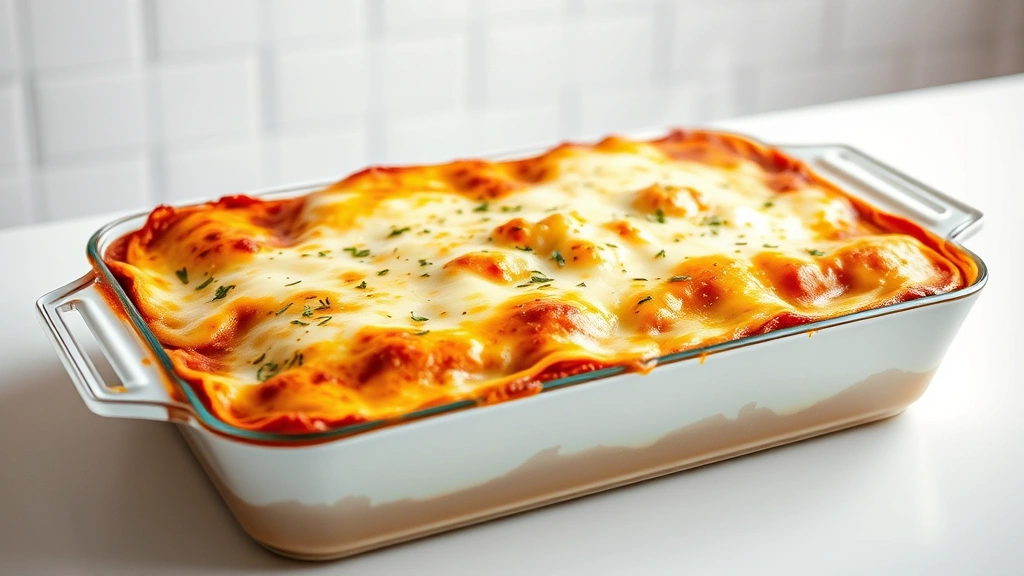
The question how long to bake lasagna trips up more home cooks than you’d think. Get it right, and you’ve got bubbling, perfectly set layers. Get it wrong, and you’re staring at either a soupy mess or a dried-out brick. I’ve been there—standing in front of the oven at 9 PM wondering if I should give it another 15 minutes or call it done. After years of trial and error, I’ve cracked the code on nailing lasagna baking time every single time.
Table of Contents
Standard Baking Time
Here’s the baseline: most lasagna recipes call for 30 to 40 minutes at 375°F (190°C) when you’re baking a traditional meat or vegetable lasagna from scratch. That’s your sweet spot for a standard 9×13-inch pan with about 6-8 layers. But—and this is important—that timing assumes your lasagna went into the oven at room temperature or just slightly chilled.
I always shoot for the 35-40 minute range because it gives me a safety margin. The first 20 minutes do most of the heavy lifting, getting the noodles tender and the sauce hot all the way through. The final 15-20 minutes is where the magic happens: the cheese on top gets that golden-brown crust, the edges bubble up, and everything sets properly so it doesn’t collapse when you cut into it.
Oven Temperature Matters
Temperature is where most people go sideways. Your oven temperature directly controls how fast the lasagna cooks and how evenly it bakes. The standard is 375°F, but I’ve seen recipes ranging from 350°F to 425°F, and there’s a reason for that variation.
At 350°F, you’re looking at 45-50 minutes. This is the slower, gentler approach. Use this if you’re worried about the top browning too fast before the middle cooks through, or if you’re dealing with a really thick, heavily-filled lasagna.
At 375°F, you hit that 35-40 minute window. This is my go-to because it’s the Goldilocks zone—fast enough to get everything cooked through without excessive browning, but hot enough to develop that nice cheese crust.
At 400°F or higher, you’re down to 25-30 minutes. Only use this if you’re in a hurry and you keep a close eye on it. The risk here is a burnt top with an undercooked center.
Before you start, always preheat your oven for at least 15 minutes. A cold oven throws off all your timing calculations.
Covered vs Uncovered Baking
This decision changes your baking time significantly. Here’s the deal: covering your lasagna with foil traps steam, which keeps the top from browning but helps the middle cook more evenly. Uncovered baking lets moisture escape, which gives you that crispy, golden cheese top but risks drying things out.
My method: cover for the first 25 minutes, then uncover for the final 10-15 minutes. This gives you the best of both worlds. The foil keeps everything moist and cooking evenly during the initial phase, then you remove it to let the cheese brown and get some color going.
If you’re baking covered the entire time, add 5-10 minutes to your total time. If you’re going fully uncovered from the start, watch it carefully after 30 minutes because it can brown too fast on top while staying undercooked in the middle. You can also tent it loosely with foil if the top is browning too quickly.
Frozen Lasagna Timing
Frozen lasagna is a different beast entirely. Don’t thaw it first—bake it straight from frozen. This prevents the noodles from getting mushy and helps everything cook more evenly. Add 50% to your baking time. So if your recipe calls for 35 minutes fresh, you’re looking at roughly 50-55 minutes from frozen.
Use the same temperature (375°F), but definitely keep it covered with foil for the first 30-35 minutes. The moisture trapped under the foil is crucial when you’re starting from a frozen block. Check it at the 45-minute mark. You want to see the edges bubbling and the center hot all the way through. If the top isn’t browning enough by minute 50, uncover it for the final 5-10 minutes.
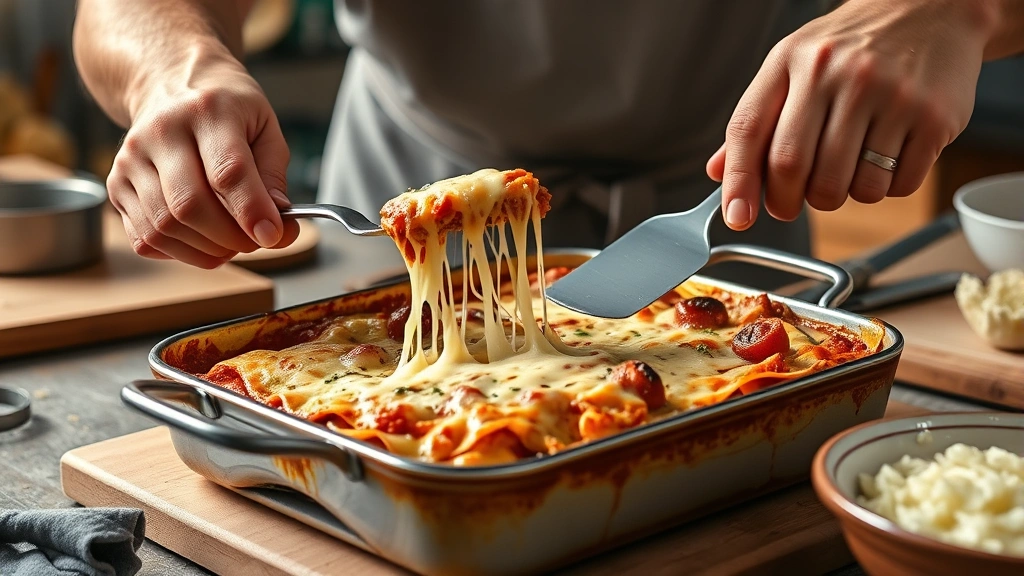
Store-bought frozen lasagnas usually have specific instructions on the box, and I follow those to the letter because they’ve tested their product. Homemade frozen lasagna I treat with the 50% time addition rule, and it’s never steered me wrong.
Signs It’s Actually Done
Forget just watching the clock. Real doneness has telltale signs you can actually see and feel. First, look at the edges. The sauce should be bubbling up around the perimeter, not just simmering. That’s a good indicator the heat has penetrated all the way to the center.
Second, check the top. The cheese should be melted and slightly golden, not pale. If it’s still white and barely warm-looking, it needs more time. If it’s dark brown or starting to char, you’ve gone too far.
Third—and this is my favorite trick—use a thin knife or skewer. Stick it straight down through the center of the lasagna and hold it there for 5 seconds, then touch it to your inner wrist (like you’re checking a baby’s bottle temperature). If it’s hot, the center is cooked through. If it’s warm but not hot, give it another 5-10 minutes.
Finally, the noodles should be tender but not falling apart. Cut a small piece from the edge and taste it. The pasta should have some slight resistance but not be crunchy or hard.
The Resting Period
Here’s what separates a good lasagna from a great one: you have to let it rest. Remove it from the oven and let it sit, uncovered, for 10-15 minutes before cutting into it. This isn’t just waiting around—it’s essential.
During this resting period, the cheese sets up, the sauce thickens slightly, and the whole thing firms up enough to slice cleanly. If you cut into it immediately, you’ll get a soupy, runny mess that falls apart on the plate. I learned this the hard way at a dinner party. Wait those 10-15 minutes, and your slices will hold their shape beautifully.
Keep it in a warm place during this rest, but don’t cover it. You want the steam to escape so the top stays crispy instead of getting soggy.
Common Timing Mistakes
Let me walk you through the mistakes I see most often. First mistake: not preheating the oven. You start the timer the moment the lasagna goes in, but the oven hasn’t reached temperature yet. This adds 10-15 minutes to your actual cooking time without you realizing it. Always preheat.
Second mistake: opening the oven door constantly. Every time you open that door, you drop the temperature 25-50 degrees. If you’re opening it every 5 minutes to check, you’re extending your baking time significantly. Resist the urge. Check it once around the 30-minute mark, then maybe once more at 35 minutes.
Third mistake: making the lasagna too thick. If you’re piling in 8-10 layers with tons of filling, you’re going to need 45-50 minutes minimum. Standard thickness (6-8 layers) is easier to time accurately.
Fourth mistake: using a cold pan straight from the fridge. If your assembled lasagna has been sitting in the fridge, add 5-10 minutes to your baking time. Cold pans take longer to heat through.

Fifth mistake: not using an oven thermometer. Most home ovens are off by 25-50 degrees. If your oven runs cool, everything takes longer. If it runs hot, things cook faster. A $10 oven thermometer solves this problem permanently.
Altitude Adjustments
If you live at high altitude (above 3,000 feet), water boils at a lower temperature, which affects cooking times. Your lasagna will take longer to cook because the heat transfer is less efficient. Increase your baking time by 15% and lower your oven temperature by 25°F.
So at high altitude, I’d bake at 350°F instead of 375°F, and add about 5-10 minutes to the total time. The sauce also tends to dry out faster at altitude, so you might need to add a little extra liquid to your sauce before assembling.
Frequently Asked Questions
Can I bake lasagna at a lower temperature for longer?
Yes, absolutely. You can bake at 325°F for 60-75 minutes if you want a slower, more gentle cook. This is great if you’re worried about the top burning. Just keep it covered with foil the entire time, or at least for the first 45 minutes.
What if the top is browning too fast?
Tent it loosely with foil. Don’t seal it tight—just lay a piece of foil over the top so heat still reaches it but the direct oven heat is blocked. This slows down the browning while the interior continues cooking.
Is it better to bake lasagna covered or uncovered?
Covered for most of the time, uncovered at the end. I do 25 minutes covered, then 10-15 minutes uncovered. This prevents drying while still getting that nice golden top.
How do I know if my lasagna is undercooked?
The noodles will be hard or crunchy, the sauce won’t be hot all the way through, and the cheese will be pale or not fully melted. Use the knife test: if it comes out cold or lukewarm, it needs more time.
Can I make lasagna the day before and bake it?
Yes, and it’s actually better. Assemble it, cover it, refrigerate overnight, then bake it straight from the fridge, adding 10-15 minutes to your baking time. The flavors meld overnight, and the noodles absorb sauce more evenly.
Why is my lasagna watery?
Usually because the sauce is too thin, or you haven’t let it rest long enough after baking. Make sure your sauce has simmered for at least 20-30 minutes to reduce. Also, drain any excess liquid from ricotta before using it.
Should I cover lasagna while it rests?
No. Let it rest uncovered so steam escapes and the top stays crispy. Covering it during the rest makes the top soggy.
What’s the difference between baking and broiling lasagna?
Never broil lasagna from the start. Broil uses direct, intense heat from above, which burns the top before the inside cooks. You can use the broiler for the last 2-3 minutes if you need extra browning, but only after the lasagna is mostly cooked.


