
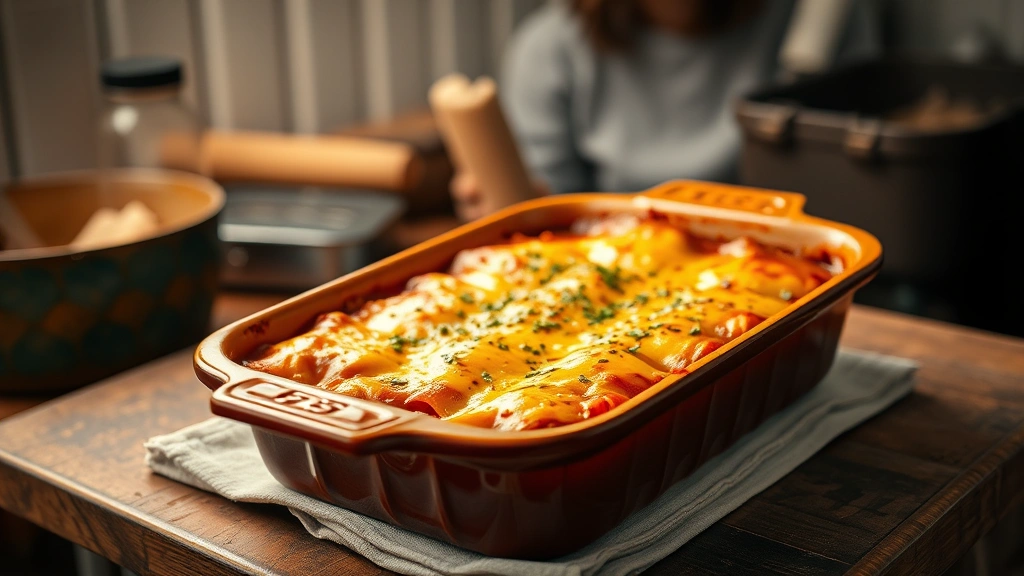
If you’re wondering how long to bake enchiladas, the answer depends on whether they’re frozen, fresh, or made ahead—but most homemade enchiladas need 25-30 minutes at 350°F to reach that perfect bubbly, golden-topped finish. I’ve made enough enchiladas to know that timing is everything: bake them too short and the filling stays cold, too long and the tortillas dry out. Let me walk you through exactly what you need to know to nail it every single time.
Table of Contents
Standard Baking Time
The baseline for most homemade enchiladas is straightforward: 25-30 minutes at 350°F. This works for chicken, beef, cheese, or veggie enchiladas that you’ve just assembled. The key is that your oven needs to be preheated—don’t skip this step. Cold ovens throw off your timing by 5-10 minutes, and that matters when you’re working with delicate tortillas and sauces.
I usually start checking at the 20-minute mark. Look for the sauce to start bubbling around the edges of the baking dish. That’s your first real sign something’s happening. By minute 25, you should see consistent bubbling and the cheese on top (if you’ve got it) starting to brown lightly.
Temperature Matters Most
Here’s where people mess up: they crank the oven to 400°F thinking they’ll speed things up. Don’t. Lower temperature, longer time is your friend with enchiladas. At 350°F, the heat penetrates evenly and the filling warms through without the tortillas becoming brittle.
If your oven runs hot (and many do), you might need to knock it down to 325°F and add 5-10 minutes. Every oven is different. Mine runs about 25 degrees hot, so I’ve learned to adjust. Use an oven thermometer if you’re serious about consistency. It’s one of those tools that pays for itself in perfect results.
Frozen vs Fresh Enchiladas
Frozen enchiladas are a different beast entirely. If you’ve made them ahead and frozen them solid, you’re looking at 40-50 minutes at 350°F, or you can thaw them overnight in the fridge and bake for 30-35 minutes. Don’t bake frozen enchiladas covered with foil the whole time—that traps steam and makes tortillas soggy. Cover for the first 25 minutes, then uncover for the last 15-20 to let the top brown.
Fresh enchiladas (made that day) need less time because the filling and tortillas are already at room temperature. The sauce also heats faster when everything’s warm to begin with. This is why assembly-to-oven timing matters—if you’re assembling cold ingredients straight from the fridge, add 5 minutes to your bake time.
Cheese Coverage Impact
The amount of cheese on top affects baking time more than people realize. A heavy cheese topping (like a full cup of shredded cheddar) insulates the filling and slows heat transfer. You might need an extra 5 minutes. A light cheese layer or no cheese on top? You’re looking at the shorter end of the 25-30 minute window.
If you’re making easy Mexican street corn as a side dish, you can coordinate timing—start the corn in the last 15 minutes while enchiladas finish. For a complete meal, pair enchiladas with charro beans that you’ve already prepared, or steam broccoli on the stovetop while everything bakes.
Visual Doneness Signs
Forget guessing. Here’s what done looks like: the sauce bubbles vigorously around all edges of the baking dish, not just one corner. The cheese (if you’ve got it) has melted completely and shows light golden-brown spots. The tortillas look slightly darker at the edges where they’ve absorbed sauce.
If you peek and see pale sauce that’s barely warm, you need more time. If the cheese is dark brown and starting to look crusty, you’ve gone too far. The sweet spot is bubbling sauce with light golden cheese. That’s your target every time.
Assembly to Oven Flow
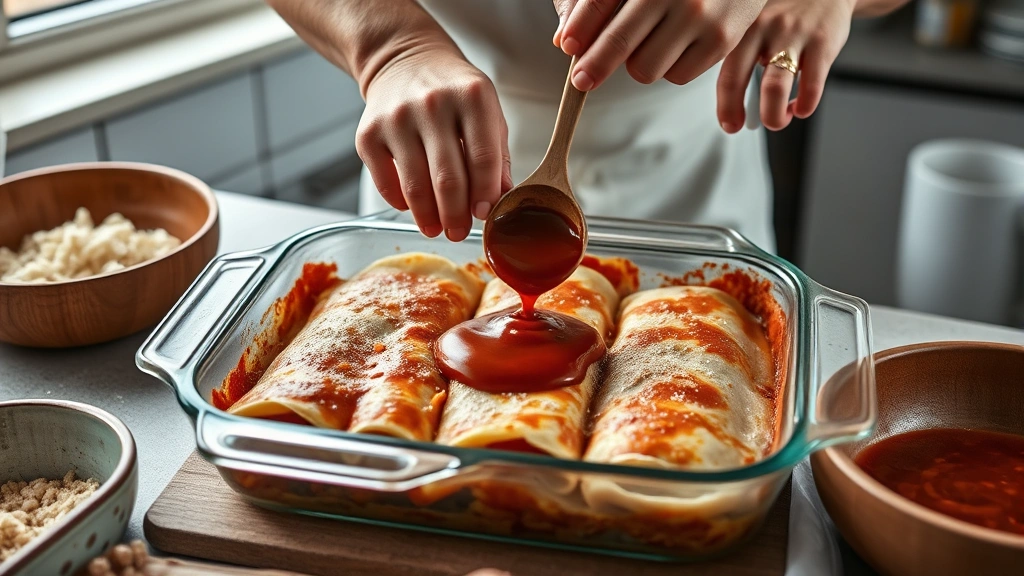
The speed between assembly and oven matters. If you’re assembling cold enchiladas straight from the fridge—cold tortillas, cold filling, cold sauce—they’ll need the full 30-35 minutes. If you’ve warmed your sauce on the stove (which I recommend), you can shave off 2-3 minutes.
Here’s my workflow: warm the sauce while preheating the oven, assemble everything, then straight into the oven. No sitting around. This consistency means I can rely on 27 minutes every single time. Build your own routine and stick with it.
Resting Period Explained
After they come out of the oven, let them rest for 5 minutes. Seriously. This isn’t optional. The residual heat continues cooking the filling slightly, and the sauce thickens up a bit. If you cut into them immediately, everything runs everywhere. Five minutes of rest makes them hold together better when plated.
Use this time to finish any sides. Plate up that chipotle salsa recipe you made, grab some sour cream, set the table. By the time you’re ready, the enchiladas are perfect to serve.
Make-Ahead Strategy
Make-ahead is where enchiladas shine. Assemble them completely, cover with plastic wrap, and refrigerate up to 24 hours. When you’re ready to bake, add 5-10 minutes to your bake time since they’ll be cold. This is my go-to move for entertaining—everything’s ready, I just pop them in the oven.
You can also assemble, bake, then reheat. Bake as normal, cool completely, cover, and refrigerate. To reheat, cover with foil and bake at 325°F for 20-25 minutes until heated through. The advantage here is you can prep days ahead and just reheat when needed.
Troubleshooting Common Issues
Soggy tortillas? You’re either using too much sauce or covering them too long during baking. Use just enough sauce to coat—about 1.5 to 2 cups for a 9×13 dish. Uncover halfway through baking to let moisture escape.
Cold filling after baking? You didn’t bake long enough, or your oven temperature is off. Use that thermometer. Also, warm your filling ingredients before assembling—cold filling takes longer to heat through.
Burnt cheese, raw filling? Your oven’s too hot. Lower it 25 degrees and add time. Or cover with foil for the first 20 minutes, then uncover for the last 10-15.
If you’re using an electric skillet instead of an oven (yes, people do this), you’ll need to adjust completely—that’s a different technique altogether and requires lower heat for longer time.
Pro Tips for Perfect Results
Use a 9×13 inch baking dish—it’s the standard for a reason. Smaller dishes mean tighter stacking and longer bake times. Larger dishes spread them out and they bake faster. Glass dishes heat differently than metal, too. Glass tends to brown the bottom more, so you might need to place a baking sheet underneath to prevent over-browning.
Always preheat your oven for a full 15 minutes. I know it seems like overkill, but it makes a real difference. The oven interior needs to stabilize at temperature, not just the dial. Use an oven thermometer to verify—many ovens are off by 25-50 degrees.
Frequently Asked Questions
How long do frozen enchiladas take to bake?
Frozen enchiladas need 40-50 minutes at 350°F without thawing. Cover with foil for the first 25 minutes, then uncover to allow browning. If you thaw them overnight in the fridge first, reduce time to 30-35 minutes. Always check that the filling is hot throughout before serving.
Can I bake enchiladas at 375°F instead of 350°F?
You can, but reduce time to 20-25 minutes and watch carefully. Higher heat cooks the outside faster than the inside, risking burnt cheese and cold filling. 350°F is the sweet spot because it allows even heat penetration. If your oven runs hot, stick with 350°F and add a few minutes rather than increasing temperature.
What if my enchiladas aren’t bubbling after 25 minutes?
Give them another 5 minutes. If they’re still not bubbling, your oven temperature might be low. Check with a thermometer. Also consider whether your filling was cold when assembled—cold ingredients need the full 30-35 minutes. Don’t rush it; undercooked filling is worse than slightly overcooked cheese.
Should enchiladas be covered while baking?
Not the whole time. If you cover them completely, they steam and tortillas get soggy. Cover with foil for the first 15-20 minutes if your sauce is thin or if you want to prevent the top from browning too fast. Uncover for the last 10-15 minutes to allow browning and moisture to escape. For frozen enchiladas, cover for 25 minutes, then uncover.
How do I know when enchiladas are done?
Look for sauce bubbling vigorously around all edges of the baking dish, not just one side. The cheese (if used) should be melted and light golden brown. The tortillas will look slightly darker where they’ve absorbed sauce. The filling should be hot throughout—use a meat thermometer in the center if you’re unsure. It should read 165°F for food safety.
Can I partially cook enchiladas and finish later?
Not recommended. Partial cooking can leave dangerous bacteria alive. Either bake them completely, cool and refrigerate, then reheat fully—or assemble and refrigerate unbaked, then bake fully when ready. Don’t do partial bakes and expect safe results.


