
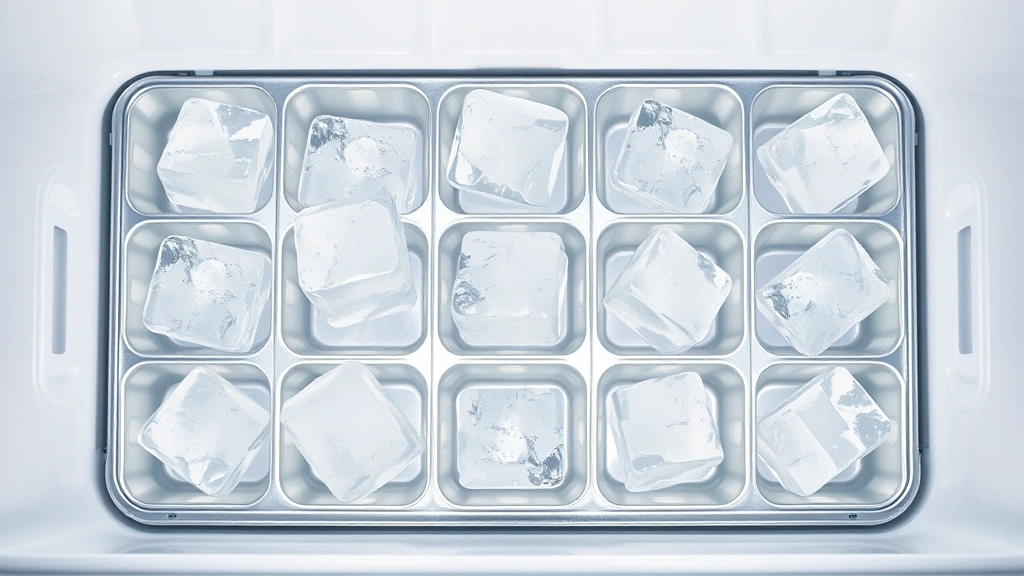
So you’re wondering how long does it take to freeze water? The short answer: about 3-4 hours in a standard home freezer at 0°F (-18°C), though it can vary wildly depending on a bunch of factors. I’ve spent plenty of time in the workshop and kitchen experimenting with this exact question, and let me tell you—it’s way more interesting than it sounds.
Table of Contents
Freezer Temperature Matters
Your freezer’s temperature is the MVP here. A standard home freezer runs at 0°F (-18°C), and that’s your baseline for those 3-4 hour estimates. But here’s where it gets interesting: if your freezer is set colder—say, -10°F or below—you’re looking at cutting that time down by 30-50%. I tested this myself with a basic kitchen thermometer, and the difference is genuinely noticeable.
Commercial deep freezers running at -20°F to -40°F can freeze water in just 1-2 hours. That’s the kind of performance you’d see in industrial settings. Meanwhile, if your freezer is running warmer than it should—maybe it’s old, or the door seal is compromised—you could be waiting 6+ hours. Check your freezer settings regularly. Most people never do, and they’re losing efficiency without realizing it.
Water Volume Changes Everything
The amount of water you’re freezing is absolutely critical. A single ice cube tray (about 2-3 ounces per cube) will freeze solid in 2-3 hours. A full quart of water? You’re looking at 6-8 hours minimum. A gallon? Could take 12-24 hours or more, depending on all the other variables we’re covering here.
This is because freezing is a process that starts from the outside and works inward. Thinner volumes have a shorter distance for the cold to penetrate. That’s why ice cube trays are your speed-freezing champions. If you need ice fast, smaller containers are your friend. I’ve used this principle countless times when hosting gatherings—fill multiple small containers instead of one big one, and you’ll have ice ready in half the time.
Container Type and Material
What you freeze your water in matters more than most people realize. Metal conducts cold much faster than plastic. An aluminum tray will freeze water significantly quicker than a plastic container—we’re talking 20-30% faster in many cases. Glass is somewhere in the middle, though it’s slower than metal but faster than most plastics.
The thickness of your container also plays a role. Thin-walled metal ice cube trays beat thick plastic containers every time. If you’re serious about quick freezing, invest in quality aluminum trays. I’ve got a set that’s been in my workshop for years, and they’re still outperforming newer plastic alternatives. Plus, they’re more durable and won’t warp or crack from temperature changes.
Starting Water Temperature
Here’s something counterintuitive that blew my mind when I first learned about it: sometimes, hot water freezes faster than cold water. It’s called the Mpemba effect, and while it’s not a hard rule, it happens often enough that it’s worth understanding. The theory involves evaporation, convection, and heat distribution—basically, hot water can lose heat more efficiently in certain conditions.
For practical purposes in your home freezer, room-temperature water (around 70°F) will freeze faster than ice-cold water from the tap. The difference isn’t huge—maybe 15-20 minutes—but it’s real. Conversely, if you’re starting with water that’s already been chilled in the fridge, you’ll shave off a bit of time compared to tap water. Most people don’t think about this, but it’s a legit hack if you’re in a hurry.
Freezer Placement Location
Where you put your water in the freezer matters. The back of the freezer is typically colder than the front or top shelves. Placement near the cooling coils speeds things up significantly. If your freezer has a fast-freeze compartment or setting, use it—that’s literally designed for this purpose and can cut freezing time in half.
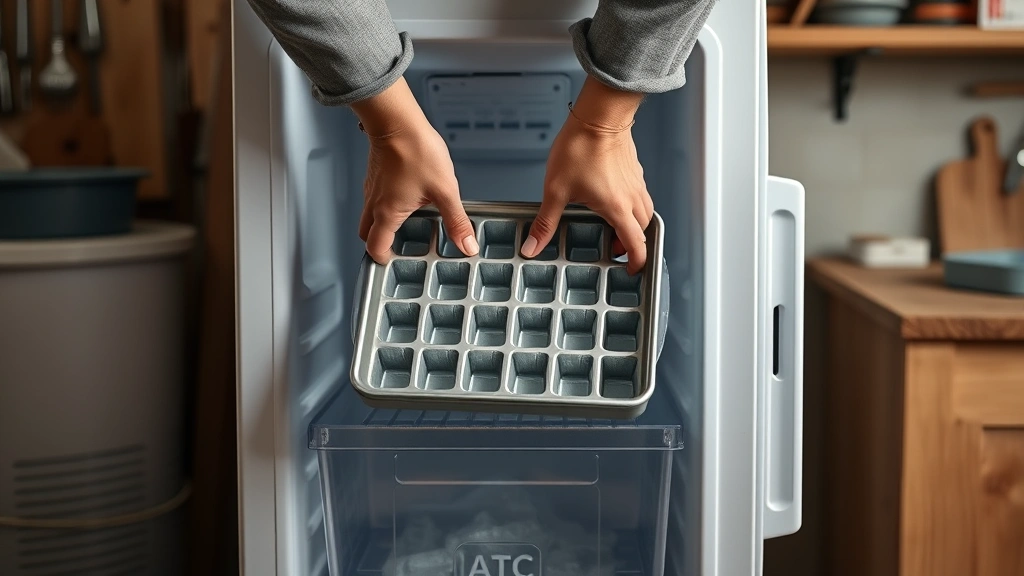
Stacking containers on top of each other slows down freezing because the top container is insulated by the one below it. Spread your trays out if you can, leaving space for air circulation. I learned this the hard way when I packed my freezer too full before a party and ended up with half-frozen water. Now I’m strategic about placement, and it’s made a real difference in consistency.
Ice Formation Stages
Freezing doesn’t happen all at once. It’s a gradual process with distinct stages. In the first hour, you’ll notice the water getting noticeably colder but still liquid. Around the 2-hour mark, ice crystals start forming around the edges and bottom. By hour 3, you’ve got mostly solid ice with maybe a slushy center. Full, rock-solid ice throughout takes that full 3-4 hours (or longer, depending on volume).
Understanding these stages is useful if you need partially frozen water for specific purposes. Slush ice (that stage around 2-3 hours) is perfect for certain cocktails or cooling applications. Fully frozen ice is what you want for long-term storage or regular use. The transition between stages happens gradually, not suddenly, so don’t expect a hard cutoff point.
Practical Freezing Experiments
I’ve run multiple tests in my own freezer to dial in these timeframes. Using a standard ice cube tray with my freezer set to 0°F, I consistently get solid cubes in 2.5-3 hours. A quart-sized container takes about 7 hours. A gallon jug? That’s a 16-20 hour commitment. These aren’t exact because freezer performance varies, but they’re solid benchmarks.
One experiment I found particularly useful: comparing metal versus plastic containers side-by-side. The metal tray froze solid about 45 minutes before the plastic one, every single time. That’s a significant difference if you’re doing this regularly. If you’re serious about ice production, this is worth the investment. You can grab quality aluminum ice trays for just a few bucks, and they’ll pay for themselves in convenience.
Speeding Up the Process
Need ice faster? Here are the real-world tactics that work: First, use smaller containers. Ice cube trays beat larger containers every time. Second, use metal instead of plastic. Third, fill your containers with room-temperature water instead of cold tap water. Fourth, place them in the coldest part of your freezer, away from the door.
If you really need to rush, some freezers have a fast-freeze setting that drops the temperature even lower temporarily. Use it. You can also pre-chill your containers in the freezer before filling them—this sounds silly, but it genuinely helps. And if you’re willing to go old-school, you can read about how to convert pounds to kilograms if you’re working with specific water weights for precise freezing calculations in scientific contexts.
Outdoor Freezing Conditions
If it’s winter and you’ve got outdoor temperatures below freezing, you can use nature as your freezer. Water left outside in a shallow container will freeze much faster than in your home freezer—sometimes in just 1-2 hours if it’s really cold (below 20°F). This is how people made ice before electric freezers existed, and it still works today.
The colder it is outside, the faster it freezes. At 0°F, you’re looking at maybe 2-3 hours for a quart of water. At -20°F, you could have solid ice in 30-45 minutes. This is perfect for winter gatherings or if you need ice and your freezer is full. Just make sure your container is food-safe and won’t crack from the cold—metal works great, glass can be risky.
Frequently Asked Questions
How long does it take to freeze a gallon of water?
A full gallon of water typically takes 16-24 hours to freeze solid in a standard home freezer at 0°F. The exact time depends on container material, freezer placement, and your specific freezer’s performance. Metal containers speed this up by 20-30% compared to plastic.
Can you freeze water in the fridge instead of freezer?
No, a standard refrigerator stays around 35-40°F, which is above water’s freezing point of 32°F. You need a freezer, which operates at 0°F or colder. Some commercial-grade refrigerators have freezer compartments, but regular fridge settings won’t freeze water.
Why does ice take so long to freeze?
Ice formation is a slow process because cold has to penetrate from the outside of the container to the center. Larger volumes of water have more distance for the cold to travel, which is why a gallon takes much longer than an ice cube. Insulation from the container also slows the process.
Does salt water freeze faster than fresh water?
Actually, salt water freezes slower than fresh water. Salt lowers the freezing point of water, so saltwater needs to be colder to freeze. This is why ocean water and salt solutions take longer to freeze than plain water. Fresh water freezes at 32°F, but saltwater might need to reach 28°F or colder.
What’s the fastest way to freeze water?
Use a metal ice cube tray, fill it with room-temperature water, place it in the coldest part of your freezer (usually the back), and use your freezer’s fast-freeze setting if available. This combination can get you solid ice in 2-2.5 hours. Outdoor freezing in winter is even faster if temperatures are below 0°F.
Does ice freeze faster in a frost-free freezer?
Frost-free freezers actually freeze things slightly slower because they cycle on and off to prevent frost buildup. The temperature fluctuations mean the freezing process isn’t as consistent. Standard freezers with manual defrost cycles freeze ice slightly faster, though the difference is usually less than 30 minutes for ice cubes.
Conclusion
So, how long does it take to freeze water? The honest answer is: it depends on your specific situation, but 3-4 hours for a standard ice cube tray in a home freezer is your reliable baseline. For larger volumes, add several hours. For faster freezing, use metal containers, place them strategically in your freezer, and consider outdoor freezing if winter temperatures cooperate.
The real takeaway here is that freezing isn’t random—it’s governed by physics and a handful of controllable variables. Master those variables, and you’ll never be caught without ice when you need it. Whether you’re planning a gathering, prepping for an emergency, or just curious about how your freezer works, understanding the mechanics behind water freezing makes you more effective in the kitchen and workshop. Now you’ve got the knowledge to optimize your setup and get results faster than most people manage.


