
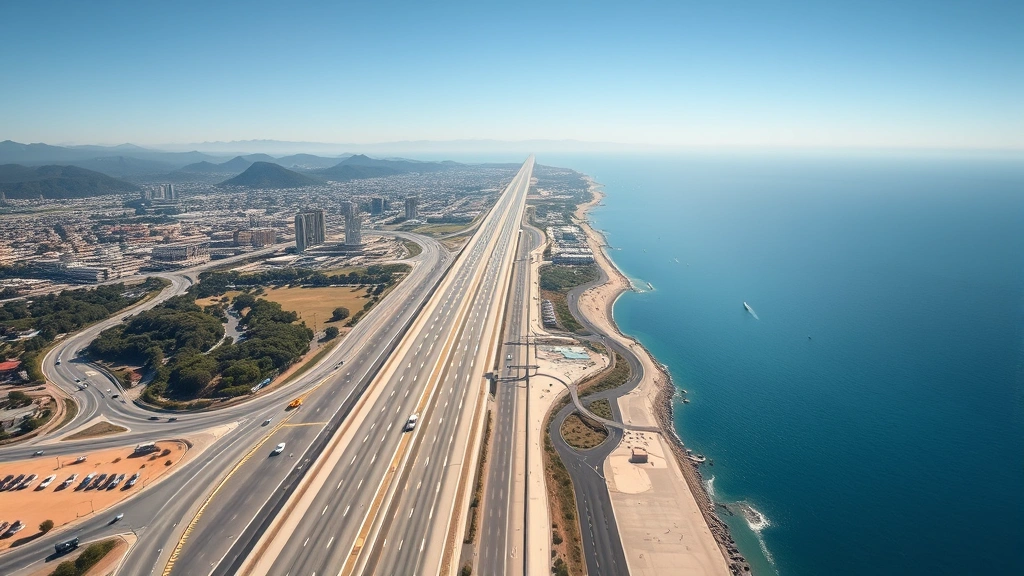
So you’re wondering how far is from Los Angeles to San Diego? The straight answer: it’s about 120 miles (193 kilometers) between these two Southern California powerhouses, and depending on traffic and your route, you’re looking at roughly 2.5 to 3.5 hours of driving time. But here’s the thing—this isn’t just a distance question. It’s about understanding your options, planning smart, and making the most of one of California’s best coastal road trips.
Table of Contents
Distance Breakdown
Let’s get specific about the distance between these two cities. The most direct route covers approximately 120 miles as the crow flies, but actual driving distances vary based on which roads you take. The I-5 corridor, which is the fastest route, measures about 127 miles from downtown Los Angeles to downtown San Diego. If you’re taking the scenic PCH (Pacific Coast Highway) route, you’re looking at closer to 160-170 miles depending on your exact starting and ending points.
The key thing to understand is that ‘distance’ in Southern California travel isn’t just about miles—it’s about real-world driving time. You could technically cover 120 miles in two hours on an open highway, but LA to San Diego traffic is a whole different beast. Most people experience travel times between 2.5 and 4 hours depending on when they travel and which route they choose.
Driving Routes Explained
You’ve got three main routes to consider, and each one tells a different story about the journey itself. The I-5 is your fastest option, taking you straight down the spine of Southern California. It’s direct, it’s efficient, and it’s also the most trafficked. This is the route most commuters take, and during rush hours (7-10 AM and 3-7 PM), you’ll feel every bit of that congestion.
The I-405 to I-5 route adds some distance but can sometimes be faster during peak traffic times, especially if you’re starting from the Westside of LA. It’s a bit of a gamble depending on the day and time. Then there’s the Pacific Coast Highway (CA-1), which is the scenic route. Yes, it takes longer—significantly longer—but you’re getting ocean views, coastal towns, and the kind of drive that makes the journey part of the vacation. This route takes you through places like Laguna Beach and Carlsbad, which are worth the extra time if you’re not in a rush.
Travel Time Factors
Here’s what actually determines how long your trip takes, and it’s not just the distance. Time of day matters enormously. Leave LA at 6 AM on a weekday, and you might make it to San Diego in 2 hours 45 minutes. Leave at 8 AM, and you’re looking at 3.5+ hours. Friday afternoons? Forget about it—plan on 4+ hours.
Weather plays a role too, though it’s less dramatic in Southern California than other regions. Fog along the coast can slow the PCH route, and rare rain events can increase travel time across all routes. Vehicle condition matters—a well-maintained car with good tires handles the drive better than one that’s struggling. And your own driving style factors in: aggressive lane-changing and speeding might save you 10-15 minutes, but it’s not worth the stress or safety risk.
Construction is another variable. Southern California highways are perpetually under some form of maintenance or improvement. Check current conditions before you leave, and consider using Google Maps or Waze for real-time traffic updates. These apps are genuinely useful for picking your route based on actual current conditions rather than historical averages.
Public Transportation Options
Not everyone wants to drive, and that’s completely valid. The Amtrak Pacific Surfliner is a fantastic option if you’ve got time. The train takes about 3 hours for the journey, but you’re not dealing with traffic, you can walk around, grab food, and actually enjoy the scenery without concentrating on the road. It’s more expensive than driving (around $30-60 depending on when you book), but when you factor in gas, wear and tear, and the stress of LA traffic, it’s competitive.
Greyhound and other bus services offer cheaper options, though they take longer because of multiple stops. The journey can stretch to 4-5 hours depending on the service. Rideshare services like Uber and Lyft are options too, but expect to pay $100-150+ for a one-way trip, which makes them less practical for regular travel.
Best Stops Along the Way
If you’re taking the I-5 and want to break up the drive, Irvine is roughly halfway and has everything you need for a quick break. If you’re feeling the PCH vibe, Laguna Beach is absolutely worth a 30-minute stop—grab coffee, walk around the galleries, stretch your legs. Carlsbad is another gem on the coastal route, famous for the Legoland California Resort and beautiful beaches.
San Clemente has a great pier and some solid restaurants if you want a more substantial break. Crystal Cove State Park is perfect if you want to actually get out and walk on the beach for 20-30 minutes. These stops transform the drive from a chore into an actual experience. You’re not just covering distance; you’re exploring the region.
Cost Comparison Methods
Let’s talk money because it matters. Driving your own car costs roughly $0.67 per mile in gas and wear-and-tear (according to AAA standards). For a 127-mile trip, that’s about $85 one way. If you’re driving a fuel-efficient hybrid, you might cut that to $60. Add parking in San Diego ($10-20 typically), and you’re looking at $70-105 per trip.
The Amtrak Pacific Surfliner costs $30-60 depending on how far in advance you book. That’s significantly cheaper if you’re traveling alone. If you’re bringing passengers, the math changes—four people splitting gas costs becomes very reasonable compared to four individual train tickets. Rideshare options run $100-150+ and really only make sense if you’re traveling with multiple passengers and splitting the cost.
Traffic Patterns Guide
Understanding Southern California traffic patterns is like understanding weather patterns—it’s predictable but requires knowledge. Weekday mornings (7-10 AM) heading south toward San Diego are typically moderate to heavy. Afternoons (1-3 PM) are usually your best window for smooth driving. Late afternoon (3-7 PM) gets progressively worse as people leave work.
Weekends are generally better than weekdays, but Saturday mornings heading to San Diego can get busy with beach traffic. Sunday afternoons heading back north can be surprisingly heavy. If you absolutely need to avoid traffic, aim for off-peak times: early morning (before 6 AM), mid-afternoon (2-3 PM on weekdays), or late evening (after 8 PM).
The I-5 corridor through Orange County (between LA and San Diego) is the critical bottleneck. This is where most delays happen. The PCH route avoids this but takes longer overall. Waze is genuinely helpful here because it can route you around major incidents in real-time.
Planning Your Trip Right
Start by checking current traffic conditions on Google Maps or Waze 15 minutes before you leave. This single step can save you 20-30 minutes by helping you pick the optimal route for that exact moment. If you’re traveling during peak hours, leave earlier than you think you need to—the stress of rushing isn’t worth shaving 10 minutes off your trip.
Make sure your vehicle is in good condition before a long drive. Check tire pressure, oil level, and coolant. Southern California heat can be brutal on older vehicles. Pack water, snacks, and a phone charger. If you’re taking the scenic route, download some podcasts or audiobooks—they make the drive infinitely more enjoyable.
Consider tolls on certain routes. Some express lanes on the I-405 and I-5 offer faster travel during peak hours but cost $1.50-$6.00 depending on congestion. For some people, paying for express lanes is worth the time savings and stress reduction.
If you’re making this trip regularly, seriously consider the train or bus options. Your stress levels and overall quality of life improve when you’re not sitting in traffic. Plus, you can work, read, or sleep instead of concentrating on driving.
Frequently Asked Questions
What’s the absolute fastest time to drive from LA to San Diego?
Under perfect conditions—empty roads, no construction, optimal weather—you could theoretically make it in 1 hour 45 minutes to 2 hours. In real-world Southern California, the fastest you’ll realistically see is about 2 hours 15 minutes, usually on early Sunday mornings or very late at night. Most people experience 2.5 to 3.5 hours.
Is the Pacific Coast Highway worth the extra time?
Absolutely, if you’re not in a rush. The extra 30-45 minutes gets you ocean views, coastal towns, and a genuinely memorable drive. If you’re just trying to get from point A to point B, stick with I-5. If you’re actually taking a trip, the PCH is worth it.
Can I make this drive in one day as a round trip?
Yes, but it’s brutal. You’re looking at 5-7 hours of driving plus time in San Diego. You’d need to leave very early, spend just a few hours in San Diego, and head back. It’s doable for a beach day or quick meeting, but it’s exhausting. Consider staying overnight if possible.
What’s the best time to travel between these cities?
Early morning (before 6 AM) or mid-afternoon (1-3 PM) on weekdays offer the smoothest traffic. Weekends are generally better than weekdays. Avoid Friday afternoons and Sunday evenings entirely if you can.
Are there rest stops along the I-5?
Yes, several. The most notable is the San Clemente Rest Area, which is roughly halfway. There are also numerous service stations and small towns along the route where you can stop for food, fuel, and restrooms.
How much does gas cost for this trip?
Expect to spend $15-25 in gas depending on your vehicle’s fuel efficiency and current gas prices. A fuel-efficient car might cost $12-15, while an SUV could be $25-35. Add this to your overall trip cost calculation.
Is tolling worth it on express lanes?
During peak hours (3-7 PM weekdays), express lanes can save 20-30 minutes and reduce stress significantly. The cost ($3-6 depending on congestion) might be worth it if you’re traveling during these times. For off-peak travel, it’s unnecessary.


