
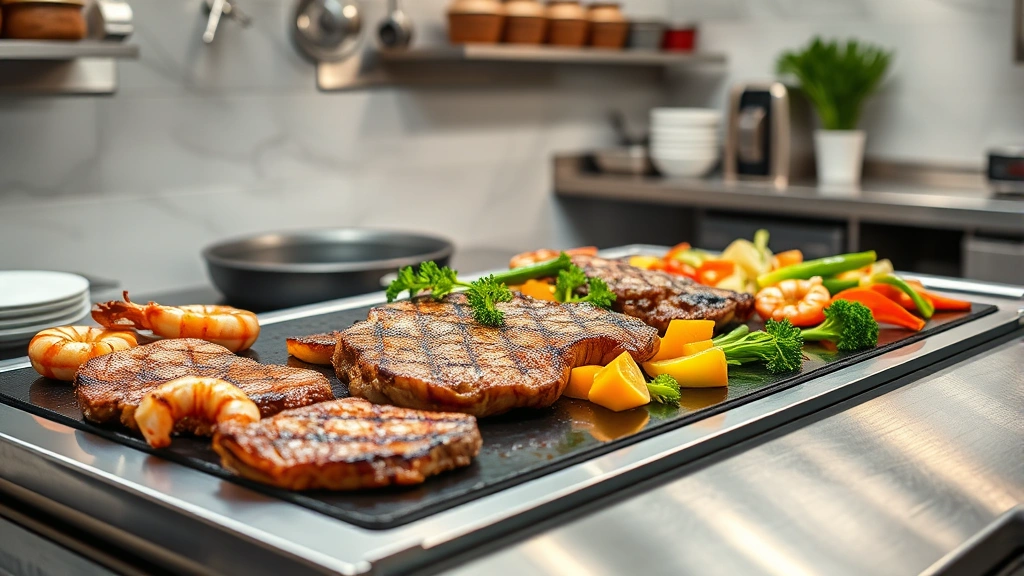
Learning hibachi recipes transforms your backyard into a teppanyaki restaurant, where you’re both chef and entertainer. Whether you’re cooking for family or impressing guests, mastering the griddle takes technique, confidence, and the right approach. This guide walks you through everything you need to know to cook like a pro.
Table of Contents
Set Up Your Station
Before firing up your hibachi, get your workspace organized. Restaurant chefs call this mise en place—everything in its place. Arrange your ingredients in small bowls within arm’s reach of the griddle, organized by cooking order. Keep your proteins separate from vegetables to prevent cross-contamination and maintain food safety.
Position your tools strategically: two metal spatulas (one in each hand for flipping and chopping), a squeeze bottle for oil, and a damp towel for cleaning between sections. Your seasoning station should include salt, pepper, garlic powder, and your favorite BBQ sauce recipe variations. Temperature control matters more than anything else—ensure your griddle surface is completely clean and dry before heating.
Prep Ingredients Like a Pro
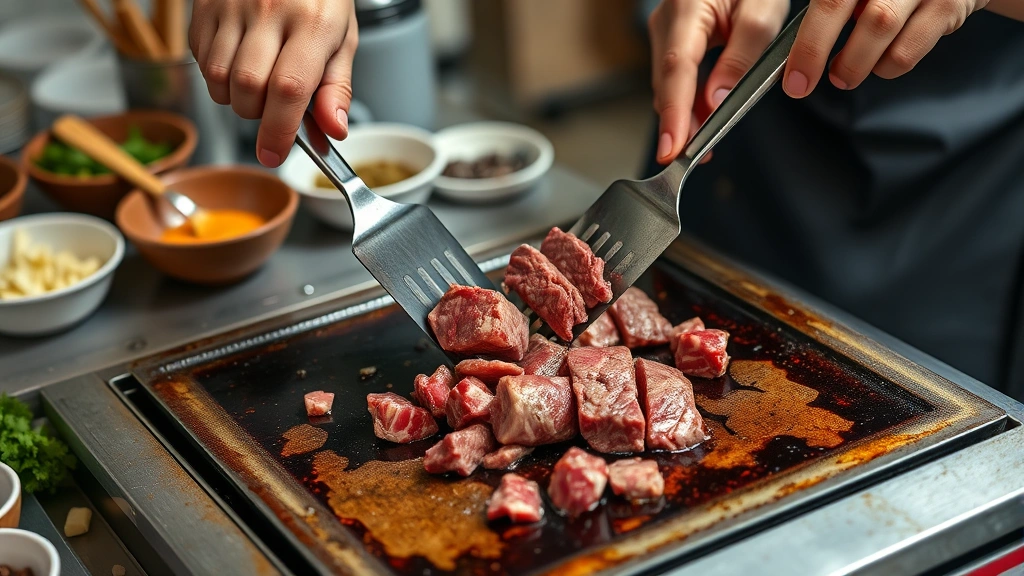
The difference between amateur and professional hibachi cooking starts with prep work. Cut proteins uniformly—typically ¼-inch thick slices for beef, slightly thicker for chicken to prevent drying out. Vegetables should be cut consistently so they cook at the same rate. Onions work best cut into thick rings or chunks, mushrooms sliced lengthwise, and zucchini into half-moons.
Pat all proteins dry with paper towels before cooking. Moisture is the enemy of a good sear and prevents that restaurant-quality crust. For carnivore recipes enthusiasts, quality matters—use prime or choice beef cuts rather than lower grades. Marinate proteins for 30 minutes to 2 hours if time allows, but even unseasoned meat cooks beautifully with proper technique.
Master Heat Control
Heat management separates good hibachi cooks from great ones. Start with medium-high heat (around 375-400°F) for initial searing, then adjust based on what you’re cooking. Proteins need aggressive heat initially to develop that caramelized crust, while vegetables prefer medium heat to cook through without burning.
Use the water droplet test: sprinkle water on the griddle to check temperature. If it sizzles and evaporates immediately, you’re ready. If it pools, heat more. Once you add food, resist the urge to constantly flip. Let proteins sit for 2-3 minutes per side to develop color. The griddle’s residual heat finishes cooking the interior while the surface caramelizes.
Classic Hibachi Recipes
The foundation of hibachi cooking relies on a few classic combinations that work every time. The traditional hibachi trio combines steak, shrimp, and chicken—each cooked in separate zones of your griddle. Start proteins on high heat, sear both sides, then push to a cooler zone while vegetables cook in the center.
Fried rice is the signature side dish. Use day-old rice (fresh rice gets mushy), create a well in the center of the griddle, scramble eggs in it, then incorporate the rice and vegetables. Toss constantly for 3-4 minutes until everything’s heated through and slightly crispy. Season with soy sauce, butter, and white pepper. For best fall recipes, incorporate seasonal vegetables like butternut squash and Brussels sprouts into your hibachi rotation.
Protein Cooking Guide
Different proteins require different approaches on the hibachi. Beef cooks fastest—1-2 minutes per side for medium-rare on high heat. Filet mignon and New York strip are ideal cuts; avoid overly fatty cuts that splatter excessively. Shrimp cook in under a minute per side; overcooking makes them rubbery and tough.
Chicken requires more patience. Cut into uniform pieces about ½-inch thick, start on medium-high heat, and cook 3-4 minutes per side depending on thickness. Use a meat thermometer if you’re unsure—165°F is your target. Scallops deserve gentle heat (medium) for 2 minutes per side to maintain their delicate texture. Always let cooked proteins rest briefly before serving; this redistributes juices throughout the meat.
Vegetable Techniques
Vegetables are where hibachi really shines. Onions develop incredible sweetness when cooked slowly on medium heat for 8-10 minutes, stirring occasionally. They caramelize beautifully and provide textural contrast. Mushrooms need similar treatment—medium heat, 6-8 minutes, stirred frequently to avoid sticking.
Zucchini and broccoli cook faster—4-5 minutes on medium-high heat. Asparagus is best cooked standing upright at the cooler edge of the griddle for even cooking. Garlic and ginger should be minced fine and added near the end to prevent burning. Butter added at the finish enhances everything. Consider incorporating budae jjigae recipe influences by mixing Asian vegetables like bok choy and snap peas into your hibachi repertoire.
Sauce and Seasoning Secrets
Restaurant hibachi relies heavily on seasoning and sauce to create depth. Yum yum sauce (a creamy, slightly spicy condiment) is the classic choice—a simple blend of mayo, ketchup, paprika, garlic powder, and hot sauce. Make it fresh before cooking; it keeps refrigerated for a week.
Salt and white pepper are your primary griddle seasonings—apply liberally throughout cooking, not just at the end. Garlic powder adds umami depth without burning like fresh garlic. Butter is essential; add it frequently throughout cooking to enhance flavors and prevent sticking. Some cooks swear by MSG (monosodium glutamate) for authentic restaurant taste, though it’s entirely optional. Soy sauce should be added sparingly at the end to prevent over-saltiness.
Common Mistakes to Avoid
Overcrowding the griddle is the most common error—it drops temperature and steams food instead of searing it. Work in batches if necessary; quality beats quantity. Don’t skip the griddle cleaning between proteins, especially when moving from raw to cooked items. Cross-contamination ruins both flavor and safety.
Flipping too frequently prevents proper browning. Resist the urge to constantly move food around. Overcooking proteins is another killer—use a thermometer and trust it. Underseasoning happens when cooks apply salt only at the end; season throughout cooking for better flavor development. Finally, don’t neglect your oil—a light coating prevents sticking and aids browning, but too much creates a greasy mess.
Frequently Asked Questions
What type of hibachi griddle works best for home cooking?
Flat-top griddles ranging from 24-36 inches work well for home hibachi. Look for models with independent heat zones, stainless steel cooking surfaces, and built-in grease management. Portable tabletop models work for smaller gatherings, while permanent installations suit frequent entertainers. Gas provides more even heat than electric, though both work fine with proper technique.
Can I use a regular grill instead of a hibachi griddle?
Not really. Grills have grates that allow food to fall through, while hibachi’s flat surface lets you chop and manipulate food directly on the cooking surface. The griddle’s design is essential to the cooking method. You could use a flat-top griddle on a regular grill, but a dedicated hibachi griddle is worth the investment.
How do I prevent food from sticking to the griddle?
Proper griddle seasoning is key—clean it well after each use and apply a light oil coating while warm. When cooking, ensure the surface is hot before adding food; this creates a natural non-stick surface. Use butter and oil liberally throughout cooking. A well-maintained griddle rarely sticks.
What’s the best way to season a new hibachi griddle?
Clean it thoroughly with warm soapy water and dry completely. Heat it to medium-high temperature, then apply a light coat of high-smoke-point oil (vegetable or canola). Let it cool, then wipe away excess oil. Repeat this process 3-4 times before first use. This creates a protective seasoning layer.
Can I prepare hibachi food in advance?
Absolutely. Prep all ingredients the day before—cut proteins and vegetables, make sauces, and store in airtight containers. The actual cooking happens quickly, usually 15-20 minutes from start to finish. This advance prep is what makes hibachi perfect for entertaining; you’re ready to cook the moment guests arrive.
What oil should I use for hibachi cooking?
High-smoke-point oils work best: vegetable oil, canola oil, or refined peanut oil. Avoid olive oil and butter for the initial high-heat cooking, though butter is perfect for finishing touches. Refined peanut oil adds subtle flavor while handling heat exceptionally well, making it many chefs’ first choice.
Master Your Hibachi Skills
Becoming proficient at hibachi recipes requires practice, but the fundamentals are straightforward: proper prep, heat control, and confidence. Start with simple combinations—steak and vegetables, shrimp and fried rice—before experimenting with more complex recipes. Your first attempts won’t match restaurant quality, but each cook improves your technique and builds muscle memory.
The beauty of hibachi cooking is the entertainment factor. Your guests watch the process unfold, which builds anticipation and makes the meal special. Invest in a quality griddle, gather your tools, prep your ingredients, and start cooking. Within a few sessions, you’ll develop the timing and intuition that separates amateur cooks from true hibachi masters. The griddle awaits—fire it up and start creating restaurant-quality meals at home.


