

Making a gluten free pizza dough recipe at home doesn’t mean sacrificing taste or texture—it just means knowing the right tricks. I’ve spent years tinkering with flour blends, hydration ratios, and fermentation times to crack the code on pizza dough that actually works without wheat. The result? A crispy-on-the-outside, chewy-on-the-inside crust that rivals traditional pizza, ready in about 30 minutes flat.
Table of Contents
- Why Gluten-Free Pizza Matters
- Essential Ingredients Breakdown
- Flour Blend Selection
- Step-by-Step Mixing Process
- Resting and Fermentation
- Shaping & Stretching Techniques
- Baking Temperature & Timing
- Troubleshooting Common Issues
- Pro Tips for Texture Tricks
- Storage & Make-Ahead Options
- Frequently Asked Questions
Why Gluten-Free Pizza Matters
Whether you have celiac disease, non-celiac gluten sensitivity, or simply want to explore different grains, gluten-free pizza dough deserves a spot in your rotation. The challenge with traditional wheat flour is that gluten creates elasticity and structure. Without it, you’re working with different physics. But here’s the thing—gluten-free doesn’t mean flavorless or crumbly. It means adapting your approach.
The market’s pre-made gluten-free crusts often taste like cardboard, which is exactly why homemade is the way to go. You control every variable: hydration, binders, fermentation time, and flavor development. A proper gluten free pizza dough recipe relies on understanding how starches and proteins interact without gluten’s help.
Essential Ingredients Breakdown
You’ll need just seven core ingredients for this recipe:
- Gluten-free flour blend: 2 cups (I’ll explain which blend below)
- Warm water: 1.25 cups (110°F)
- Instant yeast: 1.5 teaspoons
- Salt: 1.5 teaspoons
- Olive oil: 2 tablespoons
- Xanthan gum: 1 teaspoon (if your blend doesn’t contain it)
- Honey or sugar: 1 tablespoon (feeds yeast)
That’s it. No weird additives or chemical binders if you choose your flour blend wisely. The xanthan gum is your secret weapon—it mimics gluten’s binding properties without the protein. If you’re using a commercial blend like Bob’s Red Mill or King Arthur, check the label; many already include xanthan gum, so you won’t need to add more.
Flour Blend Selection
This is where most people stumble. A single gluten-free flour won’t work. You need a blend that combines starches and proteins for structure and flavor. My go-to is a mix of:
- Brown rice flour: 1 cup (provides structure)
- Tapioca starch: 0.75 cups (creates chewiness)
- Potato starch: 0.25 cups (adds lightness)
Alternatively, grab a quality pre-made blend. King Arthur Gluten-Free Measure for Measure and Bob’s Red Mill 1-to-1 both perform well. The advantage of pre-made blends is consistency—they’re engineered to behave predictably. Just verify they include xanthan gum on the ingredient list.
Avoid using only almond flour or coconut flour; these are too dense for pizza dough and will create a gritty, heavy crust. Stick with starches and rice-based flours as your foundation. For more inspiration on flour-based recipes, check out this Amish Cinnamon Bread Recipe which also navigates flour alternatives creatively.
Step-by-Step Mixing Process
Minute 1-2: Activate the Yeast
Pour your warm water into a bowl and add honey and yeast. Let it sit for 2 minutes. You should see foam forming on top—that’s your yeast waking up. If nothing happens, your yeast is dead; start over with fresh yeast.
Minute 3-5: Combine Dry Ingredients
In a separate bowl, whisk together your gluten-free flour blend, salt, and xanthan gum (if not already in the blend). Whisking is important—it aerates the flour and distributes the xanthan gum evenly. This prevents clumping later.
Minute 6-8: Merge and Mix
Pour the yeast mixture into the dry ingredients. Add olive oil. Mix with a wooden spoon or electric mixer on low speed for about 2 minutes. The dough will be wetter than traditional wheat dough—this is normal. Gluten-free dough needs higher hydration to develop proper texture.
Keep mixing until you have a shaggy, cohesive mass with no dry flour visible. Don’t overmix; you’re not developing gluten (it doesn’t exist), so excessive mixing won’t help.
Resting and Fermentation
Transfer your dough to a lightly oiled bowl or onto parchment paper. Cover with a damp towel or plastic wrap. Let it rest for 10-15 minutes at room temperature. This autolyse period allows the flour to fully hydrate and the starches to begin absorbing water.
After the initial rest, you have two paths:
Quick Method (30 minutes total): Skip additional fermentation and move straight to shaping. You’ll still get decent flavor, but the crust will be less complex.
Better Method (1-2 hours): Let the dough bulk ferment in a warm spot (75-80°F). This develops flavor through yeast activity and creates a more open crumb structure. If your kitchen is cool, place the bowl in a proofing box, oven with the light on, or near a sunny window.
For comparison on fermentation techniques, this Bierocks Recipe uses similar yeast-based fermentation principles for achieving depth of flavor.
Shaping & Stretching Techniques
Here’s where gluten-free dough behaves differently. It won’t stretch and spring back like wheat dough. Instead, it’s more forgiving but also more fragile.
Method 1: Press and Stretch (Easiest)
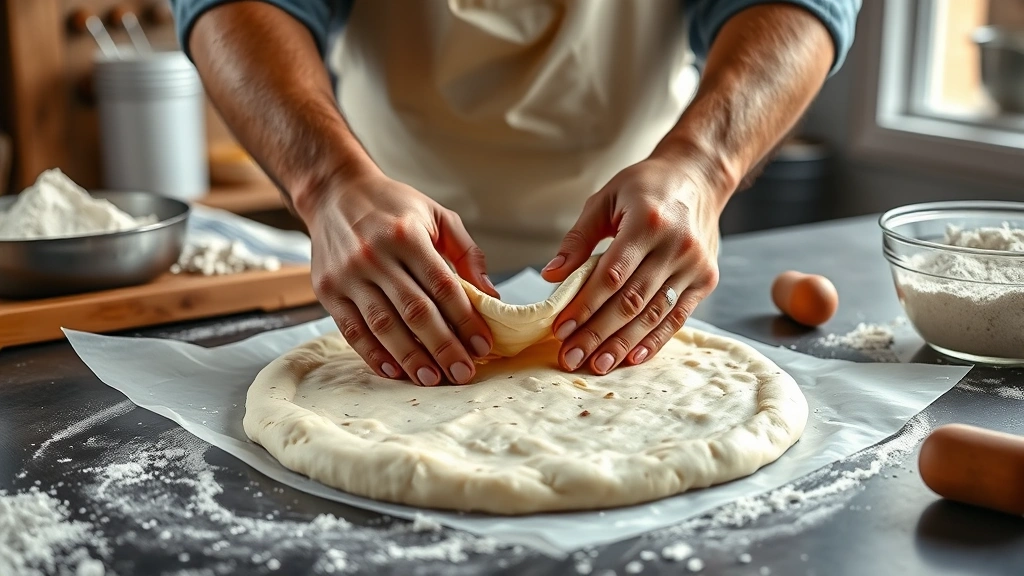
Place parchment paper on your work surface and lightly oil it. Gently press the dough into a rough circle with your fingertips, working from the center outward. Don’t be aggressive—let gravity and gentle pressure do the work. If the dough springs back, let it rest for 2 minutes and try again.
Method 2: Wet Hands Technique (My Preference)
Wet your hands with cool water (not oily—water prevents sticking better). Gently stretch the dough over your knuckles, rotating it slowly. The moisture on your hands prevents tearing. Work slowly and patiently. If a tear happens, pinch it closed; the dough is forgiving.
Target Thickness: Aim for 0.25 inches for a thicker, chewier crust, or 0.125 inches for a thinner, crispier version. Gluten-free dough won’t puff as much as wheat dough during baking, so thickness here matters more.
Baking Temperature & Timing
Preheat your oven to 450°F for 15 minutes. Gluten-free dough benefits from a hot oven because it sets quickly, preventing the crust from becoming dense.
Transfer to Oven: If you’ve shaped on parchment, simply slide the whole thing onto a preheated baking sheet or pizza stone. If using a stone, transfer carefully with a pizza peel or large spatula.
Pre-bake Option: For extra crispiness, pre-bake the crust for 5 minutes before adding toppings. This sets the structure and prevents a soggy bottom.
Bake with Toppings: Add sauce, cheese, and toppings, then bake for 12-15 minutes until the crust is golden and cheese is bubbly. Watch it carefully—gluten-free crusts can brown faster than you’d expect.
Total Oven Time: 17-20 minutes (5 minutes pre-bake + 12-15 minutes with toppings), or 12-15 minutes if skipping the pre-bake.
Troubleshooting Common Issues
Crust is too dense and heavy: Your hydration might be too low, or you’re not letting it ferment long enough. Try adding an extra tablespoon of water and extending bulk fermentation to 90 minutes.
Dough tears when stretching: Gluten-free dough is more delicate. Let it rest longer between stretches. Also, ensure your flour blend includes xanthan gum—without it, the dough lacks cohesion.
Crust is gummy or undercooked inside: Your oven might not be hot enough, or the crust is too thick. Increase oven temperature to 475°F and pre-bake for 7 minutes before topping.
Crust spreads too much and becomes thin: This suggests overfermentation or too much hydration. Reduce water by a tablespoon and shorten bulk fermentation to 45 minutes.
Bottom is burnt but top is undercooked: Move your oven rack higher and reduce temperature to 425°F. Use a baking sheet instead of a stone, which conducts heat too aggressively.
Pro Tips for Texture Tricks
Add Psyllium Husk: Replace 2 tablespoons of flour blend with psyllium husk powder. This adds fiber, improves elasticity, and creates a better crust structure. It’s a game-changer if you can find it.
Use Vital Wheat Gluten Alternative: If you want even more structure without actual gluten, try adding 1 tablespoon of egg white powder or gelatin powder to your dry ingredients. These proteins help bind.
Cold Fermentation: For deeper flavor, refrigerate the dough after shaping for 12-24 hours before baking. This slow fermentation develops more complex flavors and actually improves digestibility.
Steam in the Oven: Place a cast-iron skillet with water on the bottom rack while preheating. The steam helps the crust rise and creates a crispier exterior. Remove it after 8 minutes.
For another perspective on creating textures through careful preparation, this Beans and Greens Recipe demonstrates how technique transforms simple ingredients into something special.
Storage & Make-Ahead Options
Dough Storage (Refrigerator): After shaping, wrap the dough in plastic wrap and refrigerate for up to 3 days. This actually improves flavor through cold fermentation. Bake directly from the fridge; just add 3-5 minutes to baking time.
Dough Storage (Freezer): Freeze shaped dough on a baking sheet for 2 hours, then transfer to a freezer bag for up to 3 months. Thaw in the refrigerator overnight before baking, or bake directly from frozen and add 5-7 minutes to baking time.
Baked Crust Storage: Cool completely, wrap in foil, and refrigerate for up to 4 days. Reheat at 350°F for 8 minutes. You can also freeze baked crusts for up to 2 months.
Make-Ahead Dough Balls: After mixing, divide dough into portions, wrap individually, and refrigerate. This is perfect for weeknight pizza nights—just pull out a ball, let it come to room temperature for 20 minutes, and shape.
Frequently Asked Questions
Can I make this recipe without xanthan gum?
It’s not ideal, but you can substitute with 1 tablespoon of ground flaxseed mixed with 3 tablespoons of water (let it sit 5 minutes to gel). However, the texture won’t be quite as good. Better option: use a commercial gluten-free flour blend that already contains xanthan gum.
Why is my dough so sticky compared to regular pizza dough?
Gluten-free dough requires higher hydration to develop proper texture. The stickiness is normal and necessary. Wet your hands instead of flouring them when handling the dough.
Can I use all-purpose gluten-free flour from the store?
Yes, if it contains xanthan gum. King Arthur and Bob’s Red Mill both make good all-purpose blends. Avoid brands that don’t include a binder—they won’t work without modification.
How do I get a crispier crust?
Pre-bake for 5-7 minutes before adding toppings, use a pizza stone instead of a baking sheet, increase oven temperature to 475°F, and ensure the dough isn’t too thick. Thinner dough naturally becomes crispier.
Is this recipe safe for celiac disease?
Yes, as long as you use certified gluten-free flour and ensure all ingredients (especially yeast and salt) are certified gluten-free. Cross-contamination during preparation is the main concern—use clean utensils and surfaces.
Can I use sourdough starter instead of commercial yeast?
You can, but gluten-free sourdough is more temperamental. You’d need to use 0.5 cups of active starter and extend fermentation to 4-6 hours. It’s doable but requires experimentation.
What’s the difference between this recipe and store-bought gluten-free pizza crusts?
Homemade dough develops flavor through fermentation and uses simple ingredients. Store-bought crusts often contain preservatives, gums, and stabilizers that create a different (usually less desirable) texture. Homemade tastes fresher and more authentic.
Final Thoughts
Mastering a gluten free pizza dough recipe takes practice, but the payoff is worth it. Start with a quality flour blend, respect the fermentation process, and don’t be afraid to adjust hydration based on your specific flour and kitchen humidity. Your first batch might not be perfect—that’s fine. Each attempt teaches you something about how your ingredients behave.
The beauty of homemade pizza is that it’s forgiving. A slightly imperfect crust still tastes infinitely better than store-bought. Once you nail the basic technique, you can experiment with different flour blends, add herbs to the dough, or try cold fermentation for deeper flavor. For more inspiration on dough-based cooking, explore this Arroz Con Pollo Recipes which shares similar techniques for building layered flavors, and this Boston Butt Recipe which demonstrates how patience in preparation pays dividends in the final result.
Happy pizza making. Your gluten-free crust is waiting.


