
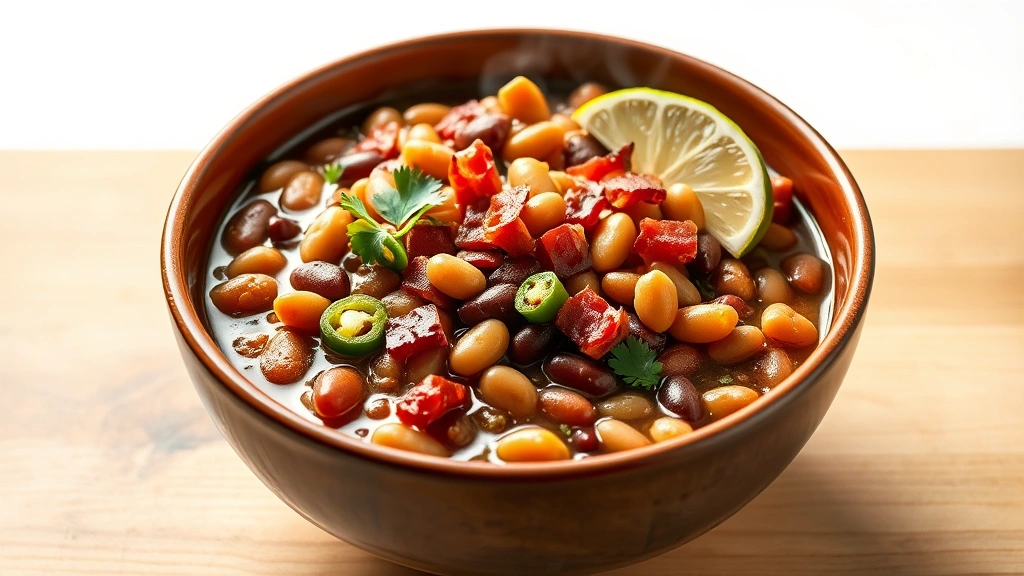
A charro beans recipe is your ticket to authentic Mexican comfort food that tastes like it simmered for hours but comes together in about 30 minutes. These smoky, savory beans loaded with bacon, jalapeños, and onions are the real deal—no shortcuts, no canned soup, just honest ingredients and simple technique.
Table of Contents
What Are Charro Beans?
Charro means “cowboy” in Spanish, and these beans live up to the name. They’re a Tex-Mex staple that brings together pinto beans with smoky bacon, fresh jalapeños, diced onions, and sometimes tomatoes or cilantro. The magic happens when you render that bacon fat and use it as your cooking base—that’s where the deep, savory backbone comes from.
Unlike refried beans or simple bean soups, charro beans stay whole and chunky. You’re looking at a rustic, hearty dish that pairs perfectly with grilled meats, rice, or as a side to your favorite Mexican meal. The beauty of this charro beans recipe is that it’s forgiving, flexible, and tastes better the longer it sits.
Ingredients You Need
Here’s what you’ll gather for a solid four-to-six serving batch:
- 6 slices bacon, diced
- 1 large white or yellow onion, diced
- 3-4 jalapeños, seeded and minced (leave seeds if you like heat)
- 3 cloves garlic, minced
- 2 cans (15 oz each) pinto beans, drained and rinsed (or 3 cups cooked dried beans)
- 1 cup beef or chicken broth
- 1 can (10 oz) diced tomatoes with green chiles (like Rotel)
- 1 teaspoon cumin
- ½ teaspoon chili powder
- Salt and black pepper to taste
- Fresh cilantro for garnish (optional)
- Lime wedges for serving
That’s it. No cream, no complicated spice blends, just straightforward ingredients that you probably already have on hand. If you’re serious about cooking and want to explore more Mexican flavors, check out our barbacoa recipe slow cooker guide for another authentic dish.
Prep Work Matters
Don’t skip the prep stage. Dice your bacon into small pieces—about ¼ inch—so it crisps up evenly and distributes flavor throughout. Cut your onion into a medium dice, similar in size to your bacon pieces so everything cooks at the same rate.
For the jalapeños, slice them in half lengthwise and scrape out the seeds with a small spoon. This gives you the flavor without turning your beans into a five-alarm fire. If you like serious heat, leave some seeds in. Mince everything finely so it blends into the beans rather than sitting in chunks.
Drain and rinse your canned beans thoroughly under cold water. This removes excess sodium and the starchy liquid that can make your beans mushy. If you’re using dried beans, cook them ahead until they’re tender but not falling apart—about 1.5 to 2 hours depending on the beans’ age.
Cooking the Beans
Start with a heavy-bottomed pot or Dutch oven over medium-high heat. Add your diced bacon and let it cook for about 5-7 minutes, stirring occasionally, until the edges are crispy and the fat has rendered. You want golden, crispy bacon pieces, not chewy ones.
Once the bacon is done, add your diced onion directly to the bacon fat. Don’t drain it—that rendered fat is liquid gold for flavor. Stir and cook for about 3-4 minutes until the onion softens and becomes translucent. You’ll notice it picking up those browned bacon bits stuck to the bottom of the pot.
Toss in your minced jalapeños and garlic, and cook for another 1-2 minutes until fragrant. This is where your kitchen starts smelling incredible. Add your cumin and chili powder, stir everything together, and let it toast for about 30 seconds. Don’t let the spices burn—you want toasted, not blackened.
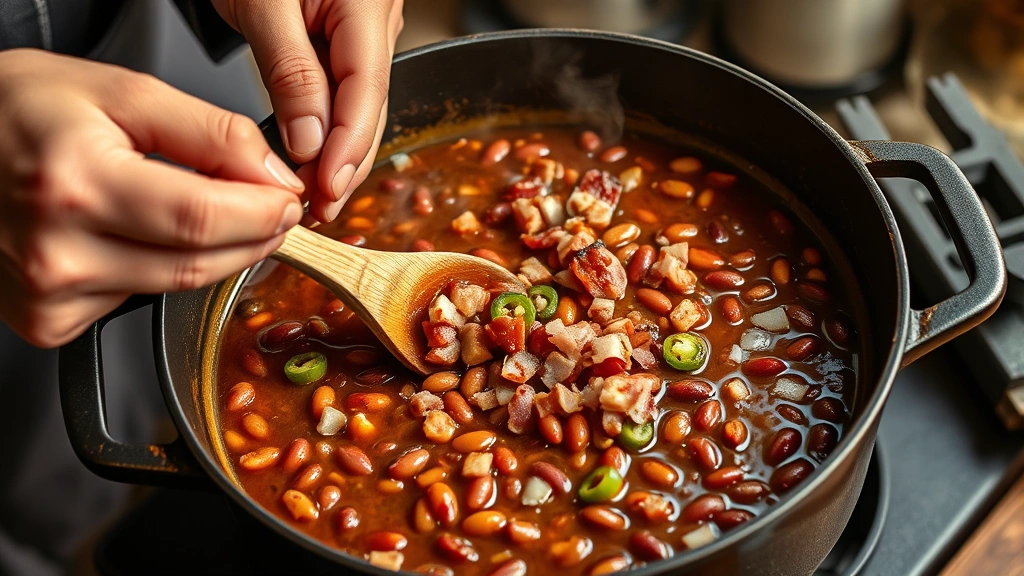
Pour in your broth and diced tomatoes with green chiles, scraping the bottom of the pot to release all those flavorful browned bits. Add your drained beans and stir well. Bring everything to a simmer, then reduce heat to medium-low and let it bubble gently for 15-20 minutes. This isn’t a full boil—you want a gentle simmer so the beans stay intact and absorb the flavors around them.
Flavor Building Secrets
The real secret to depth in a charro beans recipe is patience and layering. That initial bacon-fat base creates your foundation. The onion and jalapeño add brightness and heat. The tomatoes bring acidity and body. But here’s what separates good beans from great ones: tasting and adjusting.
About halfway through cooking, grab a spoon and taste. Does it need more salt? More heat? A splash of lime juice? This is your moment to dial it in. Unlike baking, cooking beans is forgiving—you can adjust as you go. If the beans are too thick, add more broth. If they’re too thin, let them simmer uncovered for a few extra minutes.
Fresh cilantro stirred in at the end brightens everything up. A squeeze of fresh lime juice right before serving adds complexity and cuts through the richness of the bacon fat. These final touches transform good beans into memorable ones. For more side dish inspiration, explore our baby red potato recipes for pairing options.
Serving and Storage
Serve these beans hot, garnished with fresh cilantro and a lime wedge on the side. They’re perfect alongside grilled chicken, carne asada, or even simple tacos. Ladle them into bowls and let people squeeze lime over their portion—it makes a difference.
Leftover charro beans keep beautifully in an airtight container in the refrigerator for up to 4 days. Reheat gently on the stovetop over medium heat, adding a splash of broth if they’ve thickened too much. They actually taste better the next day as the flavors continue to meld and deepen.
You can also freeze them for up to 3 months. Portion them into freezer bags or containers, leaving a little headspace for expansion. Thaw overnight in the refrigerator and reheat gently. Frozen beans work great for quick weeknight meals—just thaw and warm.
Variations and Swaps
The beauty of charro beans is how adaptable they are. Don’t have bacon? Use chorizo instead, or a combination of both. Chorizo brings its own spice and smoke, so you might dial back the chili powder slightly. Prefer less heat? Use mild green chiles instead of jalapeños, or skip them entirely and add more onion.
Want to bulk them up? Add diced potatoes in the initial cooking stage—they’ll soften as the beans cook and create a heartier dish. Some recipes include corn kernels toward the end for sweetness and texture. Others add diced bell peppers for color and mild flavor.
If you’re cooking for a crowd or want to prep ahead, this recipe scales beautifully. Double or triple the batch and you’ve got enough for a gathering. These beans pair wonderfully with other Mexican dishes. Check out our best stuffed cabbage recipe for another crowd-pleasing side, or explore Asian recipes if you’re building a diverse menu.
Troubleshooting Tips
If your beans are turning mushy before they’re cooked through, you’re cooking too hot or too long. Lower the heat to a gentle simmer and check them every 5 minutes. Canned beans need less cooking time than dried beans—usually 15-20 minutes total is plenty.
If they’re too thick and pasty, add more broth or even water, a quarter cup at a time. If they’re too thin and soupy, let them simmer uncovered for 5-10 minutes to reduce the liquid. The consistency should be thick enough to coat a spoon but loose enough to pour.
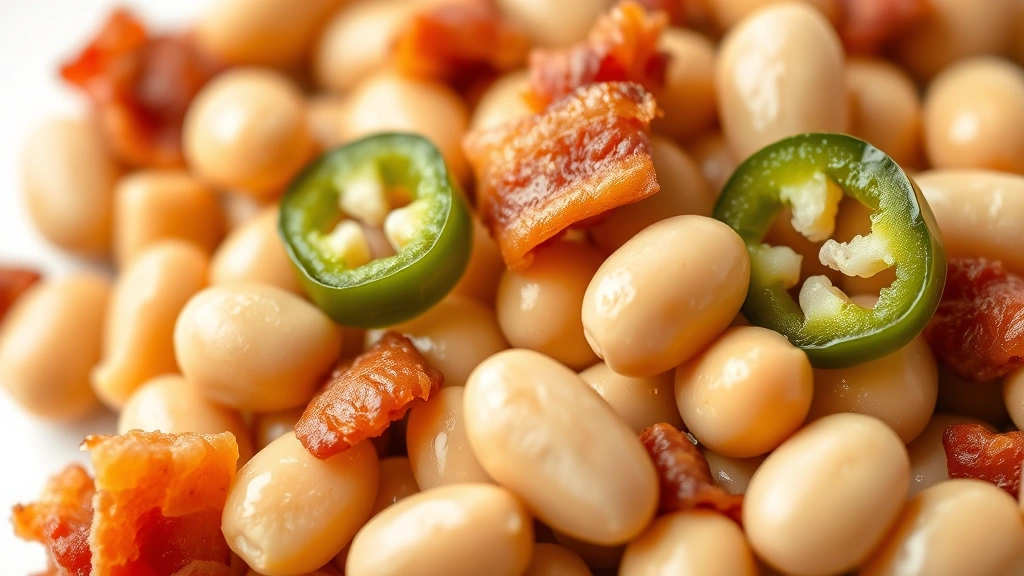
Not enough flavor? Taste and add more salt gradually—you’d be surprised how much salt these beans can take. Add a pinch of cumin or a dash of hot sauce. A squeeze of lime juice does wonders for brightening flavors that seem flat.
Too spicy? Add a dollop of sour cream or a splash of milk to cool things down. You can also add more beans to dilute the spice level. There’s no failure here—just adjustments until you get it right.
Frequently Asked Questions
Can I make charro beans without bacon?
Absolutely. Use chorizo, pancetta, or even smoked paprika with a bit of olive oil to create that smoky depth. The beans won’t be quite the same, but they’ll still be delicious. Some vegetarian versions use smoked salt and extra cumin to build complexity.
How long does this recipe actually take?
Start to finish, about 30-35 minutes. That includes prep time. If you prep your ingredients ahead (mise en place), the actual cooking is about 20 minutes. It’s genuinely one of the quickest authentic Mexican sides you can make.
Should I use canned or dried beans?
For speed and convenience, canned beans are your friend. For flavor and texture control, dried beans are worth the extra time. Canned work great for weeknight dinners. Dried beans, cooked fresh, give you slightly better texture and allow you to control the salt level completely.
Can I make this in a slow cooker?
Yes. Brown your bacon and sauté your onions and jalapeños as described, then transfer everything to a slow cooker with your beans and broth. Cook on low for 4-6 hours or high for 2-3 hours. The timing is longer, but you get the same results with zero hands-on time.
What should I serve with charro beans?
They pair beautifully with grilled meats, rice, tortillas, or as a topping for nachos. They’re substantial enough to serve as a main course with cornbread. They’re also perfect alongside our how to use a pizza stone guide if you’re making wood-fired pizzas and want an authentic side dish.
Final Thoughts
A solid charro beans recipe is one of those dishes that separates people who cook from people who follow recipes. Once you understand the fundamentals—render the bacon, build your flavor base, simmer gently, taste and adjust—you can make this dish with your eyes closed. It’s forgiving, scalable, and tastes like you spent hours in the kitchen when you really spent 30 minutes.
The best part? These beans get better as they sit. Make them for dinner, and you’ve got an even better lunch the next day. Make a double batch and freeze half for a future weeknight when you need something authentic and delicious without any fuss. That’s what good cooking is really about—understanding the technique so well that you can make magic happen whenever you want.


