
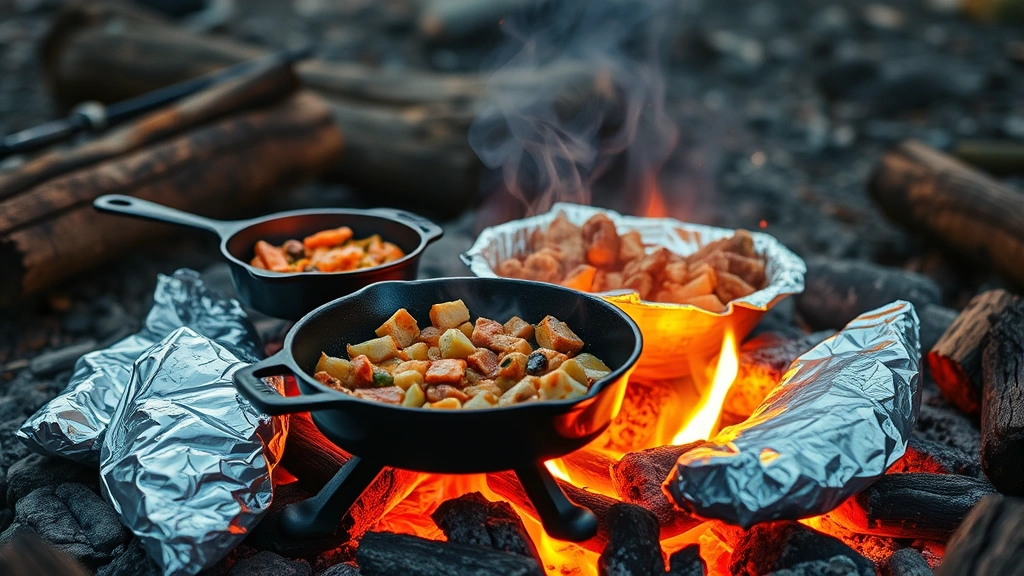
Campfire recipes are the heart of outdoor adventure—nothing beats cooking over an open flame with friends and family gathered around. Whether you’re a seasoned camper or heading out for your first trip, mastering a few solid campfire meals transforms your experience from “just surviving” to genuinely enjoying the food part of your getaway. The beauty of campfire cooking lies in its simplicity: minimal equipment, maximum flavor, and the kind of satisfaction you only get when you’ve fed yourself in the wilderness.
Table of Contents
Foil Packet Dinners Rule
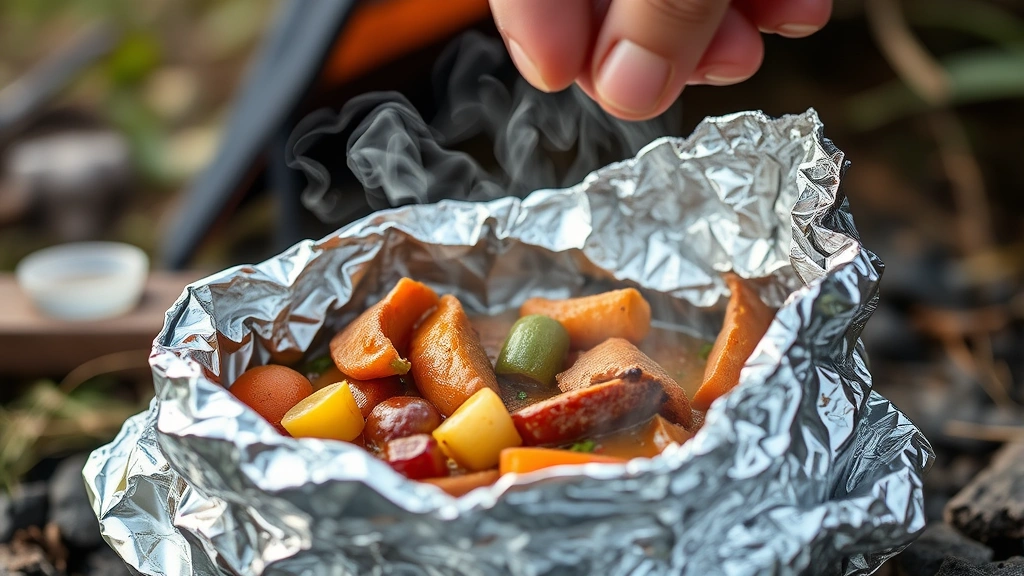
Foil packet meals are the MVP of campfire cooking. Here’s why: you prep everything at home, toss it in foil, and let the fire do the work. No cleanup, minimal dishes, and everyone gets a customized meal. Start with a protein—chicken breast, ground beef, or salmon work beautifully. Add diced vegetables (bell peppers, zucchini, potatoes, onions), a splash of olive oil, salt, pepper, and whatever seasonings appeal to you.
Seal each packet tightly (double-fold the edges so nothing leaks), and place them directly on hot coals or a grill grate about 4-6 inches above the flames. Cooking time varies: thin chicken takes 12-15 minutes, ground beef needs 15-20 minutes, and hearty vegetables with potatoes might need 25-30 minutes. You’ll know they’re done when you carefully open a corner and steam escapes—that’s your signal everything inside is cooked through.
Pro tip: mark each packet with a permanent marker before you leave home so people know which one is theirs. Add a Betty Crocker recipe inspiration twist by incorporating pre-made seasoning packets for consistent flavor.
Cast Iron Skillet Magic
A cast iron skillet is your secret weapon for campfire cooking versatility. Unlike foil packets, a skillet lets you cook with more control and can handle everything from breakfast pancakes to dinner fajitas. The key is letting your skillet preheat properly over the fire—about 5 minutes on a grate positioned 6-8 inches above medium-hot coals.
Try a simple campfire stir-fry: slice whatever proteins and vegetables you brought, add them to hot oil in the skillet, and cook until everything’s tender and slightly caramelized. Soy sauce, garlic, and ginger transform basic ingredients into something restaurant-quality. The cast iron distributes heat evenly, preventing hot spots that would burn your food in a regular pan.
Don’t forget seasoning your skillet before the trip—a well-seasoned cast iron is nearly non-stick and practically indestructible. After cooking, wipe it clean with a paper towel while it’s still warm (don’t submerge it in water), and it’ll last generations.
One-Pot Campfire Chili
Chili is the ultimate crowd-pleaser for group camping trips. Brown ground beef in your cast iron or heavy pot, then add diced onions, canned beans (kidney, black, pinto—whatever you prefer), canned tomatoes, tomato paste, and chili powder. Let it simmer for 20-30 minutes while the flavors meld together. The longer it simmers, the better it tastes.
The beauty of campfire chili is that it’s nearly impossible to mess up. Everything goes into one vessel, and the fire does most of the heavy lifting. Serve it with cornbread cooked in a cast iron skillet, or spoon it over hot dogs for a quick dinner. People can customize their bowls with cheese, sour cream, jalapeños, or whatever toppings you bring.
Make it ahead at home in a slow cooker, then reheat it over the fire in a Dutch oven. This approach saves time and lets you focus on enjoying the campfire rather than cooking.
Skewered Meat & Vegetables
Kebabs over a campfire tap into something primal about outdoor cooking. Thread cubed chicken, beef, or pork onto metal skewers (soak wooden ones for 30 minutes first), alternating with chunks of bell pepper, onion, mushroom, and cherry tomatoes. Brush everything with oil, season generously, and hold the skewers over medium-hot coals, rotating every 2-3 minutes for even cooking.
The direct heat creates a light char on the outside while keeping the inside juicy. Marinate your meat for a few hours before the trip—even a simple mixture of oil, lemon juice, garlic, and herbs elevates the whole thing. Serve kebabs with rice, pita bread, or just eat them straight off the skewer.
This method works for shrimp, fish, and even fruit (pineapple and mango char beautifully). The interactive nature of cooking kebabs makes it a social activity—everyone can help rotate their own skewer and watch it cook.
Campfire Bread Baking
Baking bread over a campfire sounds intimidating but it’s genuinely doable. Dutch ovens are your tool here—they trap heat and create an oven-like environment. Prepare your dough before the trip (simple no-knead recipes work great), let it rise in a cooler, then bake it in the Dutch oven nestled in coals for 30-40 minutes.
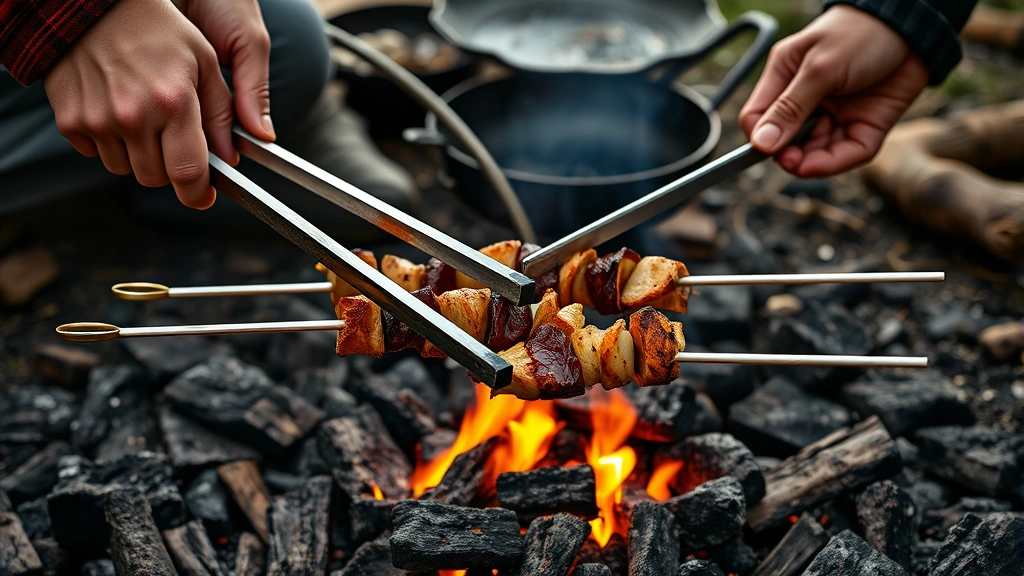
Alternatively, wrap biscuit dough around a stick and hold it over the fire, rotating slowly until golden and cooked through. Kids love this interactive approach, and fresh-baked bread over a campfire tastes incomparably better than anything store-bought. Serve it warm with butter, jam, or use it for sandwiches the next day.
For simplicity, bring pre-made biscuit dough in a tube—the campfire version of cheating that nobody will judge you for. Wrap sections around green sticks and you’ve got warm bread in 10 minutes.
Breakfast Over Flames
Campfire breakfast sets the tone for your whole day. Scrambled eggs in a cast iron skillet with bacon, sausage, or ham is straightforward and satisfying. Crack eggs into a bowl, whisk with a fork, and pour into hot buttered skillet. Stir occasionally until they’re creamy and cooked through—takes about 5 minutes.
Pancakes are another winner: bring a dry mix, add water and oil to the required ratio, and cook on a griddle or flat rock positioned over the fire. The key is patience—let each pancake cook until bubbles form on top before flipping. Top with fruit, syrup, or banana bar-inspired toppings for something different.
Hash browns cooked in cast iron with onions and peppers round out a full breakfast. Everything cooks faster than you’d expect over an open flame, so prep your ingredients beforehand and have everything ready before you start cooking.
Desserts Around the Fire
S’mores are the obvious choice, but venture beyond basic marshmallows. Try chocolate-filled pastries held over the fire until the chocolate melts, or create s’mores with different cookies, chocolate varieties, or even peanut butter cups. The campfire dessert possibilities are genuinely endless.
Foil packet desserts work too: wrap sliced apples with cinnamon, brown sugar, and a pat of butter in foil, heat over coals for 10-15 minutes, and you’ve got warm apple crisp. Bananas with chocolate chips wrapped in foil turn into natural boats of gooey goodness. Even simple fruit skewers held over the fire caramelize beautifully.
For something fancier, bake a cobbler in a Dutch oven—canned fruit mixed with simple biscuit topping, baked in coals for 20-25 minutes. Serve with vanilla ice cream if your cooler can handle it, or eat it warm with a spoon straight from the pot. Check out blackberry recipe ideas for inspiration on using fresh berries in campfire desserts.
Essential Campfire Gear
You don’t need fancy equipment, but a few items make campfire cooking dramatically easier. Cast iron skillets and Dutch ovens are workhorses—they last forever and perform beautifully over flames. Long-handled tongs and forks keep your hands safely away from heat. A sturdy grill grate that sits above coals provides a stable cooking surface.
Heavy-duty aluminum foil is non-negotiable for packet meals. Bring metal skewers instead of wooden ones (no soaking required, and they last forever). A heat-resistant glove protects your hands when adjusting cookware. A sharp knife makes prep work faster and safer. Trivets or hot pads prevent burns when setting down hot cookware.
Don’t overlook simple items like a cutting board, mixing bowl, and basic utensils. A blank recipe book lets you jot down successful campfire meals for future trips. Bring more seasoning than you think you’ll need—outdoor cooking burns through salt and spices faster than indoor cooking.
Safety Tips for Cooking
Never leave food unattended over the fire. Flames are unpredictable, and a sudden gust of wind can shift coals or cause flare-ups. Keep a fire extinguisher or bucket of water nearby—not paranoia, just common sense. Make sure your cooking area is clear of low-hanging branches that could catch fire.
Understand the difference between cooking directly over flames versus cooking over coals. Coals provide steadier, more controlled heat. Flames are too intense for most campfire cooking and create dangerous flare-ups. Let your fire burn down to coals before you start cooking—this takes 20-30 minutes from a fresh fire.
Always assume cookware is hot. Use tongs and long-handled utensils. Never reach over flames. Keep children supervised and away from the cooking area. Wear closed-toe shoes around the fire. Store raw meat separately from cooked food to prevent contamination. Cook meat to proper internal temperatures—use a meat thermometer if you’re uncertain.
Clean up thoroughly after cooking. Food scraps attract bears and other wildlife. Burn food waste in the fire if your campsite allows it, or pack it out completely. Never pour hot oil or grease directly on the ground.
Frequently Asked Questions
What’s the best campfire cooking method for beginners?
Foil packets are the easiest entry point. They require minimal equipment, nearly impossible to ruin, and let you prep everything at home. Just seal, place on coals, and wait. No flipping, no monitoring—the fire handles everything.
How do I know if my campfire is ready for cooking?
Your fire should burn down to mostly coals with just a few flames. You should be able to hold your hand 6 inches above the grate for about 4-5 seconds before the heat forces you to pull away. That’s medium-hot coals—perfect for most campfire cooking.
Can I use regular pans instead of cast iron?
You can, but cast iron is superior for campfire cooking. It distributes heat evenly, handles direct flame contact, and improves with age. Regular pans can warp over intense heat and don’t perform as reliably. If you only have regular pans, keep them further from the flames and monitor constantly.
How do I prevent food from sticking in my cast iron?
A well-seasoned skillet is naturally non-stick. If food sticks, you either need more seasoning or more oil in the pan. Preheat the pan thoroughly before adding food, and use enough fat to coat the cooking surface. Never use soap on cast iron—just wipe clean with a paper towel.
What are the best foods to bring for campfire cooking?
Bring proteins that freeze well (chicken, ground beef, pork), hearty vegetables that hold up (potatoes, peppers, onions, zucchini), and shelf-stable ingredients (canned beans, tomatoes, spices, oil, salt). Avoid delicate foods that bruise easily or require precise temperatures.
Can I cook fish over a campfire?
Absolutely. Whole fish wrapped in foil with lemon and herbs cooks beautifully over coals. Fish fillets on skewers work too, though they’re more delicate to handle. Cook until the flesh flakes easily with a fork—usually 12-15 minutes depending on thickness.
How do I cook for a large group over one campfire?
Use multiple cooking methods simultaneously: foil packets, cast iron skillet, and skewers can all cook at the same time over different parts of the fire. Prep everything in advance so you’re just cooking, not chopping. One-pot meals like chili feed many people from a single vessel.
What should I do if my food is cooking unevenly?
Move it further from the hottest part of the fire or rotate it more frequently. If one side is burning, position it over cooler coals. Campfire heat is inconsistent—this is normal. Patience and frequent adjustments are your friends.
Final Thoughts on Campfire Cooking
Campfire recipes transform camping from a survival exercise into a genuine culinary adventure. The techniques are simple, the ingredients are basic, and the results taste infinitely better than anything you could cook at home. Start with foil packets and cast iron skillets, master those fundamentals, then branch out into bread baking and more ambitious dishes. Every meal cooked over an open flame becomes a memory—the smoke, the warmth, the satisfaction of feeding yourself in the wilderness. That’s what outdoor cooking is really about.


