
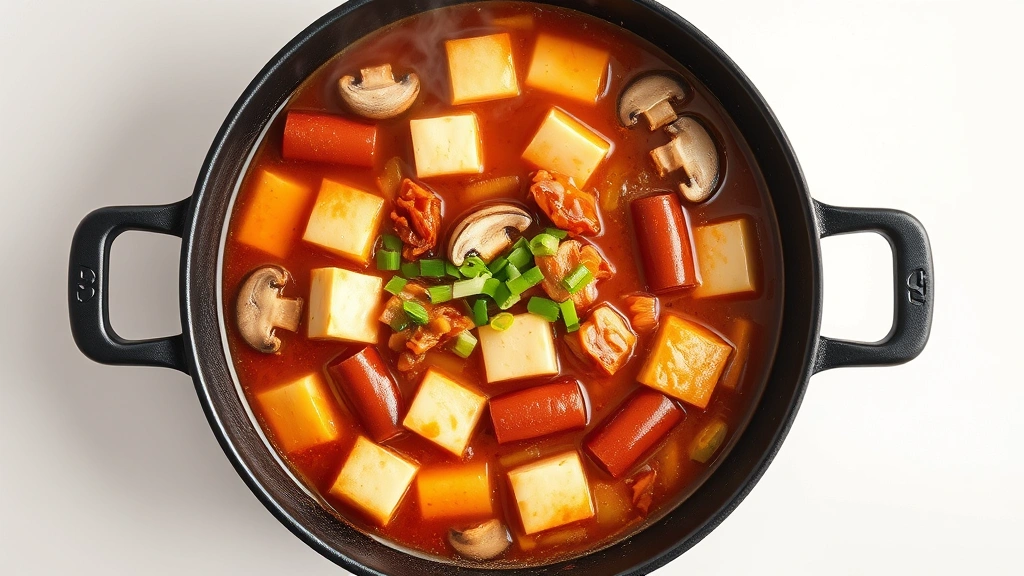
A budae jjigae recipe is your ticket to mastering one of Korea’s most beloved comfort dishes—a hearty, fusion stew born from post-war creativity that combines Korean flavors with Western ingredients in the most delicious way possible. Whether you’re cooking for a crowd or just craving something warm and satisfying, this guide walks you through every step to nail this iconic dish.
Table of Contents
What Is Budae Jjigae?
Budae jjigae—literally “army stew”—emerged in the 1950s around U.S. military bases in South Korea, where resourceful cooks blended Korean cooking traditions with available American ingredients. Think of it as culinary improvisation at its finest. You’re looking at a bubbling pot of spicy broth loaded with spam, hot dogs, baked beans, kimchi, tofu, and vegetables. It sounds unconventional, but the flavors work in harmony—the richness of processed meats plays against the funk of fermented kimchi, while gochugaru (Korean red chili flakes) ties everything together with heat and depth.
This isn’t fancy restaurant food. It’s the kind of dish you make when you want maximum flavor with minimal pretense. It’s meant for sharing, for eating family-style straight from the pot, for lingering conversations over steaming bowls.
Gathering Your Ingredients
Here’s what you need to pull off an authentic budae jjigae recipe:
For the Broth: 6 cups beef or chicken stock, 3 tablespoons gochugaru (Korean red chili flakes), 2 tablespoons gochujang (Korean red chili paste), 2 tablespoons soy sauce, 1 tablespoon sugar, 4 cloves garlic (minced), 1 tablespoon sesame oil, 1 teaspoon salt, ½ teaspoon black pepper.
For Proteins: 1 can (12 oz) spam (cut into chunks), 4-5 hot dogs (sliced), 1 can (15 oz) baked beans, 1 block firm tofu (cubed), 4 oz ground beef (optional but recommended).
For Vegetables and Extras: 2 cups kimchi (roughly chopped), 4 oz mushrooms (shiitake or cremini, sliced), 1 medium onion (sliced), 2 green onions (cut into 2-inch pieces), 1 can (15 oz) corn kernels, 2 slices American cheese (optional, but traditional), instant ramen noodles (1-2 packages, optional).
You can find most ingredients at any decent grocery store. Asian markets will have the gochugaru and gochujang for better prices and quality. Don’t skimp on these—they’re the backbone of your stew.
Prep Work Matters
Mise en place is your friend here. Before you turn on the heat, get everything prepped and within arm’s reach. Chop your vegetables into bite-sized pieces—you want them to cook evenly and be easy to grab with your spoon. Cut your spam into roughly ¾-inch cubes; slice those hot dogs on a bias for visual appeal (and because it looks more intentional). Cube your tofu gently so it doesn’t crumble. Mince your garlic fresh—jarred garlic won’t give you the same punch.
The kimchi should be roughly chopped, and don’t drain all its liquid. That funky brine is flavor gold. If your kimchi is super spicy and you’re cooking for sensitive palates, you can rinse it lightly, but I’d recommend keeping it as-is.
Building the Broth Base
Heat 1 tablespoon of sesame oil in a large pot or wide shallow pan (a Korean hotpot or cast iron works beautifully) over medium-high heat. Add your minced garlic and let it bloom for about 30 seconds—you want it fragrant, not burned. Pour in your stock and bring it to a simmer.
Now add your gochugaru and gochujang. Stir these in slowly, breaking up any clumps. These pastes can clump if you dump them in all at once. Once they’re dissolved, add your soy sauce, sugar, salt, and black pepper. Taste it. Adjust. This broth should be savory, spicy, and slightly sweet. If it tastes flat, add a pinch more salt. Too spicy? Add a touch more sugar or stock.
Let the broth simmer for 2-3 minutes so the flavors marry. This is also a good time to reference similar recipes like authentic bolognese recipe techniques for building deep, complex broths.
Layering Your Proteins
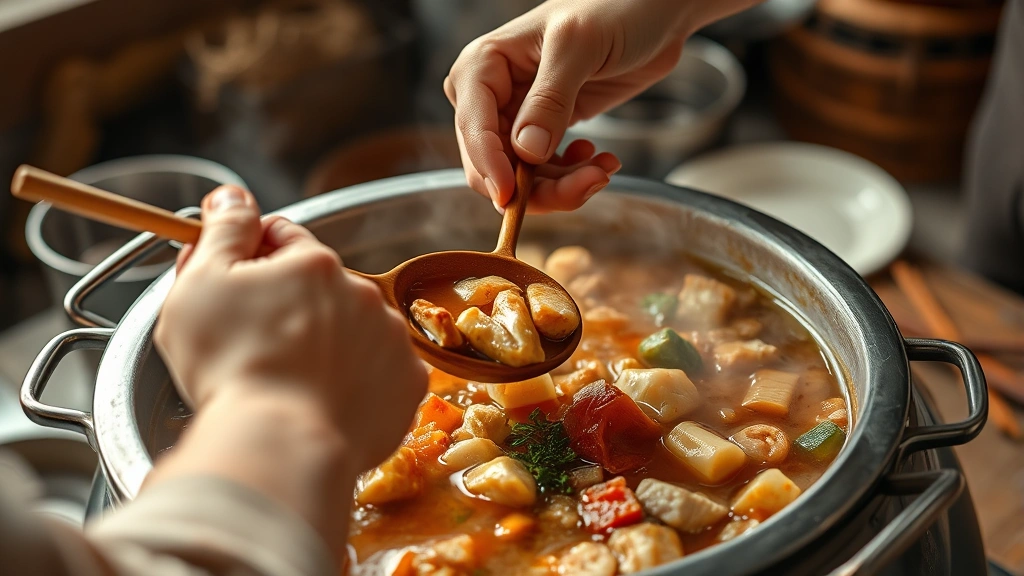
This is where budae jjigae gets fun. You’re not stirring everything together into a homogenous mess—you’re creating distinct sections in the pot so diners can choose their components.
Start by browning your ground beef (if using) in a small skillet with a pinch of salt and pepper. This takes about 3-4 minutes over medium-high heat. Set it aside. Now, arrange your spam cubes on one side of the pot, your sliced hot dogs on another section, and your ground beef in a third. Push your tofu cubes into a fourth area. This visual organization makes the eating experience better—people can grab exactly what they want.
Pour your baked beans (with their sauce) into another section. The starch from those beans will thicken your broth slightly, adding body and richness. This technique mirrors the layering approach used in au jus recipes where you build flavor through strategic component placement.
Vegetables and Extra Touches
Scatter your sliced mushrooms, onion, and kimchi throughout the pot. Don’t bury them—let them sit on top of the broth so they cook properly and stay visible. Add your corn kernels (drained if canned). Sprinkle your green onions over everything.
If you’re using instant ramen, break the noodles into chunks and scatter them over the pot. They’ll soften as the stew simmers, soaking up all that spicy broth. If you want to include American cheese, tear it into pieces and add it in the last minute of cooking—it’ll melt into the broth and add a subtle creaminess.
The beauty of this stew is flexibility. Want to add seafood like crab or shrimp? Go for it. Prefer more vegetables? Load it up with cabbage, zucchini, or bok choy. This recipe is your canvas.
Cooking Technique Breakdown
Increase your heat to medium-high and bring the whole pot to a gentle boil. You’re not looking for a rolling boil—just steady bubbling. Let it cook for 8-10 minutes. The proteins will warm through, the vegetables will soften slightly, and the flavors will meld.
Here’s the key: budae jjigae is meant to be eaten directly from the communal pot. In Korea, it’s typically cooked at the table on a portable burner, and people eat as it cooks. If you’re doing this at home, you can either cook it entirely on the stove and transfer to a heated pot at the table, or use a slow cooker or electric hotpot on low to keep it warm while people eat.
The stew should bubble gently throughout the meal. This keeps everything warm and allows flavors to continue developing. If it starts to reduce too much, add a splash of stock or water.
Serving and Eating Right
Budae jjigae is a communal eating experience. Set it in the center of your table with small bowls, spoons, and chopsticks for each person. Have a stack of small plates nearby. People will grab components they like, add them to their personal bowls with broth, and eat continuously throughout the meal.
Serve with steamed white rice on the side. The rice soaks up the spicy broth beautifully. A cold beer or Korean soda pairs perfectly—the carbonation cuts through the richness and heat.
This cooking method mirrors the interactive approach of arroz con pollo recipes where the dish is meant for sharing and communal enjoyment.
Storage and Leftovers
Budae jjigae keeps well in the refrigerator for 3-4 days in an airtight container. The flavors actually deepen as it sits. To reheat, transfer to a pot and warm over medium heat, stirring occasionally. Add a splash of stock if it’s thickened too much.
You can also freeze it for up to 2 months, though the texture of some ingredients (like spam and hot dogs) will change slightly. The broth and vegetables freeze beautifully. Thaw overnight in the refrigerator and reheat gently.
Frequently Asked Questions
Can I make budae jjigae without spam?
Absolutely. Use bacon, pancetta, or additional sausages instead. The spam is traditional, but it’s not irreplaceable. The key is having some kind of salty, rich pork product to balance the kimchi’s funk.
Is budae jjigae supposed to be spicy?
Yes, it should have noticeable heat, but not be unbearably hot. The gochugaru and gochujang provide the spice. If you’re cooking for people who can’t handle heat, reduce the gochugaru to 2 tablespoons and use less gochujang. You can always add more spice to individual bowls.
What if I can’t find gochugaru or gochujang?
These are increasingly available at regular grocery stores, but if you’re stuck, you can order them online. There’s no real substitute that captures the same flavor profile. Regular chili powder won’t work—it’s a different beast entirely.
Can I prep this ahead of time?
You can prep all your ingredients the night before and store them separately in the refrigerator. Make your broth base and store it in a container. On cooking day, just assemble everything in the pot and heat. This saves significant time when you’re cooking for guests.
How many people does this serve?
This recipe serves 4-6 people as a main course, depending on appetites and whether you’re serving side dishes. Budae jjigae is rich and filling, so portions tend to be moderate.
What’s the best pot for budae jjigae?
A shallow, wide pot works best because it allows for the sectioning of ingredients. A 12-inch cast iron skillet, a Korean hotpot, or a wide shallow Dutch oven all work beautifully. Avoid tall, narrow pots where everything gets jumbled together.
Should I add the instant ramen before or after cooking?
Add it about 3-4 minutes before serving so it softens but doesn’t turn to mush. If you add it at the beginning, it’ll fall apart and thicken the broth too much.
Final Thoughts
Mastering a budae jjigae recipe is about understanding balance—balancing spice with richness, traditional Korean flavors with Western ingredients, and individual preferences within a communal experience. This stew isn’t about precision or perfection. It’s about gathering people around a pot of warm, satisfying food and letting the meal unfold naturally.
Start with this recipe as your foundation, then make it your own. Add ingredients you love, adjust the heat to your preference, and don’t worry about deviating from tradition. That’s exactly how budae jjigae came to exist in the first place.


