
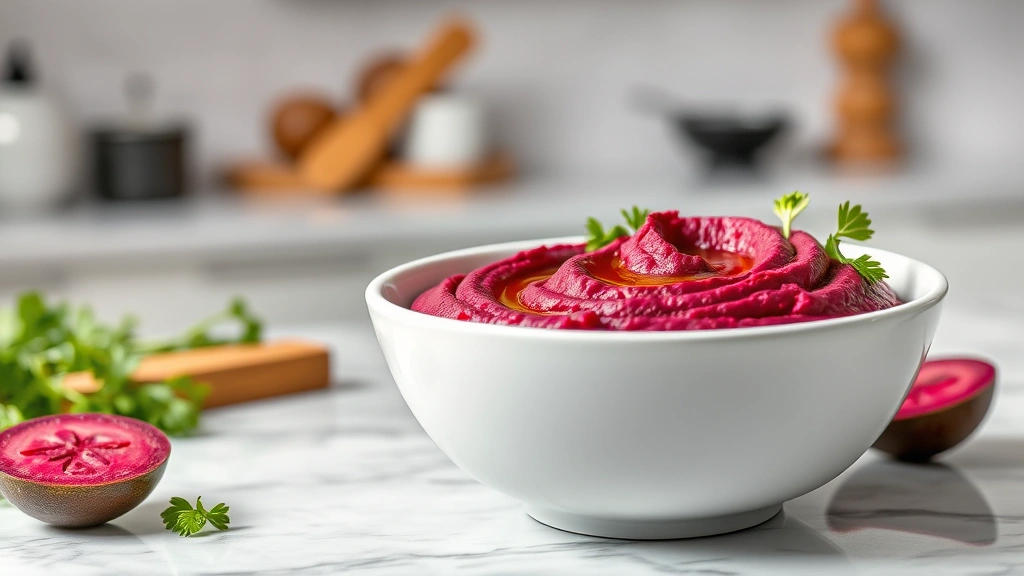
A beet hummus recipe transforms the classic Middle Eastern dip into something visually stunning and surprisingly simple to make. If you’ve been staring at store-bought hummus wondering why it all looks beige, this is your answer. We’re talking deep magenta, earthy flavor, and the kind of dip that makes people ask for your recipe before they even taste it.
Table of Contents
Why Beet Hummus Works
Let’s be honest—regular hummus is delicious, but it looks like cafeteria food. Beets change the entire game. They bring natural sweetness, earthiness, and that knockout color without any artificial anything. The beauty of this healthy hummus variation is that beets complement chickpeas perfectly. Both are nutrient-dense, both have subtle sweetness, and together they create something that tastes homemade and feels fancy.
This isn’t just about looks either. Beets add fiber, folate, and manganese to your dip. You’re getting all the protein and healthy fats from tahini and chickpeas, plus antioxidants from the beets. It’s the kind of appetizer that works for game day, dinner parties, or meal prep when you want something substantial that doesn’t feel heavy.
Ingredients You’ll Need
Here’s what goes into a solid beet hummus recipe:
- 1 can (15 oz) chickpeas – drained and rinsed, or about 1.5 cups cooked from scratch
- 1 medium beet – roasted or canned (about 3/4 cup), cut into chunks
- 3 tablespoons tahini – the sesame paste that gives hummus its signature creaminess
- 2 cloves garlic – minced or smashed
- 2 tablespoons lemon juice – fresh squeezed, not bottled
- 1 tablespoon olive oil – good quality, extra virgin
- 1/2 teaspoon cumin – optional but recommended
- Salt and pepper – to taste
- 2-3 tablespoons water – for consistency adjustment
Pro tip: If you’re using fresh beets, roast them ahead of time. Raw beets work too, but roasting brings out sweetness and makes blending easier. Canned beets are totally fine—just rinse them well to avoid that tinny flavor.
Step-by-Step Guide
Making beet hummus takes about 10 minutes if your beets are already cooked. Here’s the process:
Step 1: Prep Your Ingredients
Drain and rinse your chickpeas under cold water. This removes the starchy liquid that makes hummus gluey. Cut your roasted beets into chunks—smaller pieces blend faster and more smoothly. Mince your garlic or smash it with the side of your knife.
Step 2: Add to Food Processor
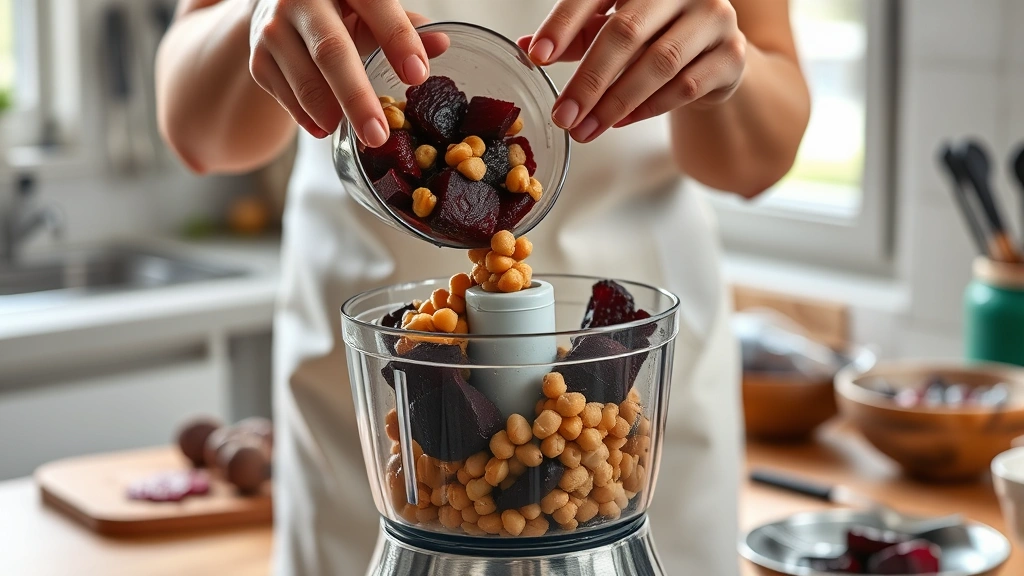
Combine chickpeas, beets, tahini, garlic, lemon juice, and olive oil in your food processor. Don’t skip the tahini—it’s what makes this creamy and prevents a grainy texture. If you don’t have tahini, almond butter works in a pinch, but the flavor shifts.
Step 3: Blend Until Smooth
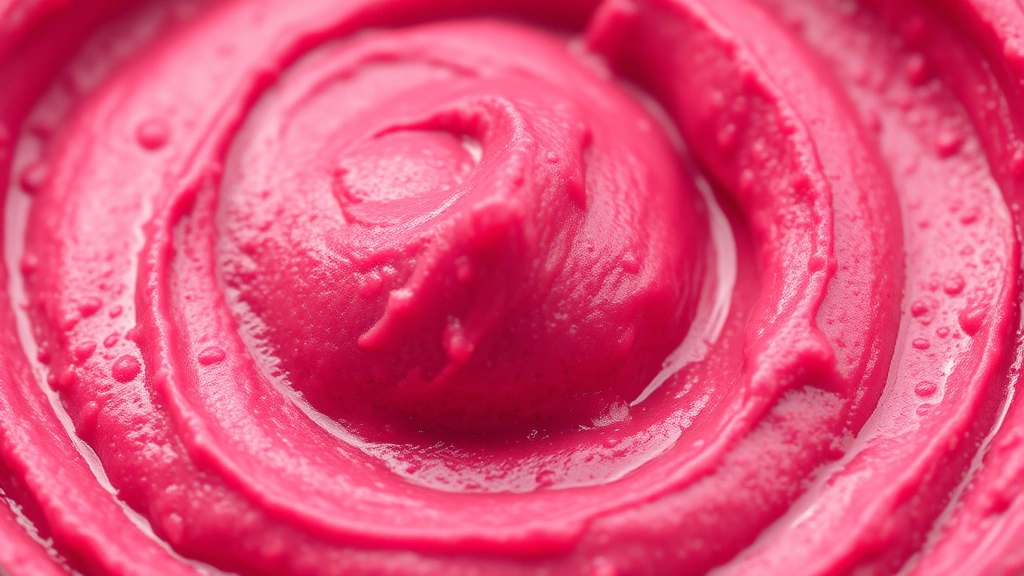
Pulse a few times to break everything down, then run the processor continuously for 2-3 minutes. Scrape down the sides halfway through. You’re looking for smooth and creamy, not chunky. This is where patience pays off—the longer you blend, the creamier the result.
Step 4: Adjust Consistency
Add water one tablespoon at a time until you reach your desired thickness. Some people like it thick for scooping, others prefer it looser for drizzling. Start conservative—you can always add more, but you can’t take it out.
Step 5: Season and Taste
Add cumin, salt, and pepper. Taste it. Add more lemon if it needs brightness, more salt if it tastes flat, more garlic if you want punch. This is your dip—make it yours.
Blending Tips for Perfection
The difference between grainy hummus and silky hummus comes down to technique. First, don’t skimp on blending time. Tahini takes longer to break down than you’d think. Keep going even when it looks done—another 30 seconds makes a real difference.
Second, use a food processor, not a blender. Blenders are too aggressive and can heat up your dip, which affects flavor. Food processors give you control and that perfect creamy texture. If you’re using a high-powered blender like a Vitamix, use the lowest speed and pulse method.
Third, the order matters slightly. Put your liquid ingredients (lemon juice, olive oil) in first, then add solids. This helps the tahini incorporate smoothly instead of clumping. And keep your beets in chunks before blending—don’t puree them separately first.
Flavor Variations to Try
Once you’ve mastered the basic beet hummus recipe, experiment with variations:
Spicy Version: Add 1/4 teaspoon cayenne pepper or a pinch of smoked paprika. This cuts through the sweetness and adds complexity.
Herb-Forward: Blend in 2 tablespoons fresh dill or parsley. Dill especially complements beets beautifully and adds freshness.
Roasted Garlic: Instead of raw garlic, roast a whole head of garlic first. It’s milder and sweeter, perfect if raw garlic usually overpowers you.
Walnut Crunch: Toast 1/4 cup walnuts and fold them in at the end instead of blending them. Adds texture and nutty flavor.
Horseradish Heat: Add 1 teaspoon prepared horseradish for a surprising kick that works with the earthiness.
Storage & Serving Ideas
Store your beet hummus in an airtight container in the refrigerator for up to 5 days. The color might deepen slightly over time—that’s normal. Before serving, drizzle with a little olive oil and sprinkle with paprika or fresh herbs.
Serving options are endless. Pair it with pita chips, vegetable sticks (especially carrots—the color contrast is gorgeous), crackers, or flatbread. Use it as a spread on sandwiches or wraps. Dollop it on roasted vegetables. Serve it alongside grilled chicken or fish. It works as a dip, spread, or sauce.
For meal prep, divide into small containers and grab one for lunch. It stays fresh enough for the work week and adds nutritious vegetables to whatever else you’re eating.
Common Issues Solved
Too Thick? Add water one tablespoon at a time. Lemon juice works too and adds flavor.
Too Thin? Add more tahini or a few more chickpeas. Blend again until you reach the right consistency.
Grainy Texture? You need more blending time or more tahini. The tahini acts as an emulsifier—it holds everything together smoothly.
Tastes Flat? Lemon juice is your friend. Add a squeeze at a time and taste. Salt also brings out flavor—don’t undersalt.
Too Garlicky? Balance it with more lemon juice or a splash more olive oil. You can also add a pinch of sugar to mellow it out.
Separated or Oily? This usually means you need more blending or more tahini. The tahini emulsifies the oil—without enough of it, everything separates.
Nutrition & Health Benefits
A typical serving of beet hummus (about 1/4 cup) contains roughly 100 calories, 4 grams of protein, 8 grams of carbs, and 6 grams of healthy fat. The chickpeas provide plant-based protein and fiber for satiety. The tahini brings selenium, copper, and magnesium. The beets add folate, manganese, and betalains—powerful antioxidants.
This is a genuinely nutrient-dense food that happens to taste indulgent. It’s suitable for vegetarian, vegan, and gluten-free diets. It’s lower in sodium than most store-bought hummus. It’s the kind of dip you can feel good about serving or eating.
According to FamilyHandyman‘s approach to practical solutions, making food from scratch gives you control over ingredients. You know exactly what’s going in. No weird stabilizers, no excess sodium, no mystery ingredients.
Frequently Asked Questions
Can I use canned beets for this beet hummus recipe?
Absolutely. Canned beets are convenient and work great. Just rinse them thoroughly to remove the canning liquid, which can add an off-flavor. The texture and taste will be nearly identical to roasted beets.
How long does homemade beet hummus last?
Refrigerated in an airtight container, it keeps for 5-7 days. You can also freeze it for up to 3 months. Thaw in the refrigerator overnight before serving. The texture might be slightly different after freezing, but it’s still delicious.
What if I don’t have a food processor?
A high-powered blender works, though you’ll need to pulse carefully to avoid overheating. A regular blender is harder to use—you might need to work in batches and add more liquid. Immersion blenders won’t give you the smooth texture you want.
Can I make this without tahini?
You can substitute with almond butter, sunflower seed butter, or even Greek yogurt for creaminess. The flavor changes, but it’s still good. Tahini is traditional and worth seeking out though—it’s inexpensive and lasts forever in the pantry.
Is this recipe naturally vegan?
Yes. Chickpeas, beets, tahini, lemon, garlic, and olive oil are all plant-based. It’s vegan, vegetarian, and naturally gluten-free.
How do I keep the color vibrant?
Store it in an airtight container away from light. The betalains in beets can fade over time, but this doesn’t affect taste. A splash of lemon juice helps preserve color too.
Final Thoughts
A beet hummus recipe is one of those kitchen wins that looks complicated but couldn’t be simpler. You’re blending seven ingredients for 3-5 minutes and suddenly you have something that looks restaurant-quality and tastes homemade. It’s the kind of dip that makes you look like you’ve got your life together.
The real magic is that it’s genuinely good for you. You’re getting fiber, plant protein, antioxidants, and minerals. It tastes indulgent without being heavy. It works for casual snacking or impressive entertaining. Make it once and you’ll understand why people ask for your recipe.
Start with the basic version, then play around with variations. Try it with different herbs, experiment with spice levels, see what works for your palate. This is the kind of recipe that gets better the more you make it because you learn what you like. Get a food processor going, grab some beets, and make something vibrant.


