
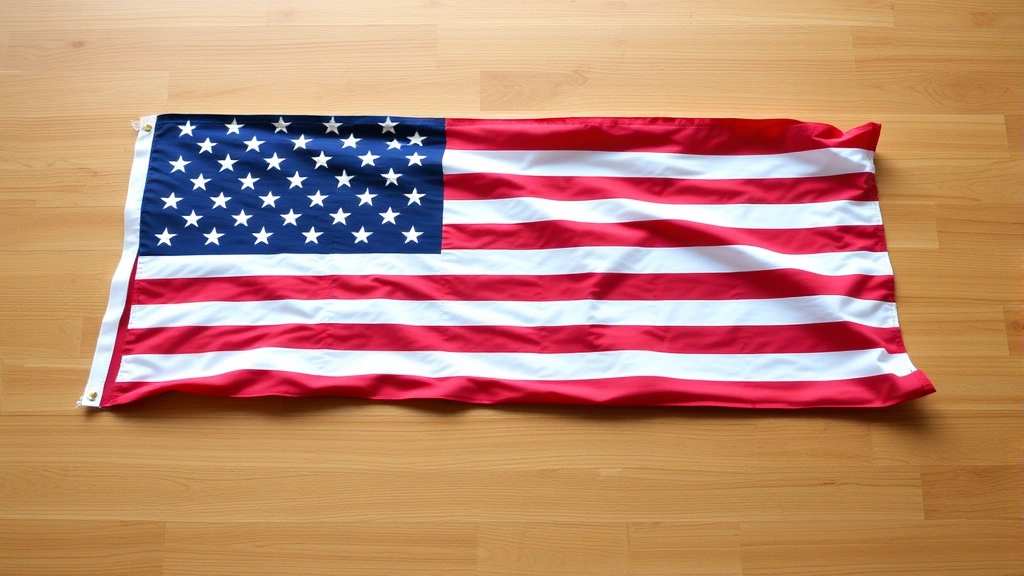
There’s something about folding an American flag that feels heavier than just folding fabric. You’re handling a symbol—a piece of history that deserves respect. Whether you’re retiring an old flag, preparing one for storage, or performing this duty at a ceremony, knowing how to fold an American flag correctly matters. It’s not complicated, but it does require attention and care. This guide walks you through the official method, the reasoning behind each fold, and the common mistakes people make.
The proper way to fold an American flag follows a specific sequence that results in a neat triangle shape. It’s a ritual that’s been standardized for decades, and while there’s no federal law requiring a specific folding method, the technique taught by the military and observed at formal ceremonies is what most people recognize and respect. Let’s break down exactly how to do this right.
Before You Start: Space and Preparation
Here’s the thing about folding an American flag—you need room. A standard 3×5 flag requires a clean, flat surface roughly the size of a large table or bed. Trying to fold on a cramped counter or while holding it in the air is a recipe for frustration and accidental disrespect (like letting it touch the ground).
What you’ll need:
- A clean, flat surface (table, bed, or large counter)
- The flag itself (in good condition)
- Another person (optional but recommended for your first time)
- Clean hands
Before you fold, inspect the flag. Is it torn? Stained? Faded beyond recognition? If the flag is significantly damaged, it’s time to retire it properly rather than fold and store it. According to the U.S. Flag Code, a flag that’s no longer fit for display should be retired with dignity, typically through a flag retirement ceremony.
If the flag is in decent shape, lay it flat on your surface with the stars (the canton) facing up. Smooth out any wrinkles gently with your hands—no need for an iron, and honestly, you don’t want to risk damaging the fabric.
The 13 Folds: The Official Method
The official method results in 13 folds, and yes, that number carries symbolism. Each fold represents something meaningful, though the primary goal is creating a neat, compact triangle that displays the stars prominently. Here’s the step-by-step process:
Fold 1: The Lengthwise Fold
Start by folding the flag in half lengthwise (the long way), with the stars facing outward. The striped side should now be hidden inside. This is your foundation—get this straight and the rest flows naturally.
Fold 2: Another Lengthwise Fold
Fold it in half lengthwise again, so now you have a long, narrow rectangle with stars on both sides and stripes hidden inside. Think of it like closing a book—smooth and deliberate.
Fold 3: The First Triangle
Now comes the shift from rectangles to triangles. Take the bottom right corner of the flag and fold it up toward the top left, creating a triangle. The bottom edge should align with the left edge. This is where things start looking like the finished product.
Folds 4-13: Continuing the Triangle Pattern
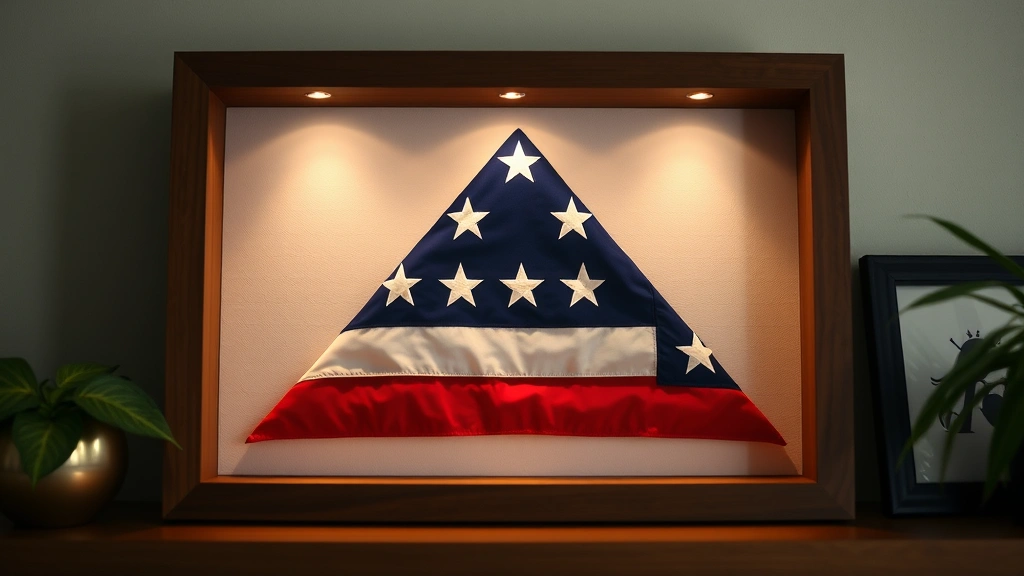
Keep folding the triangle over itself, always folding the bottom point up toward the top. Each fold should be crisp and deliberate. As you fold, the red and white stripes will gradually disappear, and you’ll see more of the blue canton (the star field). By fold 13, only the blue field with stars should be visible—the final triangle should be roughly the size of a small pillow and display only the stars.
The beauty of this method is that it’s not random—each fold builds on the last. If you mess up early, you’ll notice it. If you’re off by an inch on fold 3, fold 10 will feel awkward. That’s actually helpful feedback to restart and try again.
Pro Tip: Practice with an old sheet or fabric first. Seriously. The motions are identical, and you’ll build muscle memory without worrying about messing up an actual flag. Once you’ve done it with a sheet, the real flag feels less intimidating.
Common Mistakes People Make
I’ve watched a lot of people fold flags, and the same errors pop up repeatedly. Here’s what to avoid:
Mistake 1: Letting the Flag Touch the Ground
This is the big one. While there’s no law against it, it’s considered deeply disrespectful in flag etiquette. Keep the flag elevated on your work surface the entire time. If it starts to slip, pause and reposition.
Mistake 2: Folding Too Quickly
People rush. They think speed equals efficiency, but with flags, precision beats speed. Take your time with each fold. Make sure edges align. Smooth as you go.
Mistake 3: Incorrect Angle on the Triangle Folds
The angle matters. When you fold that first triangle (fold 3), the bottom right corner should hit the top left edge at a 45-degree angle. If you fold at a steeper or shallower angle, the subsequent folds won’t nest properly, and you’ll end up with a lumpy, uneven triangle instead of a neat one.
Mistake 4: Folding with Dirty or Damp Hands
This seems basic, but it’s worth saying. Your hands should be clean and dry. Moisture can damage the fabric, and dirt is just disrespectful. Wash up before you start.
Mistake 5: Using the Wrong Surface
Folding on carpet is awkward because the fabric catches. Folding over your lap or standing up is unstable. Use a firm, flat surface. Your dining table or bed works perfectly.
Storage and Display After Folding
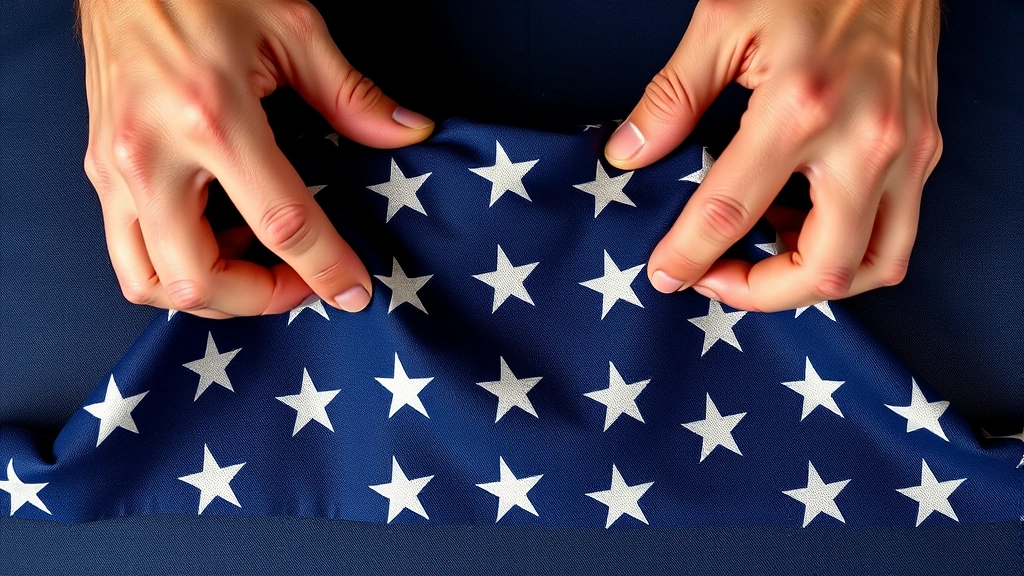
Once you’ve folded the flag into its neat triangle, you need to store or display it properly. This isn’t just about keeping it safe—it’s about maintaining the respect the flag deserves.
Display Options:
- Flag Case: A wooden or acrylic display case is the gold standard. It protects the flag from dust and damage while allowing it to be seen. These range from simple to ornate.
- Shadow Box: Similar to a display case but shallower. Good for wall mounting and looks professional.
- Shelf Display: If you’re using a shelf, place the folded flag on a small stand or pillow to elevate it slightly and prevent it from shifting.
Storage Options:
If you’re storing the flag rather than displaying it, use a breathable cotton bag (not plastic—plastic traps moisture). Store it in a cool, dry place away from direct sunlight. Attics and basements work, but avoid damp areas that could encourage mold or mildew.
For guidance on flag display standards, the National Archives provides detailed flag code information that covers display, care, and respect protocols.
When to Retire Your Flag
Not every flag should be folded and kept. Some flags reach the end of their service life, and the respectful thing is to retire them properly.
Signs a flag should be retired:
- Tears or holes in the fabric
- Significant fading or discoloration
- Stains that won’t come out
- Fraying edges
- Loss of structural integrity (fabric thinning or weakening)
Retiring a flag doesn’t mean throwing it in the trash. The traditional method is a flag retirement ceremony, where the flag is folded respectfully and then burned in a controlled setting. Many American Legion posts, Veterans organizations, and fire departments conduct flag retirement ceremonies, often for free.
You can also contact your local VFW or American Legion chapter to ask about upcoming ceremonies. According to Family Handyman, many communities have established protocols for this, and participating in a ceremony is a meaningful way to honor the flag’s service.
Flag Etiquette Beyond Folding
Knowing how to fold an American flag is one piece of flag etiquette. Here are other important practices:
Display Rules:
- The flag should never be displayed upside down except as a distress signal.
- When displayed horizontally, the stars should be in the upper left corner.
- The flag should never be used as a covering, costume, or decoration.
- It should never touch the ground, water, or merchandise.
When Flying a Flag:
- Raise it briskly; lower it ceremoniously.
- Never fly a flag in poor condition.
- Take it down at sunset or in bad weather (unless it’s illuminated).
These aren’t arbitrary rules—they stem from respect for what the flag represents. If you’re displaying a folded flag in your home, these principles still apply. Keep it elevated, protected, and treated as the symbol it is.
Folding Solo vs. With a Partner
Can you fold a flag alone? Yes. Is it easier with two people? Absolutely.
Solo Folding:
When you’re alone, you’re doing all the positioning and folding yourself. It’s doable, but the first few folds (especially the lengthwise folds) require you to manage both sides of the flag. Use your work surface to your advantage—let the table support the weight while you fold.
Two-Person Folding:
With a partner, one person can hold the flag while the other folds. This is the traditional ceremonial method. It’s smoother, faster, and honestly, more respectful—it feels more intentional when two people are focused on the task together.
If you’re teaching someone to fold a flag, having them watch a partner do it first, then doing it together, then watching them do it solo is the best progression. This Old House has good resources on ceremonial practices, and many military organizations offer flag-folding demonstrations.
Safety Note: If you’re folding at a ceremony or event, make sure both people are on the same page about the technique beforehand. Miscommunication mid-fold looks awkward and undermines the respect you’re trying to show.
Frequently Asked Questions
Is there a legal requirement for how to fold an American flag?
– No, there’s no federal law that mandates a specific folding method. However, the method described here is the standard taught by the military and observed at formal ceremonies. It’s the respectful, recognized way to do it.
What if I mess up while folding?
– Unfold it and start over. There’s no penalty for restarting. In fact, it’s better to take the time and get it right than to rush through and end up with a sloppy result. The flag isn’t damaged by being unfolded—just be gentle.
Can I fold a flag that’s wet?
– No. A wet flag can develop mold or mildew and will be harder to fold properly. Let it dry completely first. If it’s damp from humidity, let it air dry in a well-ventilated area.
How often should I refold a flag if it’s on display?
– If it’s in a display case, you don’t need to refold it. The case protects it. If it’s on a shelf or open display, refold it every few months to prevent permanent creases from settling unevenly. This also gives you a chance to inspect it for damage.
What’s the proper way to transport a folded flag?
– Keep it in a protective case or bag. Never throw it in a car trunk loose, and never let it slide around. Treat it like you’d treat something fragile and important—because it is.
Can I fold a flag that’s not the standard size?
– Yes, the same method works for smaller flags (like desk flags) and larger flags. The proportions change, but the sequence of folds remains identical. A desk flag will be easier to manage, while a large flag (like a 5×8) will require more table space and possibly a second person.
Is it disrespectful to fold a flag if I’m not military or at a ceremony?
– Not at all. Knowing how to fold a flag respectfully is a skill any American can and should learn. You don’t need to be military to show respect for the flag. If anything, more people learning and practicing proper flag etiquette is a good thing.
What should I do if my flag is slightly stained but still in good condition?
– Attempt gentle cleaning with cool water and mild soap, then air dry completely. If the stain doesn’t come out and it’s still visible, consider retiring the flag. A stained flag that’s displayed sends a mixed message about respect.


