
Your cabin air filter is doing thankless work right now. While you’re focused on oil changes and tire rotations, this little filter is silently trapping dust, pollen, exhaust particles, and all the gunk floating around outside. Ignore it long enough, and you’ll notice your air conditioning gets weaker, your windows fog up more easily, and the air inside your car starts to feel… stale. The question isn’t really “should I change it?”—it’s “how often should I change my cabin air filter to keep breathing clean air?”
The short answer: most vehicles need a cabin air filter replacement every 12,000 to 15,000 miles, or once a year, whichever comes first. But the real answer depends on where you drive, how much you drive, and whether you’re dealing with dusty roads or city pollution. Some cars might go 30,000 miles without issues. Others in heavy traffic or rural areas might need one every 6 months. We’re going to break down exactly how to figure out your situation and when to swap it out.
Recommended Replacement Intervals for Cabin Air Filters
Let’s start with the manufacturer’s recommendation because that’s your baseline. Most vehicle owners manuals specify a cabin air filter replacement interval of 12,000 to 15,000 miles or 12 months. This isn’t arbitrary—it’s based on testing under typical driving conditions. Some luxury brands like BMW and Mercedes recommend 15,000 to 20,000 miles. Japanese manufacturers tend to be conservative and stick closer to the 12,000-mile mark.
Here’s the thing though: “typical driving conditions” is doing a lot of heavy lifting in that statement. If you’re commuting on the same highway every day in a climate-controlled region, you’re probably fine at the longer end. But if you’re in Los Angeles during wildfire season, or driving through construction zones in Denver, or living on a dusty rural road, you might be changing that filter every 6 months.
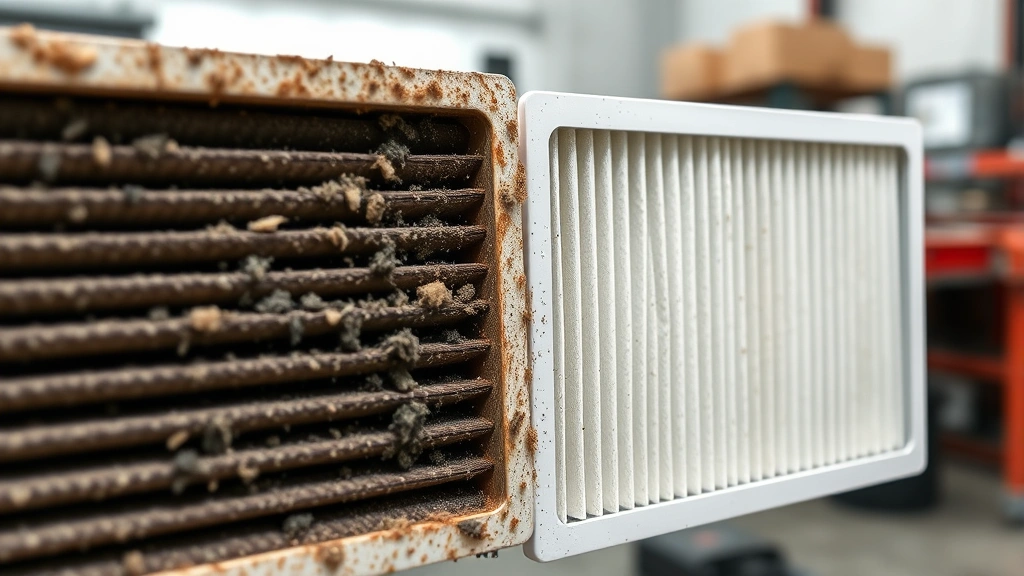
According to Family Handyman’s maintenance guide, the best practice is to check your filter at every oil change. That way you’re not guessing—you can actually see how dirty it is. A white or light gray filter that still has visible weave is fine. A dark gray or black filter that looks caked with debris? Time to change it, regardless of mileage.
Signs It’s Time to Change Your Cabin Air Filter
Your car will tell you when the cabin air filter is getting tired. You just have to listen (and smell, and feel).
- Weak airflow from vents: This is the most obvious sign. If you crank the AC or heat to full blast and the air trickles out like a whisper, the filter is likely clogged. Think of it like trying to breathe through a pillow—the harder you try, the more you realize something’s blocking the way.
- Musty or stale smell: A dirty filter traps moisture and organic matter, creating the perfect breeding ground for mold and mildew. If your car smells like a basement after it rains, that’s your filter crying for help.
- Excessive window fogging: When the cabin air filter is clogged, the AC system can’t circulate air efficiently, and moisture builds up inside. You’ll be wiping down windows constantly.
- Allergy symptoms getting worse: If you’re sneezing more when you drive, or your allergies flare up in the car but not outside, the filter isn’t doing its job anymore. It’s actually trapping larger particles but letting smaller allergens through.
- Visible dirt in the filter housing: When you pop open the filter access panel (usually behind the glove box), you might see debris around the edges or on the old filter itself.
Factors That Affect Cabin Air Filter Lifespan
Not all driving is created equal. Your cabin air filter’s lifespan depends on your environment and habits way more than the calendar.
Climate and Air Quality: If you live in an area with poor air quality—think Los Angeles, Phoenix, or anywhere near major highways—your filter works overtime. Wildfire smoke, construction dust, and vehicle exhaust all shorten the filter’s life. Similarly, if you’re in a humid climate, mold and mildew growth accelerates filter degradation.
Driving Conditions: Highway driving is easier on a cabin air filter than stop-and-go city driving. On the highway, you’re moving through air at speed, so the filter isn’t processing as much stationary dust. In the city, you’re idling in traffic, and every minute your engine is running, the filter is working. Rural driving on unpaved roads? That’s a filter killer. You might need to change it every 5,000 miles.
How Often You Drive: This seems obvious, but it matters. If you drive 50,000 miles a year, you’ll hit that 12,000-mile interval four times. If you drive 5,000 miles a year, you might only change it once. Time-based intervals still apply though—even if you’re not hitting the mileage, a year of sitting in your car’s climate (temperature swings, humidity, UV exposure) can degrade the filter material.
Vehicle Age: Older cars sometimes have less efficient cabin air intake systems, meaning more unfiltered air gets through. Newer cars with sealed climate control systems are more efficient, so filters last slightly longer.
Your Driving Habits: Do you keep your windows down in traffic? That’s pulling unfiltered air directly into the cabin. Do you use recirculate mode on your AC? That extends filter life because you’re not pulling in outside air constantly. Do you park in a garage or on the street? Street parking means more dust accumulation.
DIY Cabin Air Filter Replacement: Step-by-Step
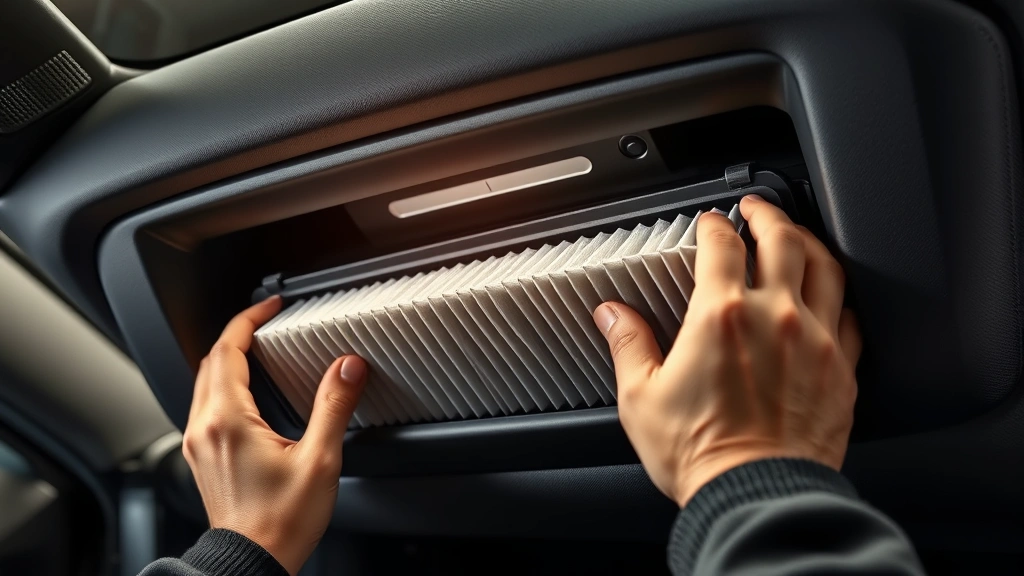
Here’s the good news: changing a cabin air filter is one of the easiest car maintenance tasks you can do. Most people can do it in 10 minutes without any special tools. Let’s walk through it.
Step 1: Locate Your Filter
The cabin air filter is usually behind the glove box, sometimes under the hood near the windshield, or occasionally under the seats. Check your owner’s manual for the exact location. For most sedans and SUVs, it’s glove box access.
Step 2: Access the Filter Housing
Open your glove box and look for clips or screws holding it in place. Most modern cars use simple clips that you just press or pull. Remove the glove box (it usually swings down on hinges). Behind it, you’ll see a plastic box—that’s your filter housing. It typically has a cover that slides or clips off.
Step 3: Remove the Old Filter
Slide the old filter out. It’ll probably be dusty, so don’t be surprised if a cloud of dust comes out. This is also your chance to inspect it—if it’s dark and caked with debris, you definitely made the right call replacing it. If it’s still relatively clean, you might be able to get another month or two out of it.
Step 4: Clean the Housing (Optional But Smart)
Use a vacuum with a brush attachment to clean out the filter housing. Any dust or debris left behind will just get pulled through to the new filter. You can also use a damp cloth, but make sure it’s completely dry before installing the new filter.
Step 5: Install the New Filter
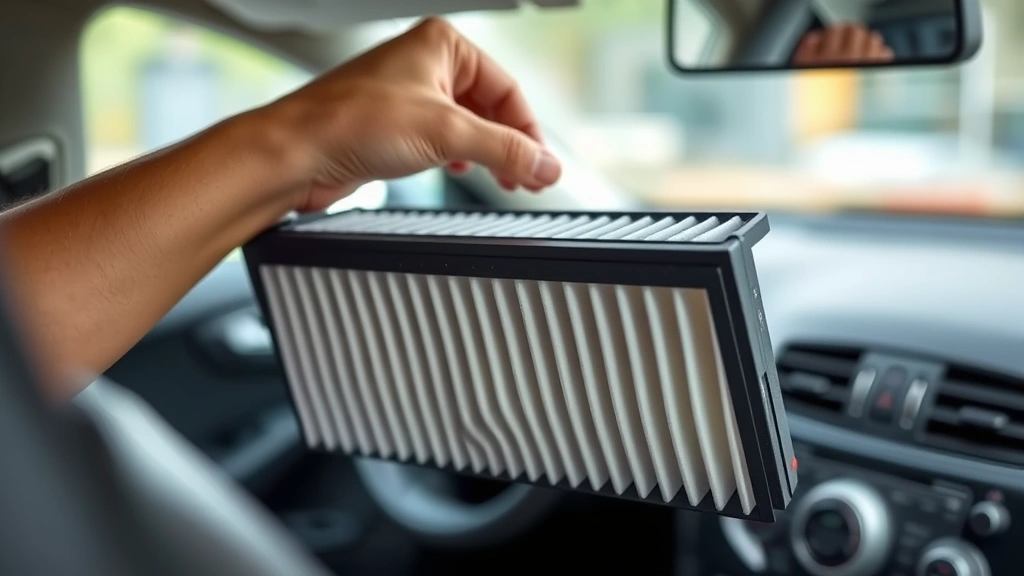
Cabin air filters are directional—there’s usually an arrow printed on the side showing airflow direction. Make sure the arrow points toward the cabin (away from the outside air intake). Slide the filter into the housing until it seats fully. You should feel it click or settle into place.
Step 6: Reassemble
Put the filter cover back on, slide the glove box back in, and secure it with clips or screws. Done. Seriously, that’s it.
Pro Tip: Take a photo of your old filter before you throw it away. If you’re ever unsure about whether it needs replacing, you can compare the new one to the old one. A filter that’s clearly darker than the old one after just a few months means you need to change it more frequently.
According to This Old House’s automotive maintenance guide, the entire process should take less than 15 minutes for most vehicles. If you’re taking longer than that, you might be overthinking it.
Cost: DIY vs. Professional Service
A replacement cabin air filter costs between $15 and $50 depending on your vehicle and filter quality. If you’re buying OEM (original equipment manufacturer) filters, expect the higher end. Aftermarket filters from reputable brands like Fram, Bosch, or Mann are usually $20 to $35.
If you take your car to a mechanic or dealership, you’re paying $50 to $150 in labor on top of the filter cost. Some dealerships charge flat rates ($75 to $100), while independent shops might charge hourly rates ($80 to $120 per hour). For a 10-minute job, that’s brutal.
The math is simple: DIY saves you $50 to $100 per replacement. If you’re changing it once a year, that’s $50 to $100 in your pocket. Over five years, that’s $250 to $500. Not bad for a job that requires zero mechanical skill.
The only time I’d recommend paying a professional is if your filter is stuck or you can’t locate it despite checking the manual. Some vehicles have weird filter placements that require partial dashboard removal. But for 95% of cars on the road, this is a DIY job.
Maintenance Tips to Extend Cabin Air Filter Life
You can’t make a dirty filter clean again, but you can slow down how fast it gets dirty.
Use Recirculate Mode Strategically: In heavy traffic or on dusty roads, switch your climate control to recirculate mode. This cycles air that’s already inside the cabin instead of pulling in outside air. It’s harder on your AC system long-term (it works less efficiently), but it saves your filter. Use it for short periods—15 to 20 minutes max—then switch back to fresh air mode.
Keep Windows Up in Traffic: Seems obvious, but driving with windows down in stop-and-go traffic pulls unfiltered air directly into your cabin. If you’re sitting in traffic, close the windows and use the AC.
Park in a Garage When Possible: If you have garage access, use it. Street parking exposes your car to dust, pollen, and pollution all day and night. A garage protects not just the filter, but the entire HVAC system.
Check Before You Change: Don’t automatically change your filter at the recommended interval. Bob Vila’s automotive maintenance experts recommend visually inspecting your filter every 6 months. If it looks clean, wait. If it looks dirty, change it early. This saves money and prevents driving around with a clogged filter.
Upgrade to a Premium Filter: Some aftermarket filters have better filtration media and last longer. Brands like K&N make washable cabin air filters that can last the life of your car. They cost more upfront ($40 to $60) but save money long-term if you’re willing to clean them periodically.
Monitor Air Quality Reports: During wildfire season or high-pollution days, your filter works harder. If you’re in an area with air quality alerts, expect to change your filter more frequently. Check AirNow.gov for local air quality data to understand what your filter is dealing with.
Frequently Asked Questions
Can I clean my cabin air filter instead of replacing it?
– Not really. Some people try vacuuming or tapping out the dust, and yeah, you can get some particles out, but you’re not restoring it to like-new condition. The filter media gets clogged at a microscopic level. If you want a reusable option, buy a premium washable filter (like K&N) designed to be cleaned and reinstalled. Standard disposable filters aren’t meant to be cleaned—it’s false economy. Replace it.
What happens if I don’t change my cabin air filter?
– Your AC and heating become less effective. Your windows fog up more. The air inside your car starts to smell stale or moldy. You might experience more allergy symptoms. In extreme cases, a completely clogged filter can reduce airflow so much that your AC compressor works harder and fails prematurely. It’s not like an engine air filter where neglect causes engine damage—it’s more about comfort and air quality. But it’s still worth doing.
Is the cabin air filter the same as the engine air filter?
– No. The engine air filter cleans air going into the engine for combustion. The cabin air filter cleans air going into the passenger compartment. They’re separate systems. You might need to replace both at different intervals. Check your owner’s manual for both schedules.
How do I know which cabin air filter to buy?
– Go to your vehicle’s owner’s manual or search your vehicle’s year, make, and model on an auto parts website like AutoZone or RockAuto. The filter is specific to your car—you can’t buy a universal one. OEM filters are made by your car manufacturer. Aftermarket filters are made by third parties. Both work fine. OEM is usually more expensive but guaranteed to fit. Aftermarket is cheaper and often just as good.
Can a clogged cabin air filter affect fuel economy?
– Indirectly, yes. A clogged cabin air filter reduces airflow, which can cause your AC compressor to work harder and draw more power from the engine. This slightly increases fuel consumption. It’s not a huge difference—maybe 1 to 2%—but it’s another reason to change it regularly.
Should I change my cabin air filter before a long road trip?
– If your filter is due or overdue, absolutely. You’ll be breathing that air for hours. A fresh filter makes the drive more comfortable and keeps your windows from fogging up. If your filter is relatively new (less than 6 months old), you’re fine.
Why is my cabin air filter so expensive at the dealership?
– Markup. Dealerships charge high labor rates and mark up parts significantly. A $25 filter becomes $50 when they install it. That’s why DIY is worth learning for this job. If you’re paying $150 for a cabin air filter replacement at a dealership, you’re overpaying by at least $100.


