
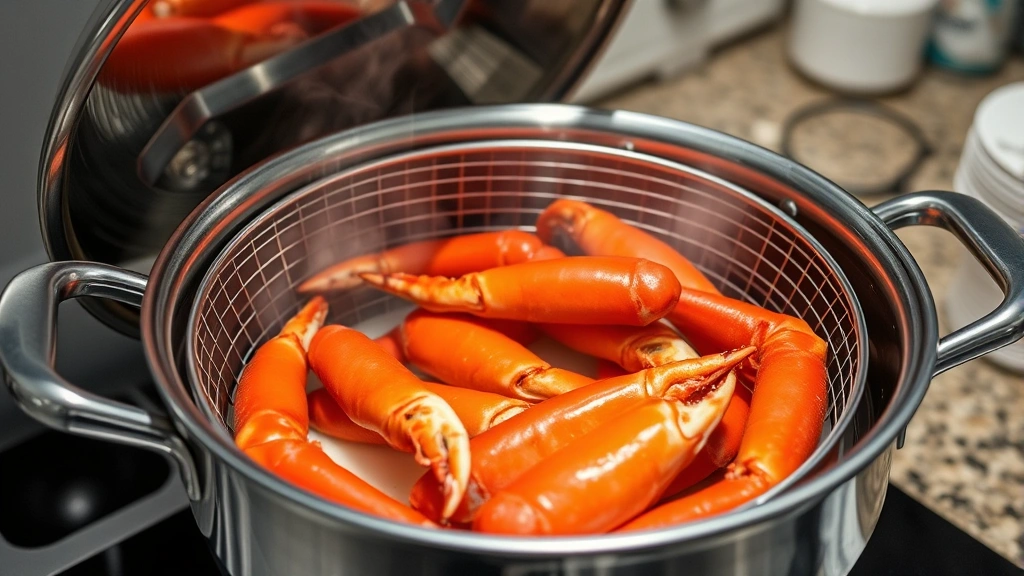
Nothing kills a dinner faster than overcooked crab legs. You’ve spent good money on them, cleared your schedule, and now you’re staring at a pot wondering: how long to steam crab legs without turning them into rubbery disappointments? The answer isn’t one-size-fits-all, and that’s what trips up most home cooks.
Here’s the real talk: crab legs are already cooked when you buy them (whether frozen or fresh). Your job isn’t to cook them—it’s to reheat them gently and evenly. That changes everything about the timing. Most people overcomplicate this and end up with sad, stringy meat. We’re going to fix that.
Basic Steaming Times by Type
Let’s cut to it: how long to steam crab legs depends on whether they’re frozen or thawed, and what species you’ve got. Here’s your baseline:
- King crab legs (frozen): 6-8 minutes
- King crab legs (thawed): 4-5 minutes
- Snow crab legs (frozen): 4-5 minutes
- Snow crab legs (thawed): 3-4 minutes
- Dungeness crab (whole, frozen): 20-25 minutes
- Blue crab (whole, frozen): 15-20 minutes
These times assume you’re starting with a pot of boiling water and a steamer basket or rack. The water should be rolling at a boil before the legs hit the steam. Cold water adds 2-3 minutes to everything, and that’s where overcooking happens.
Think of steaming like reheating leftovers—you’re not trying to transform them, just warm them through. The meat inside is already cooked. You’re essentially giving it a gentle warm bath with steam instead of direct heat.
Frozen vs. Fresh: The Timing Difference
This is where most people mess up. Frozen crab legs take longer because the heat has to penetrate the ice layer first, then warm the meat. But here’s the thing: you don’t need to thaw them completely before steaming. In fact, partially frozen legs often steam more evenly than fully thawed ones.
If your legs are rock-solid frozen, add 2-3 minutes to the times above. If they’re partially thawed (still cold but not icy), stick with the frozen times. If they’re completely thawed and at room temperature, subtract 1-2 minutes.
A pro move: run frozen legs under cold water for 30 seconds before steaming. This removes excess ice crystals but keeps the legs cold enough that they won’t overcook in the first minute. It’s like priming a surface before painting—small step, big difference.
Fresh (never frozen) crab legs are rare in most markets. If you somehow score them—maybe at a coastal seafood market—they’ll steam 1-2 minutes faster than frozen. But honestly, modern frozen crab legs are flash-frozen within hours of harvest, so “fresh” isn’t always better.
Why Your Setup Matters More Than You Think
Here’s where people go wrong: they think a pot, water, and heat are enough. Wrong. The setup determines whether your crab legs steam evenly or cook unevenly.
Water level: Fill your pot with about 1-2 inches of water. The water should touch the steamer basket or rack but NOT the crab legs. If legs sit in water, they boil instead of steam. Boiling = mushy, watery meat. Steam = tender, sweet meat.
Steamer basket vs. rack: Use a collapsible steamer basket or a metal rack. Both work fine. The goal is elevation. Some people use a crumpled ball of foil or even an upside-down bowl as a makeshift rack—that works too, as long as the legs don’t touch water.
Pot size: Use a pot deep enough that the lid seals properly. If steam escapes around the edges, your cooking time extends unpredictably. A 6-8 quart pot is ideal for 2-3 pounds of legs. Overcrowding the pot means some legs steam faster than others because steam circulation gets blocked.
Lid: Get a tight-fitting lid. This isn’t optional. Without a seal, steam dissipates and you’re basically baking the legs instead of steaming them. If your lid doesn’t seal, drape a damp kitchen towel over the pot before closing the lid. Sounds weird, it works.
According to Family Handyman’s kitchen equipment guides, proper steam circulation is non-negotiable for even cooking. Same principle applies whether you’re steaming seafood or vegetables.
Step-by-Step Steaming Process

Let’s walk through this like you’re doing it for the first time:
- Fill the pot: Add 1-2 inches of water to your pot. If you want flavor, use chicken broth, beer, or water with lemon slices and Old Bay seasoning. This doesn’t significantly change cooking time but makes the kitchen smell amazing.
- Bring to a boil: High heat, lid off. You want a rolling boil, not a simmer. This takes 3-5 minutes depending on pot size.
- Add steamer basket or rack: Once water is boiling, place your steamer insert. If using a rack, make sure it’s stable and won’t tip when you add legs.
- Arrange crab legs: Layer them loosely in the basket. Don’t pack them tight. They need steam circulation around all sides. If legs overlap, that’s fine—just don’t create a solid wall of crab.
- Cover and start timing: Put the lid on immediately. This is critical. Every second the lid is off, steam escapes and your timing gets thrown off.
- Don’t peek: I know you want to check on them. Don’t. Every time you lift the lid, you lose steam and add 30-45 seconds to cooking time. Set a timer and trust it.
- Remove carefully: Use tongs, not your bare hands. The pot and steam are hot enough to give you a nasty burn. Remove all legs at once—don’t stagger it.
Total active time: about 2 minutes of prep, then waiting. That’s it.
Common Mistakes That Ruin Crab Legs
Mistake #1: Starting with cold water. This extends cooking time unpredictably. Always start with boiling water. The legs go in after the steam is established.
Mistake #2: Letting legs touch the water. This is the #1 reason for rubbery crab. You’re boiling them, not steaming them. Boiling cooks the outer meat faster and dries it out.
Mistake #3: Steaming too long. Crab legs are already cooked. You’re not trying to cook them through—you’re reheating. Add 1-2 minutes to the times above and you’ve got overcooked, stringy meat. It’s irreversible.
Mistake #4: Overcrowding the pot. If you’re steaming 5 pounds of legs in a 4-quart pot, some will steam longer than others. Work in batches or use a bigger pot. This is annoying but necessary.
Mistake #5: Not checking your steamer seal. If steam is leaking around the lid, you might as well be baking them. Tighten the lid, use a damp towel, or switch pots.
Mistake #6: Using old, thawed crab legs. If you thawed legs 2-3 days ago and they’ve been sitting in the fridge, they’re more prone to overcooking and drying out. Use thawed legs within 24 hours of thawing, or keep them frozen until you’re ready to steam.
How to Tell When They’re Done
The timer is your guide, but visual and tactile cues matter too. Here’s what to look for:
Color: Fully cooked crab legs are bright red or orange. If they’re still pale or grayish, they need more time. But remember—they’re already cooked when you buy them, so color alone isn’t a perfect indicator. You’re looking for a slight deepening of color, not a dramatic change.
Smell: Fresh crab legs smell like the ocean—briny and sweet. If they smell fishy or ammonia-like, something’s wrong (and they shouldn’t be eaten). Good crab should smell clean and slightly sweet, like seawater.
Firmness: Grab a leg with tongs and give it a gentle squeeze. The shell should feel firm but not rock-hard. If it feels mushy or gives too easily, it’s overcooked. If it feels cold inside, it needs more time.
The internal check: If you’re paranoid (and that’s fair), crack open one leg at the thickest part. The meat should be opaque white or slightly translucent, never gray or brown. If it’s brown, you’ve cooked it too long.
Pro Tip: Set your timer for 1 minute less than the recommended time. When it goes off, check one leg. If it feels warm inside and smells right, pull them all out. You can always steam 30 more seconds if needed, but you can’t undo overcooked crab.
Adding Flavor Without the Guesswork
Steaming is the perfect time to add flavor because the steam carries it directly into the crab meat. Here are additions that don’t change cooking time:
- Old Bay seasoning: 2-3 tablespoons in the water. This is the classic move. It doesn’t change timing.
- Lemon slices: Toss 4-5 slices in the water. Adds brightness without salt.
- Beer: Replace half the water with beer (any style). Adds depth. Doesn’t change timing.
- Garlic: Smashed cloves in the water. Use 4-6 cloves. Doesn’t affect timing.
- Bay leaves: 2-3 leaves. Subtle but effective.
- Vinegar: 2 tablespoons white or apple cider vinegar. Adds tang.
Mix and match. The water should taste like you’d want to drink it (but don’t—it’s hot). If it tastes bland, the crab will too. If it tastes too salty, dial it back.
For serving, melt butter with fresh lemon juice and minced garlic. This is where the real flavor happens. Steaming is just the foundation.
Frequently Asked Questions
Can you steam crab legs in a microwave?
– Technically yes, but it’s a gamble. Microwaves heat unevenly, so some legs cook faster than others. If you must: place legs in a microwave-safe bowl with 2 tablespoons of water, cover loosely with plastic wrap, and microwave on high for 2-3 minutes for frozen legs, 1-2 minutes for thawed. Check halfway through. It works in a pinch, but stovetop steaming is more reliable.
How long to steam crab legs if they’re partially thawed?
– Treat them like frozen legs. If they’re still cold and partially icy, use the frozen timing. Once they reach room temperature, subtract 1-2 minutes from the frozen time. The transition point is fuzzy, so when in doubt, go with the longer time and check early.
Can you steam crab legs in a bamboo steamer?
– Absolutely. Bamboo steamers work great. Stack them over a pot of boiling water. The legs will cook in the same time as a metal steamer basket. Make sure the bamboo sits above the water line, not in it. Bamboo steamers are actually ideal because they distribute steam evenly.
What’s the difference between steaming and boiling crab legs?
– Steaming uses dry heat (steam), boiling uses wet heat (water). Steaming = tender, sweet, moist meat. Boiling = tougher, more fibrous, sometimes waterlogged meat. Steaming is superior for already-cooked crab legs. Boiling is for live crabs that need to be fully cooked from scratch (different timing, different process).
Do you need to thaw frozen crab legs before steaming?
– No. Frozen legs steam beautifully without thawing. In fact, partially frozen legs often steam more evenly than fully thawed ones. If you thaw them, use them within 24 hours. If you forget, refreeze and steam from frozen—it’s safer than using thawed legs that have been in the fridge for days.
How long to steam crab legs if you want them extra hot?
– The timing doesn’t change, but you can increase the water temperature. Use a rolling boil instead of a simmer. The legs will reach the same internal temperature in the same time, just with more aggressive steam. This doesn’t improve the result—it just makes the pot louder. Stick with the recommended times.
Can you add salt to the steaming water?
– Yes, but be careful. Add 1-2 tablespoons of salt to the water (or use saltwater if you have it). Too much salt makes the meat tough. The crab legs already have salt in them from the ocean, so you’re just enhancing, not adding from scratch. Taste the water—it should taste like seawater, not a salt lick.

What if your crab legs smell bad?
– Don’t steam them. Throw them away. Fresh crab should smell like clean ocean water. If it smells fishy, ammonia-like, or off in any way, it’s spoiled. This is rare with frozen crab (freezing preserves them), but it happens. Trust your nose.
How long to steam crab legs in a pressure cooker or Instant Pot?
– High pressure for 3-4 minutes for frozen legs, 2-3 minutes for thawed. Use the steamer rack insert, add 1 cup of water, and arrange legs loosely. Quick release the pressure when done. The timing is shorter because pressure cookers create more intense heat, but you lose some of the gentle reheating benefit. Stovetop steaming is still the preferred method.


