
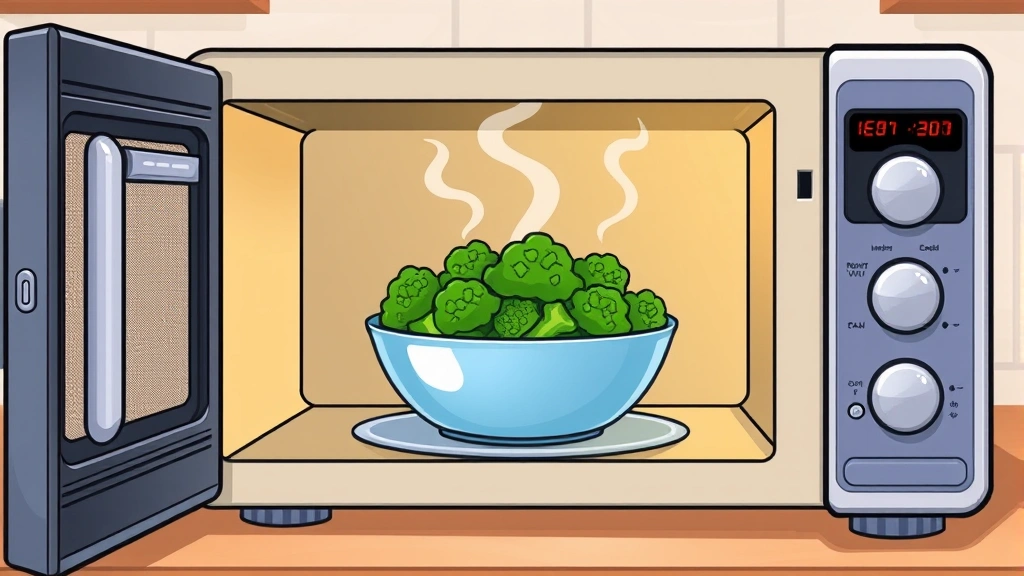
Let’s be real—steaming broccoli on the stovetop is a pain. You’re watching the pot, worrying about boiling dry, and suddenly your kitchen smells like a vegetable factory. The good news? Learning how to steam broccoli in microwave takes about 5 minutes total, and your broccoli comes out perfectly tender with way less fuss. No special equipment, no hovering over a hot stove, no mess. Just broccoli that actually tastes good.
I’ve been cooking for years, and the microwave steamer method is hands-down the fastest way to get dinner-ready vegetables on the table. It locks in nutrients better than boiling, keeps the color vibrant, and honestly, it’s foolproof once you know the timing.
Why Microwave Steaming Actually Works Better Than You Think
Steaming broccoli in the microwave isn’t a shortcut—it’s legitimately the superior method for home cooking. Here’s why:
- Speed: 4-6 minutes total vs. 15+ minutes waiting for water to boil on the stove
- Nutrient retention: Broccoli doesn’t sit in boiling water leaching vitamins. The steam is gentler and faster
- Texture control: You get crisp-tender broccoli, not mushy florets that fall apart
- No babysitting: Set the timer and walk away. No watching for boil-overs or steam burns
- Energy efficient: Microwaves use less power than heating a full pot of water
According to research from Family Handyman, microwave cooking preserves more heat-sensitive nutrients than traditional boiling methods because the cooking time is shorter and there’s less water involved. Think of it this way: steaming is like a quick sauna for your vegetables, while boiling is like drowning them.
What You Actually Need (Spoiler: Not Much)
Here’s the beautiful part—you probably already have everything in your kitchen:
- Microwave-safe bowl or container (ceramic, glass, or microwave-safe plastic). Avoid metal at all costs
- Microwave-safe plate or lid (or even a damp paper towel works in a pinch)
- Fresh broccoli (or frozen—honestly, frozen works just as well)
- Water (tap water is fine)
- Optional: A microwave steamer basket (they’re cheap, like $5-10, but totally optional)
If you want to level up, a dedicated microwave steamer basket with a lid is handy. It has little vents and sits above the water, creating a true steam chamber. But I’ve steamed hundreds of batches of broccoli in a regular bowl with a plate on top, and it works perfectly fine.
Step-by-Step: How to Steam Broccoli in Microwave
Step 1: Prep Your Broccoli
Wash your broccoli under cold running water and pat dry with a paper towel. Trim the stem—you can cut it into pieces too if you like. The goal is uniform sizes so everything cooks at the same rate. If you have giant crowns, cut them into smaller florets (about 2-3 inches). Smaller pieces = faster cooking.
Pro tip: Don’t discard the stem. Peel away the tough outer layer with a knife, and the inside is tender and sweet. Chop it into pieces and steam it right alongside the florets.
Step 2: Add Water to Your Container
Pour about 1/4 to 1/2 cup of water into the bottom of your microwave-safe bowl. You want enough water to create steam, but not so much that it touches the broccoli. If you’re using a steamer basket, the water goes beneath it. If you’re using a regular bowl, the water sits on the bottom and the broccoli sits on top of a plate or rests on the rim.
Actually, here’s a hack: use a shallow bowl and place an upside-down microwave-safe mug or ramekin in the center. Rest your broccoli on top of that. The water steams around it without touching it directly.
Step 3: Arrange the Broccoli
Place your broccoli florets in the steamer basket or directly in the bowl, making sure they’re not packed too tightly. They need air circulation. If you’re stacking, lay them crown-side up so the florets catch the steam evenly. Aim for a single layer if possible, but two layers works if you’re cooking a lot.
Step 4: Cover It
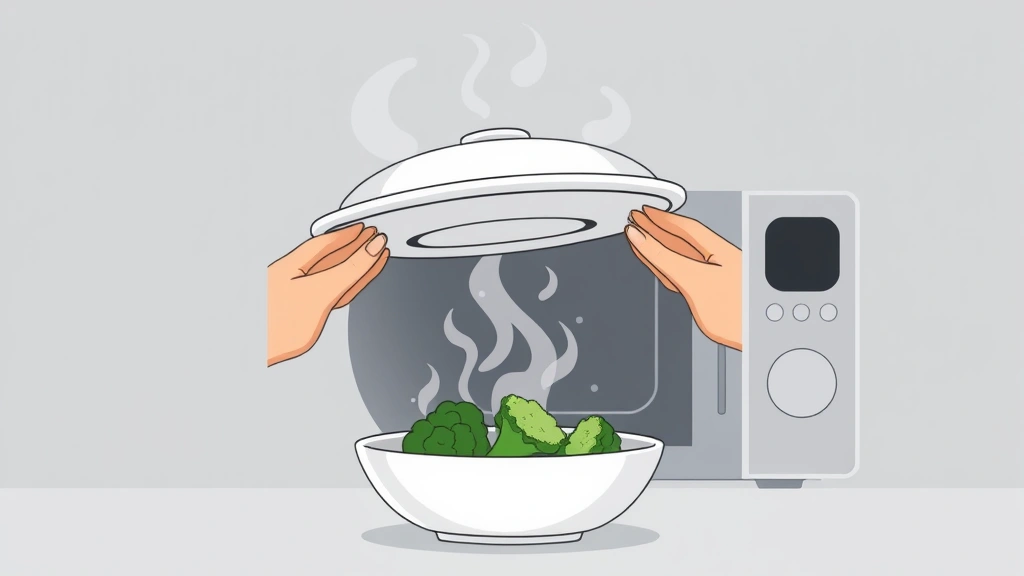
Place a microwave-safe lid, plate, or even a damp paper towel loosely on top. You want steam to be trapped inside, but not completely sealed—leave a tiny gap so pressure doesn’t build up. If you’re using a plate, just rest it on top without sealing it tight.
Step 5: Microwave & Check
Microwave on high power. See the timing guide below for specifics based on quantity, but start with 4 minutes for a standard serving. After the timer goes off, carefully remove the lid (watch out for the steam—it’s hot), and check doneness with a fork. The broccoli should be tender but still have a little resistance when you poke it.
Step 6: Drain & Season
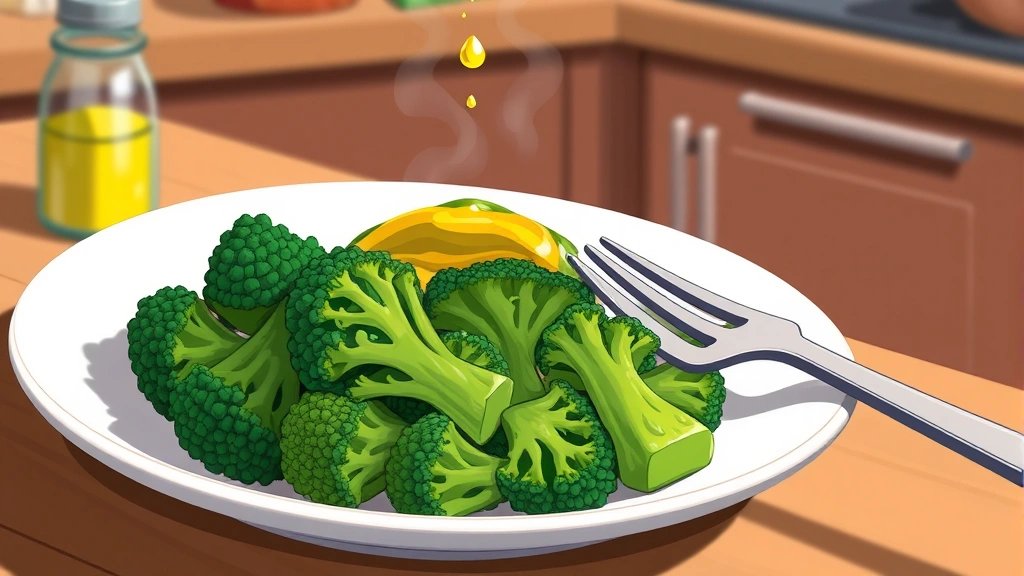
If there’s excess water in the bowl, carefully drain it. You can use a slotted spoon or just pour it out slowly. Transfer the broccoli to a serving bowl or plate. Season immediately while it’s hot—salt, pepper, a drizzle of olive oil, garlic, lemon juice, whatever you like.
Timing & Doneness Guide for How to Steam Broccoli in Microwave
Timing depends on three things: quantity, floret size, and your microwave’s wattage. Most home microwaves are 1000-1200 watts. If yours is older or lower wattage, add 30-60 seconds.
| Amount | Time on High | Result |
| 1 small serving (1-2 cups) | 3-4 minutes | Crisp-tender |
| 2-3 servings (3-4 cups) | 5-6 minutes | Tender, still has bite |
| Large batch (5+ cups) | 7-9 minutes | Fully tender |
| Frozen broccoli | 4-5 minutes | No thawing needed |
Doneness test: Pierce a floret with a fork. It should slide through with gentle pressure, but not be mushy. There should be a tiny bit of resistance. If it’s still hard, microwave for another minute and recheck.
Undercooked broccoli is way better than overcooked. You can always throw it back in the microwave for another 30 seconds. Overcooked broccoli is mushy, gray, and tastes like defeat.
Seasoning & Flavor Ideas
Plain steamed broccoli is fine, but why stop there? Here are my go-to flavor combos:
- Garlic Parmesan: Olive oil, minced garlic, grated Parmesan, cracked black pepper, and a squeeze of lemon
- Asian-Inspired: Sesame oil, soy sauce, minced ginger, and sesame seeds
- Spicy Kick: Red pepper flakes, garlic powder, and a splash of hot sauce mixed into olive oil
- Simple & Classic: Good olive oil, sea salt, fresh lemon juice, and a pinch of garlic powder
- Buttery Herb: Melted butter, fresh thyme or dill, salt, and pepper
- Cheesy: Cheddar or mozzarella (add it while the broccoli is still hot so it melts), plus a pinch of paprika
The key is adding seasonings right after steaming while the broccoli is hot. Heat helps flavors stick and blend better. Cold broccoli won’t absorb seasoning as effectively.
Common Mistakes & How to Fix Them
Broccoli Comes Out Mushy
Problem: You microwaved too long or added too much water.
Fix: Reduce time by 1-2 minutes next batch. Use less water—you only need 1/4 cup for most servings. Check doneness at the minimum time and add more time in 30-second increments.
Broccoli Is Still Hard & Crunchy
Problem: Not enough time or florets are too large.
Fix: Cut florets smaller next time. Add 1-2 minutes to the microwave time. Make sure your microwave is working properly—older microwaves take longer.
Water Boils Over or Makes a Mess
Problem: Too much water in the bowl.
Fix: Use only 1/4 to 1/2 cup water. If water still boils over, place a paper towel under the bowl to catch spills. Also, make sure your lid isn’t sealed completely—leave a tiny gap.
Broccoli Tastes Bland
Problem: No seasoning or seasoning added too late.
Fix: Season immediately after steaming while it’s hot. Use salt, pepper, and fat (oil or butter) as a base. If you’re using frozen broccoli, it might have less flavor—season more generously.
Uneven Cooking (Some Pieces Tender, Some Hard)
Problem: Florets are different sizes or packed too tightly.
Fix: Cut florets to uniform size before steaming. Don’t overcrowd the bowl. Arrange them in a single layer if possible. Stir halfway through if you’re cooking a large batch.
Safety Warning: Steam is extremely hot. When you remove the lid from your microwave steamer, always lift it away from your face and hands. The steam will rush out and can cause burns. Let the bowl sit for 30 seconds before handling if you’re worried about burns.
Storage & Reheating Steamed Broccoli
Refrigerator Storage
Steamed broccoli keeps in an airtight container in the fridge for 3-5 days. Don’t store it with dressing or seasonings if you want it to last longer—add those when you eat it. Plain steamed broccoli stays fresher.
Freezing
You can freeze steamed broccoli, but texture suffers. It becomes softer and less crisp when thawed. If you’re going to freeze it, do it right after steaming while it’s still hot. Spread it on a baking sheet, freeze for 2-3 hours until solid, then transfer to a freezer bag. Use within 2-3 months.
Reheating
To reheat, microwave on 50% power for 2-3 minutes, or until warm. Full power will make it mushy. You can also reheat in a skillet with a little olive oil over medium heat for 2-3 minutes, stirring occasionally. This method actually improves texture and lets you crisp it up a bit.
Using Leftovers
Don’t waste leftover steamed broccoli. Chop it up and add it to:
- Pasta dishes
- Fried rice
- Soups and stews
- Egg omelets or frittatas
- Salads (cold)
- Smoothies (yes, really—you won’t taste it with fruit)
- Mac and cheese
Frequently Asked Questions
Is it safe to steam broccoli in the microwave?
– Absolutely. It’s one of the safest cooking methods as long as you use microwave-safe containers and don’t seal the lid completely. Microwave steaming is actually recommended by This Old House and other reputable sources as a healthy cooking technique. The main thing is watching out for steam burns when you remove the lid—that’s hot.
Can I use frozen broccoli instead of fresh?
– Yes, frozen broccoli steams beautifully in the microwave and takes about the same time (4-5 minutes). No need to thaw it first. Frozen broccoli is actually picked and frozen at peak ripeness, so nutritionally it’s just as good as fresh, sometimes better. Just don’t overcrowd the microwave-safe bowl.
How much water do I need to steam broccoli in the microwave?
– Use 1/4 to 1/2 cup of water depending on how much broccoli you’re steaming. The water shouldn’t touch the broccoli—it just needs to create steam. If you’re using a steamer basket, water goes below it. If you’re using a regular bowl, the broccoli sits above the water on a plate or rim.
Why is my broccoli turning yellow or brown?
– Broccoli turns yellow or brown when it’s overcooked or when it’s been sitting in the microwave after cooking. Remove it immediately after the timer goes off. If it’s already discolored, it’s still safe to eat but won’t taste as fresh. Next time, reduce cooking time by 30-60 seconds.
Can I steam other vegetables the same way?
– Yes. Similar vegetables like cauliflower, Brussels sprouts, and green beans work great. Timing varies slightly—check out our guide on how long to steam green beans for specifics. Harder vegetables like carrots might need an extra minute or two. Softer vegetables like spinach need less time (1-2 minutes).
Do I need a special microwave steamer basket?
– Nope. A regular microwave-safe bowl with a plate on top works just fine. A steamer basket is convenient if you cook a lot of vegetables, but it’s not necessary. I’ve steamed thousands of servings of broccoli without one.
What’s the difference between steaming and boiling broccoli?
– Steaming uses steam to cook, so the broccoli doesn’t sit in water. Boiling submerges it in water, which leaches nutrients and can make it mushy. Steaming is faster, healthier, and gives better texture. It’s the superior method for home cooking, hands down.
Can I season the broccoli before steaming?
– You can, but I don’t recommend it. Seasoning after steaming is better because the heat helps flavors absorb better. If you season before, some salt and spices will wash off or dissolve in the water. Season right after steaming while it’s hot.
How do I know when broccoli is done?
– Pierce a floret with a fork. It should slide through with gentle pressure but still have a tiny bit of resistance. It shouldn’t be hard (undercooked) or fall apart (overcooked). Crisp-tender is the sweet spot. If you’re unsure, it’s better to undercook slightly—you can always microwave for another 30 seconds.
Is steamed broccoli healthy?
– Yes. Steaming preserves more nutrients than boiling because cooking time is shorter and there’s minimal water contact. According to research from Bob Vila, steaming is one of the healthiest cooking methods for vegetables. Broccoli is packed with vitamin C, fiber, and sulforaphane (a compound with potential health benefits). Steaming locks all that in.
Why does my microwave smell like broccoli after steaming?
– Broccoli contains sulfur compounds that create that distinctive smell when heated. It’s totally normal. To minimize the smell, make sure your microwave is vented properly and don’t seal the lid completely during steaming. After you’re done, leave the microwave door open for a few minutes to air it out. Wipe down the interior with a damp cloth if needed.
Can I steam broccoli in a paper towel instead of a bowl?
– Not really. A damp paper towel can work as a loose cover on top of a bowl to trap steam, but you still need a container to hold the water and broccoli. A regular microwave-safe bowl is your best bet.
How long does steamed broccoli last in the fridge?
– Plain steamed broccoli lasts 3-5 days in an airtight container. If you’ve added dressing or seasonings, eat it within 2-3 days. Always check for signs of spoilage—if it smells off or looks slimy, toss it.
Steaming broccoli in the microwave is genuinely one of the easiest kitchen skills to master. Once you nail the timing for your microwave, you’ll be making perfectly steamed broccoli every single time. It’s fast, it’s healthy, and it requires zero fuss. No more rubbery broccoli from the stovetop, no more waiting around for water to boil. Just perfectly tender, bright green broccoli in 5 minutes flat.
Start with the timing guide above, check doneness with a fork, and adjust from there. Your microwave might cook slightly faster or slower than others, so the first batch is your baseline. After that, you’ll know exactly how long to set the timer. It’s that simple.


